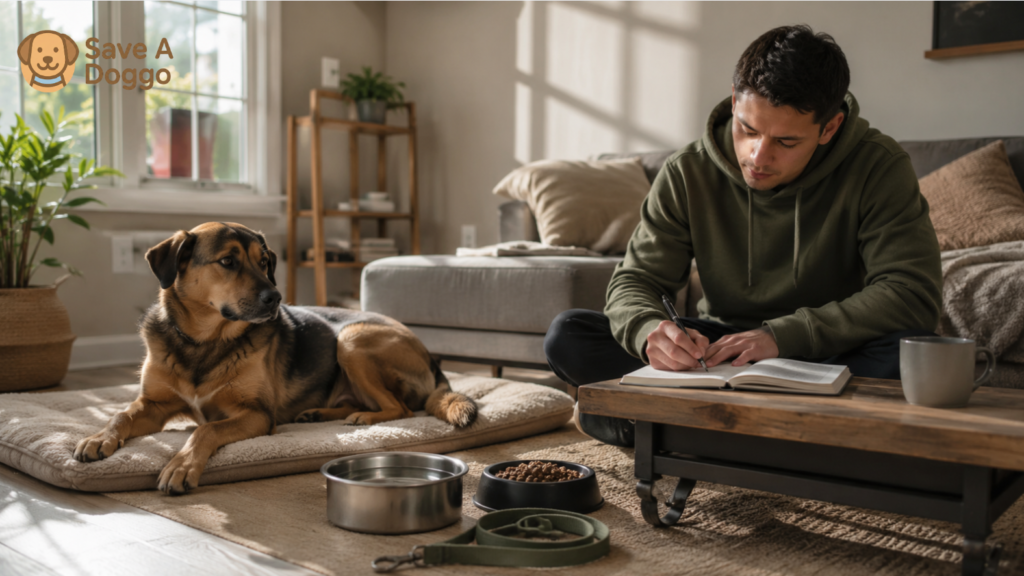
A rescue dog’s first-week schedule should be predictable, quiet, and flexible. Build each day around regular toilet opportunities, the dog’s existing meal plan, fresh water, short low-pressure walks, long rest periods, and only a few minutes of reward-based training. Limit visitors and unnecessary outings while you learn the dog’s body language.
The schedule below is a starting template for a generally healthy adult dog—not a rule for every rescue. Puppies need more frequent meals and toilet breaks. Senior dogs, dogs taking medication, and dogs with medical or behavior needs require an individualized plan from the rescue organization or veterinarian.
First-Week Schedule at a Glance
| Time | Activity | Keep it low-pressure by… |
|---|---|---|
| 6:30–7:00 a.m. | Wake up and toilet break | Going directly to the same quiet toilet area |
| 7:00 a.m. | Breakfast, medication if prescribed, fresh water | Feeding in a protected space and leaving the dog alone to eat |
| 7:30 a.m. | Short sniff walk or calm outdoor time | Choosing a quiet route and returning before the dog is overwhelmed |
| 8:00–11:00 a.m. | Rest | Reducing noise, visitors, handling, and household traffic |
| 11:00 a.m. | Toilet break and brief check-in | Keeping the outing short if the dog is worried outside |
| 11:15 a.m.–2:00 p.m. | Rest with optional calm enrichment | Offering a safe chew or food toy only if the dog does not guard it |
| 2:00–3:00 p.m. | Toilet break; one- to three-minute training session | Practicing one easy skill and stopping early |
| 3:00–5:30 p.m. | Quiet time | Letting the dog sleep or observe without forced interaction |
| 5:30–6:30 p.m. | Dinner and toilet break | Using the same feeding area and sequence as breakfast |
| 6:30–7:00 p.m. | Short calm walk or sniff time | Avoiding crowded routes, greetings, and dog parks |
| 7:00–9:30 p.m. | Calm household time | Rewarding relaxed behavior without demanding petting |
| 9:30–10:30 p.m. | Final toilet break and bedtime | Using the same quiet sleep location each night |
Move the times to match your household. The useful part is the order and predictability, not the clock itself. If the dog is sleeping comfortably, you do not need to wake them for optional training or entertainment.
What to Prioritize During the First Week
Focus on:
- Escape prevention and secure identification
- Regular toilet opportunities
- Familiar food and predictable meals
- Continuous access to clean, fresh water unless a veterinarian instructs otherwise
- A protected sleep and rest area
- Calm walks appropriate to the dog’s comfort and health
- Observation of appetite, drinking, elimination, sleep, and body language
- Short, reward-based interactions
- A first veterinary appointment when one has not already been completed
Delay:
- Dog parks, daycare, and busy pet stores
- Parties and multiple visitors
- Long hikes or intense exercise
- Off-leash time outside a securely enclosed area
- Unnecessary bathing, grooming, or nail trimming
- Taking food, toys, or chews away to “test” the dog
- Introducing every room, person, and animal at once
- Long training sessions or punishment-based corrections
A quiet week is not a missed socialization opportunity. It gives you time to learn what the individual dog can handle.
Before the Dog Arrives: Set Up the Schedule
Decide who will handle each meal, toilet break, walk, medication, and nighttime check before the dog comes home. Inconsistent responsibilities can lead to missed care or several people crowding the dog at once.
Prepare:
- A secure collar or harness, leash, identification tag, and microchip contact plan
- A quiet bed or retreat area away from busy walkways
- The same food the shelter, foster, or previous caregiver was using
- Food and water bowls placed away from household traffic
- Gates or closed doors for gradual access to the home
- Enzyme cleaner for accidents
- A written list of veterinary records and medications
- Safe enrichment items approved for the dog’s size and chewing style
- A notebook or phone note for the first-week log
Confirm the rescue organization’s instructions about food amount, medication timing, exercise restrictions, parasite prevention, and follow-up care. SaveADoggo’s rescue dog adoption checklist covers the supplies and safety details to prepare before arrival.
Day 1: Arrival, Safety, and Observation
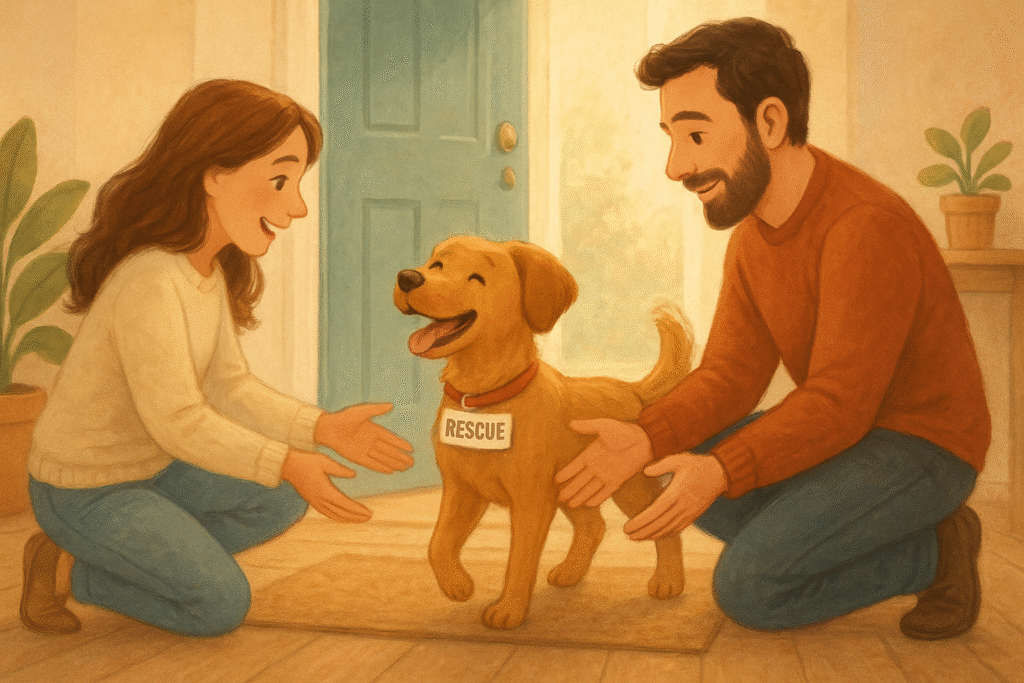
Keep the arrival uneventful. Take the dog to the planned toilet area, then guide them to a small, quiet section of the home. Offer water and show them the resting area without forcing them into a crate, bed, or interaction.
Your priorities on the first day are:
- Prevent escape at doors, gates, and vehicles.
- Follow the food and medication instructions provided by the organization.
- Offer several calm toilet opportunities.
- Let the dog sleep.
- Keep resident animals separated until a planned introduction can occur.
- Avoid visitors, baths, photoshoots, and tours of the neighborhood.
- Note whether the dog eats, drinks, urinates, defecates, rests, hides, paces, or pants.
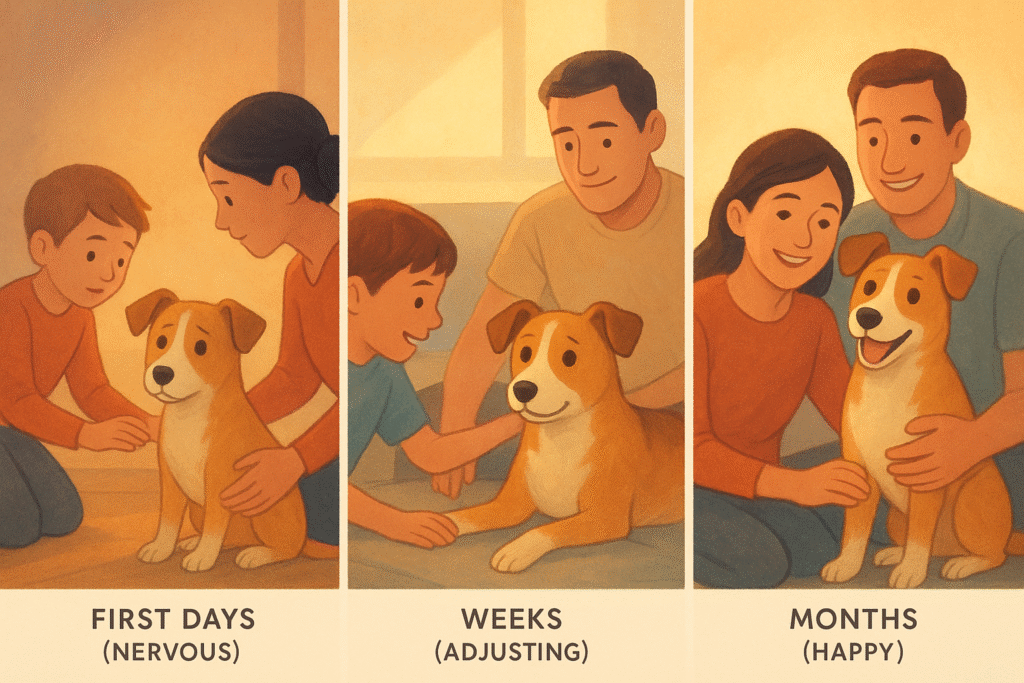
Do not judge the dog’s personality from the first evening. Stress can make a dog unusually quiet, restless, clingy, avoidant, or uninterested in food. For a detailed arrival plan, read First 24 Hours With a Rescue Dog.
Day 2: Repeat the Same Basic Pattern
Use the same toilet area, feeding location, walking equipment, and sleeping space. Repetition helps you collect useful information without changing several variables at once.
Watch for:
- The times the dog naturally needs to eliminate
- Whether eating is easier when nobody is nearby
- Sounds, surfaces, doors, or movements that cause hesitation
- The distance at which the dog can notice people or animals and remain relaxed
- Whether touch is welcomed, tolerated, or avoided
- Signs of discomfort when rising, walking, eating, or being handled
Do not follow a hiding dog or reach into a crate or under furniture. Make sure they can safely reach water and the toilet area. If the dog must be moved, use environmental setup and a calm cue rather than pulling them physically.
Day 3: Build Predictability, Not Pressure
By day three, continue the routine even if the dog appears more confident. A burst of energy does not necessarily mean they are ready for crowded walks, guests, daycare, or unrestricted access to the home.
Begin using simple, consistent phrases before predictable events:
- “Outside” before a toilet trip
- “Dinner” before placing the meal down
- “This way” before moving between areas
- “Bedtime” before the final rest period
These phrases are not obedience tests. They help the dog notice what happens next.
Use the rescue dog body-language guide to distinguish loose, curious behavior from freezing, avoidance, hard staring, lip licking, tucked posture, or other signs that the schedule is too demanding.
Day 4: Add One Tiny Training Skill
If the dog is eating, resting, and moving through the routine without marked distress, add one or two sessions lasting one to three minutes.
Useful first skills include:
- Responding to their name
- Following a treat toss away from a doorway
- Touching a hand target voluntarily
- Moving toward a bed or mat
- Standing calmly while the leash is visible
- Checking in with you during a quiet walk
Use small food rewards or another reward the dog enjoys. Stop while the dog is still engaged. If the dog turns away, stops taking food, scratches, yawns repeatedly, freezes, or leaves, end the session and make the next one easier.
The American Veterinary Society of Animal Behavior recommends reward-based methods for dog training and behavior modification. The first week is not the time for leash corrections, intimidation, or testing compliance.
Day 5: Introduce Calm Enrichment
Enrichment can help a dog settle, but it should not create guarding, frustration, or digestive problems.
Try one low-pressure option:
- Scatter part of the dog’s measured meal in a clean, safe area
- Offer a simple food toy the dog already understands
- Let the dog sniff on a quiet walk
- Place a few treats in an open cardboard box under supervision
- Offer a safe chew approved by the veterinarian or rescue organization
Use part of the normal food allowance rather than adding large amounts of rich treats. Supervise new items, but do not hover over or repeatedly remove them.
If the dog stiffens, eats faster, lowers over an item, growls, or moves away with it, create distance and follow the resource-guarding safety guide.
Day 6: Practice a Normal Household Day
Begin shaping a version of the schedule you can maintain after the first week. Keep the same care sequence while practicing normal activities such as working at a desk, preparing meals, or moving between rooms.
Do not suddenly leave the dog alone for a full workday. If the dog can relax while you move around the home, you may practice a very short separation behind a gate or door. Return before distress escalates. Pacing, persistent barking, howling, scratching at exits, drooling, destruction, or inability to eat may indicate that the step is too difficult.
If you must be away longer than the dog can currently manage, arrange safe human support rather than using the first week as a test.
Day 7: Review and Adjust the Next Week
Use your notes to build the second-week routine. Ask:
- Which meal and toilet times worked consistently?
- How much walking left the dog relaxed rather than exhausted or overstimulated?
- Where did the dog sleep most comfortably?
- Which handling or household situations caused tension?
- Did the dog guard food, objects, furniture, or people?
- Could the dog settle when you moved around or briefly left the room?
- Were there changes in appetite, drinking, elimination, mobility, or sleep?
- Which one or two skills are useful enough to continue?
Do not increase walks, visitors, freedom, training, and alone time all on the same day. Change one part gradually so you can tell whether the dog is coping.
For longer-term tracking, use SaveADoggo’s 30-Day Rescue Dog Progress Tracker.
Meals and Water During the First Week
Keep the dog’s previous food and approximate meal times unless the veterinarian or rescue organization recommends a change. Sudden diet changes can make it harder to distinguish stress-related appetite changes from digestive upset.
For a healthy adult dog, two measured meals may fit the routine, but age, size, health, medication, and previous feeding plan matter. Puppies generally need more frequent meals. Follow individualized instructions instead of applying an adult schedule to every dog.
Provide clean, fresh water at all times unless a veterinarian gives a specific medical instruction. Wash bowls regularly and place water where the dog can reach it without passing another animal or a frightening area.
Feed separately from children and other pets. Do not put hands in the bowl or take it away while the dog is eating. If appetite remains poor or the dog shows vomiting, diarrhea, pain, lethargy, or other illness signs, contact a veterinarian. SaveADoggo also explains why a rescue dog may not eat at first.
Toilet Breaks and House Training
Take the dog to the same quiet toilet area after waking, after meals, after active play, before bedtime, and whenever their behavior suggests they need to go. Puppies, senior dogs, dogs with medical conditions, and dogs without a house-training history may need more frequent opportunities than the sample schedule.
Keep the leash on outdoors unless the area is securely enclosed and the dog’s safety has been assessed. Reward elimination quietly, then return inside or allow a brief sniff if the dog remains comfortable.
Do not punish accidents. Clean them thoroughly and adjust the next toilet opportunity. Sudden frequent urination, straining, inability to pass urine, blood, diarrhea, repeated vomiting, or marked discomfort requires veterinary advice.
Walks and Outdoor Time
The first week is not an endurance test. Choose quiet routes and let the dog’s posture, breathing, scanning, and recovery guide the length.
A comfortable walk may include:
- Sniffing with a loose body
- Taking treats normally
- Turning away from a trigger
- Checking in voluntarily
- Returning home and settling within a reasonable period
The outing may be too difficult if the dog freezes, pulls frantically toward home, refuses food they normally value, pants heavily without heat or exertion, scans constantly, lunges, or cannot settle afterward.
Some dogs are not ready for neighborhood walks and need brief toilet trips in the quietest available area. Do not drag a frightened dog forward. Read about decompression walks for rescue dogs before increasing distance.
Rest and Sleep
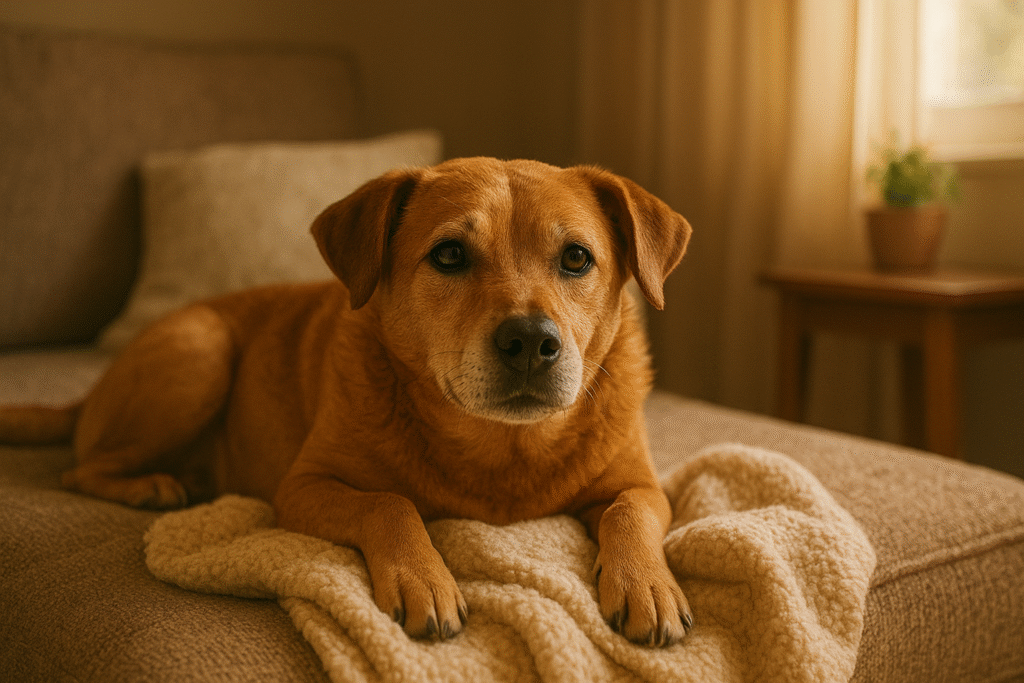
Newly adopted dogs may need substantial quiet time. Rest is not a sign that the dog is bored or failing to bond.
Place the bed in a low-traffic area and ask household members to leave the dog alone there. Do not wake the dog for petting, climb over them, or allow children to enter the resting area.
A crate can be useful only when introduced positively and the dog can relax inside it. Do not force or leave a panicking dog confined. If you plan to use one, follow How to Crate Train a Rescue Dog Without Fear or Force.
Visitors During the First Week
Most rescue dogs do not need social visits during the first few days. Essential visitors can ignore the dog while the dog remains behind a secure barrier with access to water and a resting place.
If you choose one brief introduction later in the week:
- Select a calm adult who will follow instructions.
- Keep children and other animals out of the introduction.
- Let the dog choose whether to approach.
- Do not allow staring, reaching over the head, hugging, or cornering.
- End the visit before the dog becomes restless or tense.
There is no benefit in making the dog greet someone who makes them uncomfortable.
How to Adapt the Schedule
| Dog or situation | Schedule changes to consider |
|---|---|
| Puppy | More frequent toilet breaks, age-appropriate meals, shorter activity, more supervision and sleep |
| Senior dog | Easier routes, non-slip surfaces, more rest, medication timing, closer mobility monitoring |
| Heartworm treatment or exercise restriction | Follow the veterinarian’s activity limits exactly; do not use the sample walking plan |
| Fearful dog | Smaller home area, quieter toilet location, fewer transitions, no forced walks or greetings |
| Multi-pet home | Separate feeding, sleeping, chews, and unsupervised time; use planned introductions |
| Dog guarding resources | Protected feeding and rest areas; remove conflict triggers; seek qualified guidance |
| Dog recovering from surgery or illness | Use the discharge plan from the veterinarian instead of a general adoption schedule |
When to Call the Veterinarian
Contact a veterinarian promptly when the dog:
- Is not drinking or cannot keep water down
- Repeatedly vomits or has significant diarrhea
- Cannot urinate, strains without producing urine, or shows blood
- Has difficulty breathing, collapses, appears extremely weak, or has severe pain
- Refuses food beyond the timeframe your veterinarian considers safe
- Shows a sudden behavior change, snapping, or pain during touch or movement
- Has medication questions or missed doses
- Has an unknown or incomplete medical history
Do not give human medication unless a veterinarian specifically directs you to do so. Prepare for the first vet visit after adoption by bringing records and your first-week notes.
When the Schedule Needs Behavior Support
Get qualified, reward-based help when:
- The dog has bitten, snapped, or repeatedly threatened contact.
- Growling or guarding makes ordinary care unsafe.
- The dog panics during short separations or confinement.
- Outdoor fear prevents necessary toilet trips.
- Resident animals cannot be managed safely.
- The dog cannot settle despite a quieter routine.
- You or another household member feels afraid.
Management comes before training. Use gates, doors, separate rooms, and professional guidance instead of provoking the behavior to see whether it improves.
Printable First-Week Tracking Table
Copy this table into your notes and complete one row each day:
| Day | Meals eaten | Water normal? | Urine/stool | Walk response | Rest/sleep | Stress or guarding triggers | Training/enrichment | Questions for vet or trainer |
|---|---|---|---|---|---|---|---|---|
| 1 | ||||||||
| 2 | ||||||||
| 3 | ||||||||
| 4 | ||||||||
| 5 | ||||||||
| 6 | ||||||||
| 7 |
Frequently Asked Questions
What is the best schedule for a rescue dog’s first week?
Use predictable toilet breaks, the dog’s existing meal plan, fresh water, short calm walks, long rest periods, and one or two very short reward-based training sessions. Keep the sequence consistent but adjust the timing for age, health, medication, and the dog’s comfort.
How often should I walk my rescue dog during the first week?
There is no universal number or duration. Start with short toilet trips and quiet sniff-focused walks that match the dog’s health and body language. A fearful, recovering, senior, or exercise-restricted dog may need a very different plan from a confident healthy adult.
Should I begin training immediately?
Begin with routines and easy communication rather than formal obedience. Name response, following a treat toss, moving toward a bed, and calm leash exposure may be enough. Keep sessions brief, reward success, and stop when the dog disengages.
How many meals should a rescue dog eat each day?
Follow the feeding plan provided by the shelter, foster, veterinarian, or previous caregiver. Many adult dogs eat two measured meals, while puppies often need more frequent meals. Health conditions and medications can change the schedule.
Can visitors meet my rescue dog during the first week?
Most dogs benefit from fewer visitors at first. If a visit is necessary, use a barrier or let the dog choose whether to approach a calm adult. Avoid parties, children crowding the dog, forced greetings, and face-to-face contact.
What if my rescue dog sleeps most of the day?
Transition stress can be tiring, and quiet rest may be appropriate. Monitor whether the dog also eats, drinks, eliminates, moves comfortably, and can be roused normally. Contact a veterinarian if sleepiness is accompanied by weakness, pain, vomiting, breathing changes, or other illness signs.
What if my rescue dog hides all week?
Do not pull the dog out or block their retreat. Keep food, water, and toilet access predictable and reduce household pressure. Contact a veterinarian if basic needs are not being met or illness may be involved, and seek behavior support when fear remains severe or safety is difficult to maintain.
Should my rescue dog sleep in my bedroom?
Either a bedroom or another quiet location can work if it is safe and the dog can settle there. Choose a location you can maintain consistently, prevent unsupervised conflict with other animals, and avoid forcing a dog into a crate or closed space that causes panic.
Sources and Further Reading
The Save A Doggo Editorial Team creates practical, welfare-first resources for rescue-dog adopters, foster families, and shelter supporters. We prioritize primary and authoritative sources, distinguish observation from diagnosis, correct material errors transparently, and explain when veterinary or qualified behavior support is needed. We do not claim veterinary credentials or professional review unless a named, verifiable reviewer has approved the final article.