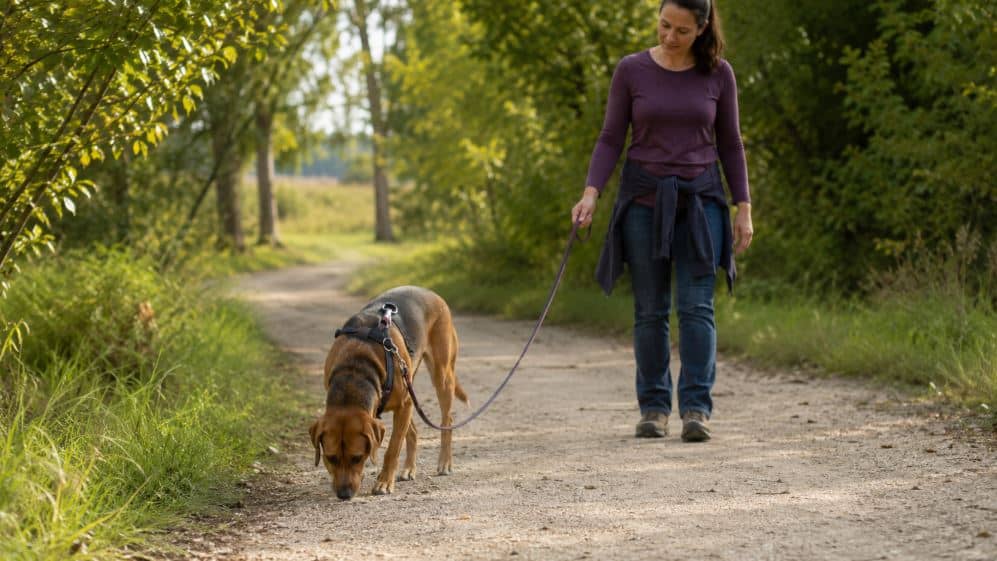
Many new adopters think a good walk means distance, speed, and exercise.
But for many rescue dogs, especially anxious or newly adopted dogs, the most helpful walk may be much slower.
Decompression walks for rescue dogs are calm, low-pressure walks where the dog is allowed to sniff, explore, pause, and move at a relaxed pace. Instead of rushing from point A to point B, the goal is to help your dog feel safe, gather information, and release stress.
A decompression walk is not about obedience. It is about emotional recovery.
Quick Answer
Decompression walks for rescue dogs are slow, quiet walks that give dogs time to sniff, explore, and relax without constant commands or pressure. These walks can help rescue dogs reduce stress, build confidence, and feel more secure after adoption. Choose calm routes, use safe gear, avoid crowded areas, and let your dog sniff at their own pace.
What a Decompression Walk Is
A decompression walk is a walk designed around your dog’s nervous system, not your step count.
Instead of asking your rescue dog to heel perfectly, ignore every smell, and keep moving, you allow them to explore safely. They can sniff grass, pause near trees, look around, and choose a slower rhythm.
A good decompression walk usually includes:
- A quiet location
- A loose leash when safe
- Plenty of sniffing time
- Minimal commands
- Calm body language from the owner
- Distance from stressful triggers
- No forced greetings
- No rushing
For a newly adopted rescue dog, the world can feel overwhelming. New smells, sounds, people, dogs, cars, bikes, and surfaces may all feel like too much.
A decompression walk gives your dog a chance to process the environment without being pushed.
This type of walk can be especially helpful for dogs who are:
- Newly adopted
- Nervous outside
- Easily overstimulated
- Reactive on leash
- Recovering from shelter stress
- Unsure around people or dogs
- Struggling to relax at home
If your dog has strong anxiety triggers, you may also want to read: Rescue Dog Anxiety Triggers Most Owners Don’t Realize.
Why Sniffing Matters
Sniffing is not a waste of time.
For dogs, scent is information. When your rescue dog sniffs the ground, a tree, a fence, or a patch of grass, they are learning about the world around them.
Sniffing can help dogs:
- Understand their environment
- Gather information about other animals
- Slow their body down
- Use mental energy
- Feel more in control
- Explore without direct pressure
- Build confidence through choice
A fast walk may tire your dog physically, but a sniffing walk can tire them mentally. For anxious rescue dogs, mental enrichment is often more useful than intense exercise.
Sniffing also gives your dog agency. They are not just being pulled through the world. They are allowed to participate in it.
That matters for trust.
A rescue dog who is always rushed may learn that walks are stressful. A dog who is allowed to sniff, pause, and observe may begin to feel safer outside.
How to Choose the Right Route
The best decompression walk route is usually quiet, predictable, and low-traffic.
You do not need a perfect hiking trail. A calm neighborhood street, empty field edge, quiet park path, or open grassy area can work.
Look for routes with:
- Grass or natural surfaces
- Wider walking space
- Fewer dogs
- Fewer people
- Lower traffic noise
- Places to pause safely
- Good visibility
- Easy exits if your dog gets overwhelmed
Try to avoid:
- Busy sidewalks
- Crowded dog parks
- School pickup times
- Narrow paths with many dogs
- Loud construction areas
- Heavy traffic roads
- Places with off-leash dogs
- Events, markets, or festivals
For some rescue dogs, the best first decompression walk may be your backyard or driveway. That is okay.
If your dog is very fearful, start smaller. Let them sniff one quiet area for five minutes. Over time, you can slowly expand their world.
A decompression walk should make your dog feel safer, not flooded.
Safety Gear and Leash Tips
Safety matters, especially with newly adopted rescue dogs.
Some rescue dogs are flight risks. If they panic, they may back out of a collar or harness, bolt, or freeze in place. Use secure equipment before exploring new places.
Helpful safety gear may include:
- Well-fitted Y-front harness
- Flat collar with ID tag
- Backup clip connecting harness to collar
- 6-foot leash for normal walking
- Long line for safe open spaces
- Treat pouch
- Poop bags
- Water on warm days
Avoid retractable leashes for anxious rescue dogs. They can create sudden tension, make control harder, and become dangerous if dropped.
A long line can be useful, but only in open, safe areas. Keep it away from roads, bikes, other dogs, and crowded spaces.
During the walk:
- Keep the leash loose when safe
- Avoid constant leash corrections
- Do not drag your dog toward scary things
- Do not force greetings
- Let your dog pause
- Reward check-ins
- Move away from triggers early
- Keep your own body calm
If your dog becomes tense, starts scanning, refuses treats, freezes, barks, lunges, or tries to escape, the walk may be too much. Create distance and choose an easier route next time.
Reward-based training and calm management are better choices than punishment or leash jerks, especially for rescue dogs learning to feel safe.
For more training foundations, read: Training an Adopted Dog.
Simple 20-Minute Walk Plan
A decompression walk does not need to be long.
Here is a simple 20-minute plan you can try.
Minute 0-3: Calm Start
Before leaving, give your dog a calm moment near the door.
Avoid excited talk, rushing, or repeating commands. Clip the leash gently. If your dog is nervous, scatter a few treats near the door or step outside slowly.
Goal: Start the walk without pressure.
Minute 3-8: Easy Sniffing
Let your dog sniff close to home or near the start of the route.
Do not worry about distance. If your dog spends five minutes sniffing one patch of grass, that can still be useful.
Goal: Let your dog gather information and settle.
Minute 8-14: Gentle Exploring
Walk slowly toward a quiet area.
Let your dog choose some direction when safe. Reward small check-ins, soft body language, and calm movement.
If your dog notices a trigger, create distance before they react strongly.
Goal: Help your dog explore without becoming overwhelmed.
Minute 14-18: Slow Return
Begin heading home before your dog is exhausted or overstimulated.
A good walk should end while your dog still has some emotional capacity left.
Goal: Finish before stress builds too high.
Minute 18-20: Calm Landing
When you return home, offer water and a quiet resting space.
Do not immediately start grooming, visitors, training, or play. Let your dog decompress after the decompression walk.
Goal: Teach your dog that walks lead back to safety.
How Often Should Rescue Dogs Do Decompression Walks?
Many rescue dogs benefit from several slow sniffing walks each week.
Some dogs enjoy one daily decompression walk. Others may need shorter sessions, especially if they are fearful or easily overstimulated.
A good starting point:
- 10-20 minutes for nervous dogs
- 20-40 minutes for confident dogs
- Shorter walks in hot weather
- Shorter routes in busy environments
- More sniffing, less marching
Watch your dog’s body language.
If they come home calmer, rest well, and recover easily, the walk may be helping. If they come home frantic, reactive, or unable to settle, the walk may be too intense.
Common Mistakes to Avoid
Decompression walks are simple, but they can be misunderstood.
Avoid these mistakes:
- Turning the walk into obedience practice
- Forcing your dog to heel the whole time
- Pulling them away from every smell
- Choosing busy routes too soon
- Letting strangers pet your dog without consent
- Going to dog parks for “socialization”
- Walking too long
- Using leash corrections
- Ignoring stress signals
- Expecting instant results
A decompression walk is not about making your dog face everything. It is about helping them feel safe enough to notice the world calmly.
FAQ
What is a decompression walk for a rescue dog?
A decompression walk is a slow, low-pressure walk where a rescue dog can sniff, explore, pause, and relax. The goal is emotional regulation, confidence, and safe enrichment rather than strict obedience or physical exhaustion.
Are decompression walks good for anxious rescue dogs?
Yes, many anxious rescue dogs benefit from calm sniffing walks in quiet areas. However, the route must be carefully chosen. If the environment is too busy, the walk may increase stress instead of reducing it.
How long should a decompression walk be?
Start with 10-20 minutes for a newly adopted or nervous rescue dog. Confident dogs may enjoy longer walks. The best length depends on your dog’s stress level, age, health, weather, and environment.
Should I let my rescue dog sniff everything?
Let your dog sniff safe areas, but avoid unsafe items such as trash, unknown food, sharp objects, toxic plants, feces, or areas with heavy pesticide use. Sniffing is healthy, but safety still matters.
Can I use a long leash for decompression walks?
Yes, a long line can be helpful in open, safe areas away from roads and crowds. Use a secure harness and stay aware of your surroundings. Avoid retractable leashes for nervous or newly adopted dogs.
What if my dog just stands still and sniffs?
That is often fine. Standing and sniffing can be part of processing the environment. If your dog’s body is loose and curious, give them time. If they are frozen, tucked, trembling, or refusing food, they may be scared and need a quieter place.
Are decompression walks better than normal walks?
They serve a different purpose. Normal walks may include exercise, potty breaks, or training. Decompression walks focus on calm exploration and stress relief. Many rescue dogs benefit from both.
Should I take my rescue dog to a dog park for decompression?
Usually no, especially early after adoption. Dog parks can be overwhelming and unpredictable. A quiet field, calm path, or low-traffic neighborhood route is often safer.
Final Thought
Decompression walks for rescue dogs are not complicated.
Slow down. Let your dog sniff. Choose quiet spaces. Keep the leash relaxed when safe. Watch your dog’s body language. End before they are overwhelmed.
For a rescue dog learning to trust the world again, one peaceful sniffing walk can mean more than a fast mile around the block.
Try one slow sniffing walk this week.
Sources & Further Reading
- AVSAB Humane Dog Training Position Statement
- ASPCA: Separation Anxiety
- The Spruce Pets: Why Dogs Like to Sniff

The Save A Doggo Editorial Team creates practical, welfare-first resources for rescue-dog adopters, foster families, and shelter supporters. We prioritize primary and authoritative sources, distinguish observation from diagnosis, correct material errors transparently, and explain when veterinary or qualified behavior support is needed. We do not claim veterinary credentials or professional review unless a named, verifiable reviewer has approved the final article.