The First 24 Hours With a Rescue Dog: A Calm Step-by-Step Guide
The first day with a rescue dog can feel full of hope and tiny worries. You may be excited to bond, nervous about doing the right thing, and deeply aware that your new dog has just gone through a major life change.
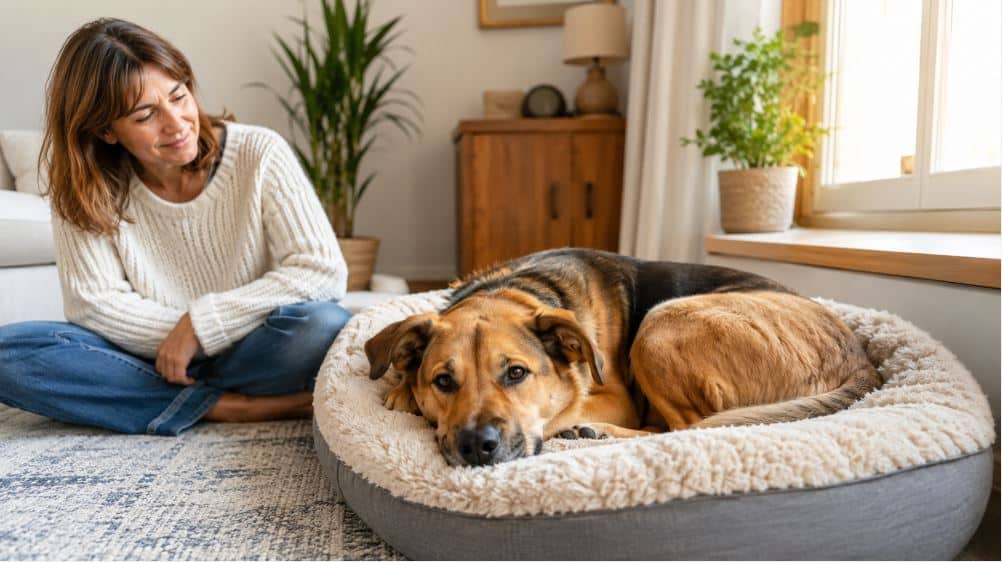
The best first day is usually quieter than people expect. Your dog does not need a perfect home tour, a big welcome, or a packed schedule. They need safety, water, rest, predictable potty breaks, and a person who moves slowly enough for them to understand what is happening.
Quick Answer
During the first 24 hours with a rescue dog, go straight home, offer a calm potty break, let them explore one safe area, provide water and a simple meal, keep introductions minimal, and set up a quiet sleeping space. Your goal is not instant bonding. It is helping your dog feel safe.
The Ride Home
The first 24 hours with a rescue dog start before you open your front door. The ride home can feel confusing or stressful for a dog who may not know you yet, so keep it simple and secure.
Before pickup, prepare your car with:
- A crate, travel carrier, or dog seat belt
- A towel or blanket
- Poop bags
- Paper towels
- Water for longer drives
- A leash and harness or collar setup
If possible, bring another adult with you. One person can drive while the other quietly monitors the dog. Avoid letting the dog ride loose in the car, even if they seem calm. A startled dog can try to climb into the front seat, squeeze out when the door opens, or panic at a traffic stop.
Keep the ride boring. Skip drive-throughs, pet stores, and “just one quick stop.” Go directly home. Talk in a soft voice if it seems to help, but do not overwhelm your dog with constant touching or excitement.
A small practical tip: before opening any car door, make sure the leash is clipped and in your hand. Many newly adopted dogs are flight risks during transitions, even dogs who were friendly and relaxed at the shelter or foster home.
First Walk and Potty Break
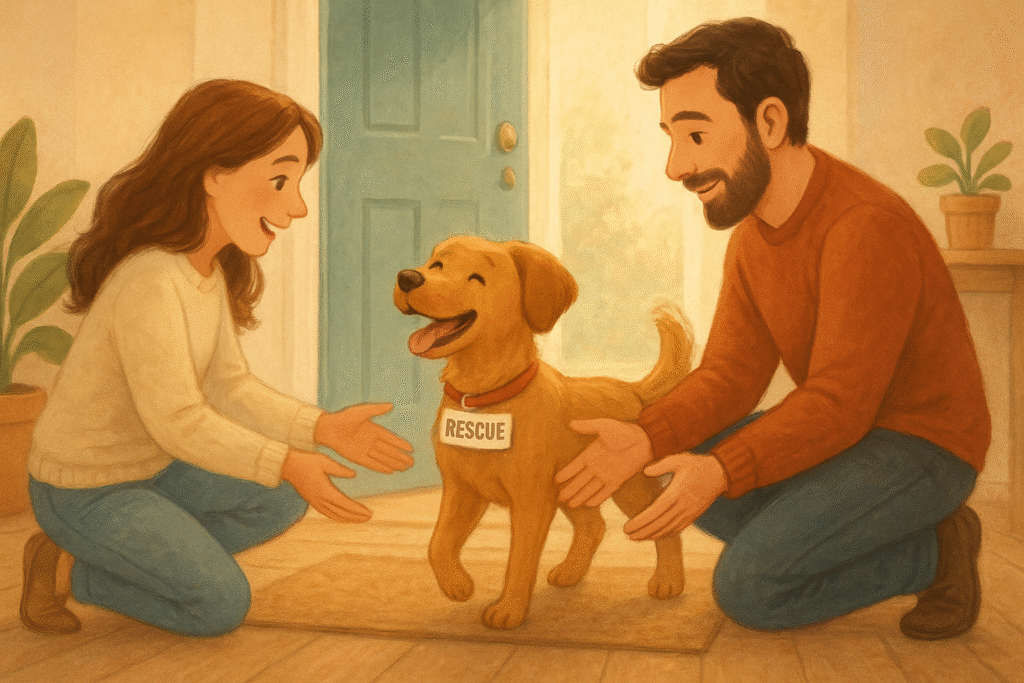
Before going inside, take your dog to the potty area you want them to use. This could be your yard, a quiet patch near your building, or a familiar walking route you plan to use daily.
Keep this first potty break short and calm:
- Use a leash, even in a fenced yard
- Avoid busy sidewalks if possible
- Let your dog sniff
- Praise softly when they potty
- Do not scold if nothing happens
- Head inside before the dog gets overstimulated
Some dogs potty immediately. Others are too stressed to go. That does not mean anything is wrong. Try again after 20 to 30 minutes, after drinking, after eating, and before bedtime.
If your dog has an accident indoors, stay calm. Clean it with an enzymatic cleaner and adjust the schedule. Stress, new smells, new doors, and travel can all disrupt house training on day one.
Letting Your Dog Explore Safely
When you enter the home, do not give your rescue dog access to every room at once. A full house tour may seem generous, but it can be too much information.
Instead, start with one safe area. This might be the living room, kitchen, bedroom, or a gated section of the home. Let your dog sniff at their own pace while you stay nearby but not pushy.
A good first-day setup includes:
- Water
- A bed or blanket
- A clear potty route
- A baby gate or closed doors
- A quiet place away from heavy foot traffic
- No loose cords, trash, shoes, medications, or small objects within reach
If your dog wants to investigate, let them. If they want to lie down, let them. If they hide under a table or stay near the door, give them time.
This is where many first-time adopters accidentally rush things. We naturally want reassurance that the dog likes us. We call their name, offer toys, invite cuddles, and watch every move. But a rescue dog’s first calm choice may be distance. That distance is not rejection. It is information gathering.
Sit nearby. Breathe normally. Let your dog learn the sound of your home without being the center of a celebration.
Feeding and Water
Offer fresh water soon after arriving home. Some dogs drink right away. Others wait until the room feels quieter. Keep water available unless your veterinarian or adoption team has given different instructions.
For the first meal, use the food your dog was already eating if you know it. If you plan to switch food, transition gradually with guidance from your vet. Sudden food changes, rich treats, or too many new chews can make the first day harder on the dog’s stomach.
For feeding:
- Keep the meal small and simple
- Feed in a quiet area
- Give space while the dog eats
- Avoid reaching into the bowl
- Pick up uneaten food after a reasonable time
- Write down appetite changes
It is not unusual for a newly adopted dog to skip a meal from stress. However, if your dog refuses food for an extended period, seems weak, vomits repeatedly, has diarrhea, coughs, limps, or appears very unwell, contact a veterinarian.
A quick note: this guide is educational and not a substitute for veterinary or behavior care. For medical symptoms, bite concerns, severe fear, or escalating aggression, contact a veterinarian or certified trainer promptly.
Nighttime Setup
Night one can be emotional for everyone. Your dog may sleep deeply from exhaustion, or they may pace, whine, bark, pant, or wake often. Try to plan the night before you are tired.
Choose a sleeping spot that is:
- Quiet
- Comfortable
- Easy to clean
- Close enough that your dog does not feel abandoned
- Secure enough that they cannot roam the whole house unsupervised
Some dogs do well in a crate. Others do better in a gated room or on a bed near your bed. If the shelter or foster used a crate successfully, it may be worth continuing. If the dog panics in confinement, do not force a long overnight crate battle on day one.
Before bed:
- Offer a final potty break
- Keep lights low
- Avoid wild play
- Give a safe chew if appropriate
- Use white noise if outside sounds trigger barking
- Keep your tone gentle and matter-of-fact
If your dog cries, pause before responding. They may settle. If they continue, calmly take them out for a boring potty break, then return to the sleep area. Keep it quiet so nighttime does not become playtime.
For more detail, read Save A Doggo’s guide on How to Calm a Rescue Dog at Night.
What Not to Do on Day One
Day one is not the day to test everything. Your dog is processing a new person, new smells, new rules, and a new environment.
Avoid these common mistakes:
- Do not invite friends and family over right away
- Do not take your dog to a dog park
- Do not bathe them unless truly necessary
- Do not force cuddling, hugging, or face-to-face greetings
- Do not introduce all household pets at once
- Do not leave them loose and unsupervised
- Do not overwhelm them with toys, treats, or commands
- Do not punish accidents or nervous behavior
- Do not expect their “real personality” to appear immediately
A calm first day gives you better information than a busy one. You will learn how your dog rests, sniffs, eats, startles, follows, avoids, and recovers. Those details are more useful than trying to make the day memorable.
FAQ
Should I take my rescue dog for a long walk on the first day?
Usually, no. Keep walks short and quiet. Your dog may already be mentally overloaded from travel and transition. A few calm potty breaks are better than a long adventure on day one.
What if my rescue dog will not eat?
Stress can reduce appetite during the first day. Offer a simple meal in a quiet place and avoid hovering. If your dog refuses food for more than a day, refuses water, vomits, has diarrhea, or seems ill, call your veterinarian.
Can my rescue dog meet my other dog right away?
Go slowly. If the shelter or rescue recommends an introduction plan, follow it. Many dogs do best with neutral, controlled introductions and separated spaces at first. Do not leave new dogs together unsupervised.
Should I let my rescue dog sleep in my bed?
It depends on your long-term comfort and the dog’s behavior. If you want bed-sharing to be allowed, it may be fine for some dogs. If you are unsure, start with a nearby bed, crate, or gated area so you can build a routine first.
Is it normal for a rescue dog to hide on the first day?
Yes, hiding can be a normal stress response. Give your dog space, keep the home quiet, and avoid pulling them out. Let them come forward when ready, and reward small brave choices with calm praise or treats.
When will my rescue dog start acting normal?
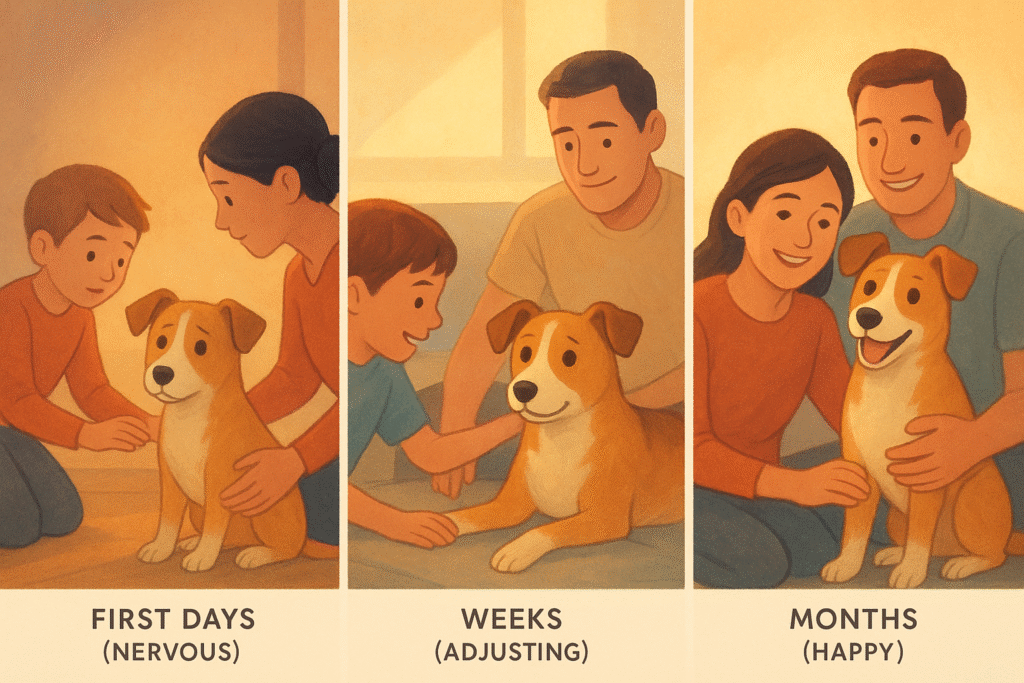
Every dog is different. Some relax in days, while others need weeks or months. The first 24 hours are only the beginning. Save A Doggo’s 3-3-3 Rule for Rescue Dogs can help you understand the adjustment timeline.
Final Thought
The first day with a rescue dog is not about proving you are the perfect adopter. It is about creating a soft landing.
Go slowly. Keep the world small. Let your dog rest. Offer food, water, potty breaks, and quiet companionship. Trust is built through ordinary moments repeated kindly.
Read the 3-3-3 rule guide next so you know what to expect after the first day.
Sources and further reading
The Save A Doggo Editorial Team creates practical, welfare-first resources for rescue-dog adopters, foster families, and shelter supporters. We prioritize primary and authoritative sources, distinguish observation from diagnosis, correct material errors transparently, and explain when veterinary or qualified behavior support is needed. We do not claim veterinary credentials or professional review unless a named, verifiable reviewer has approved the final article.