If your rescue dog is not peeing or pooping after adoption, begin by confirming when they last eliminated and watching what happens during each attempt. Fear and reduced intake may contribute to a delay, but do not assume stress is the cause—especially when a dog is trying to urinate without producing a normal stream.
Quick Answer: Repeated straining with little or no urine requires immediate veterinary attention because a urinary blockage can be life-threatening. A comfortable dog who is urinating normally but has not passed stool may need quiet opportunities and close monitoring. Record food, water, medication, urine, stool, attempts, and other symptoms, then call a veterinarian for guidance based on the complete timeline.
Why Stress Can Change Elimination
A newly adopted dog may feel too exposed to urinate or defecate in an unfamiliar place. New surfaces, traffic, people, animals, leash pressure, and the presence of an unfamiliar guardian can make settling difficult. Some dogs also eat or drink less during the transition, which can reduce the amount of urine or stool produced.
Cornell’s guidance on anxious behavior emphasizes consistency and predictability. A stable routine can help, but stress should remain a possibility—not a diagnosis. Pain, dehydration, medication effects, urinary disease, constipation, or an obstruction can look similar from home.
Rescue Dog Not Peeing or Pooping After Adoption: How Long to Observe
There is no single waiting period that is safe for every dog. Urination and bowel movements should be assessed separately. An inability to pass urine can become an emergency, while stool timing depends partly on recent meals, the dog’s usual pattern, medications, health history, and associated symptoms.
Before deciding to wait, obtain this baseline from the shelter, foster caregiver, or previous records:
- Last confirmed urination: __________
- Last confirmed bowel movement: __________
- Food eaten during the previous day: __________
- Observed water intake: __________
- Current medications and last doses: __________
- Existing veterinary instructions: __________
| What you observe | What to do |
|---|---|
| Repeated attempts to urinate with no urine, only drops, pain, or vocalizing | Contact an emergency veterinarian immediately. Do not continue observing at home. |
| No observed urine and the last confirmed urination is unknown | Contact the shelter and a veterinarian promptly for triage instead of choosing an arbitrary waiting period. |
| No stool, but the dog is comfortable, urinating normally, eating at least some food, and not straining or vomiting | Continue a quiet routine and log observations. Ask your veterinarian how long to monitor based on the dog’s history and intake. |
| No stool plus repeated straining, vomiting, abdominal discomfort, weakness, or suspected object ingestion | Seek same-day or emergency veterinary assessment, depending on severity. |
Create a Quiet Toilet Routine
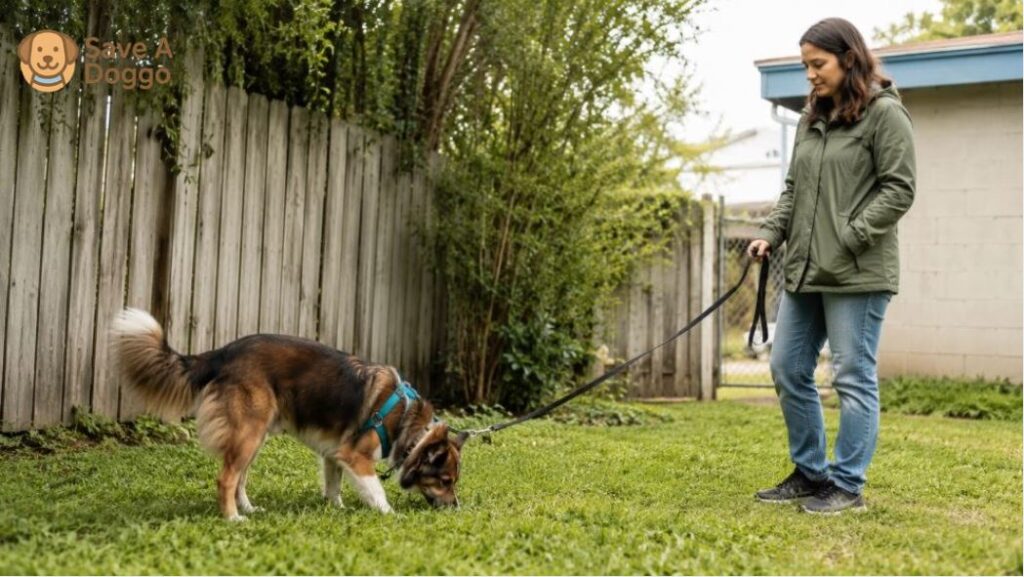
Take the dog to one quiet, low-traffic area on secure walking equipment. Allow time to sniff without staring, pulling, repeatedly cueing, or surrounding the dog with people. Several calm, predictable outings are usually more helpful than one exhausting walk.
- Use the same exit and toilet area when practical.
- Keep the leash loose while maintaining escape safety.
- Stand quietly and give the dog physical space.
- Calmly reward elimination after the dog finishes.
- Return indoors without turning the outing into a stressful event.
Never punish accidents or force the dog to remain outside when they are overwhelmed. If the dog is frightened by the environment, use the quieter setup described in our guide to planning a calm first day at home.
Hydration, Food, and Medication Context
Keep fresh water available unless a veterinarian has given different instructions. Do not restrict water to prevent accidents. Note whether the dog approaches the bowl, drinks, and keeps water down; guessing from the water level is less useful when multiple animals share a bowl.
Reduced food intake can mean less stool, but appetite loss combined with vomiting, pain, weakness, or an inability to eliminate is more concerning. If eating is also a problem, review the gentle steps in our guide to why a new rescue dog may not eat while contacting a veterinarian when warning signs are present.
Some medications and recent procedures can affect thirst, urination, intestinal movement, or stool consistency. Record every medication, dose time, and veterinary instruction. Do not stop a prescription, change a dose, or give laxatives, enemas, supplements, or human medication without veterinary direction.
What to Track
A short, objective log helps a veterinarian distinguish “not seen eliminating” from repeated unsuccessful attempts.
| Date and time | Food and water | Urination | Stool | Other observations |
|---|---|---|---|---|
| __________ | Amount offered and consumed | Attempt, stream or drops, approximate amount, color | Attempt, amount, consistency, blood or unusual material | Vomiting, energy, pain, medications, possible object ingestion |
| __________ | ________________ | ________________ | ________________ | ________________ |
| __________ | ________________ | ________________ | ________________ | ________________ |
When calling, use this script:
“My dog came home at ______. The last confirmed urination was ______, and the last bowel movement was ______. Since arriving, the dog has eaten ______ and drunk ______. I observed ______ toilet attempts and ______ urine or stool. Current medications are ______. Other symptoms are ______. Should the dog be examined now?”
Urinary Emergency Red Flags
The American College of Veterinary Surgeons advises immediate veterinary care when a dog cannot urinate. Signs of a complete or partial obstruction can include:
- Repeated squatting or leg-lifting without producing urine
- Only drops or a weak, interrupted stream
- Straining, crying, restlessness, or apparent pain
- Blood in the urine
- A painful or enlarged-looking abdomen
- Loss of appetite, lethargy, vomiting, weakness, or collapse
Dribbling does not prove that the bladder is empty. Do not press or squeeze the abdomen, and do not wait for the dog to become visibly ill if repeated attempts produce no normal urine stream.
Gastrointestinal Red Flags
Environmental stress and reluctance to defecate can contribute to hard, dry stool, according to the MSD Veterinary Manual. However, contact a veterinarian promptly when absent stool is accompanied by:
- Repeated straining or obvious pain
- Vomiting or an inability to keep water down
- A swollen, tense, or painful abdomen
- Loss of appetite, marked lethargy, or weakness
- Fresh blood, black or tarry stool, or blood in vomit
- Repeated unsuccessful retching
- Known or suspected ingestion of a toy, bone, clothing, trash, or another object
Cornell identifies gastrointestinal foreign-body obstruction as an emergency that may cause vomiting, appetite loss, abdominal pain, dehydration, diarrhea, and lethargy. A dog can still pass a small amount of stool or diarrhea with a partial obstruction, so some output does not rule it out.
When to Call a Veterinarian
Go to an emergency clinic now when the dog cannot produce urine, repeatedly retches without vomiting, has a swollen painful abdomen, collapses, has difficulty breathing, appears severely weak, or may have swallowed a toxin or obstructing object. The ASPCA recommends preparing an emergency-care plan before it is needed.
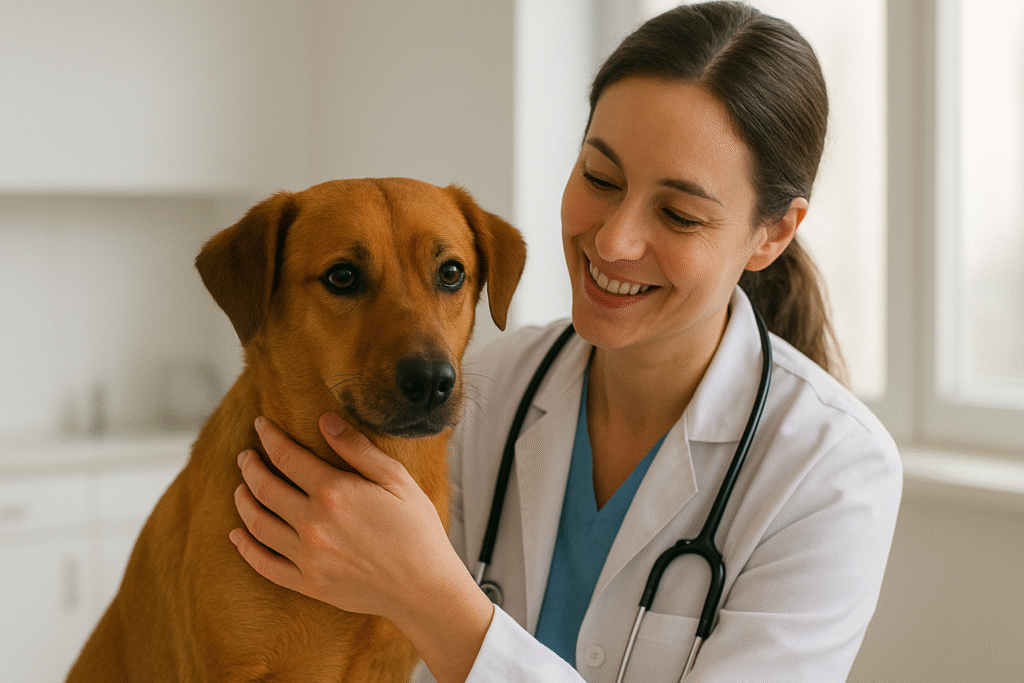
Call your regular veterinarian the same day when the elimination history is unknown, the dog repeatedly strains, intake drops, blood appears, prescribed medication may be involved, or the delay continues beyond the veterinarian’s instructions. Puppies, seniors, recently hospitalized dogs, and dogs with known urinary or gastrointestinal conditions may need a more cautious plan.
If the dog remains comfortable, urinates normally, has no vomiting or abdominal pain, and has recently eaten less than usual, close observation may be reasonable while you request individualized guidance. Prepare for the conversation using our first post-adoption veterinary visit guide.
Frequently Asked Questions
Can stress make a rescue dog hold both urine and stool?
Fear and an unfamiliar environment may delay elimination, but stress should not be assumed when a dog cannot produce urine, repeatedly strains, appears painful, or has other symptoms.
Should I take the dog on a long walk to make them go?
No. A long or busy walk can overwhelm a newly adopted dog. Use several quiet, secure outings and seek veterinary guidance rather than trying to exercise away a possible medical problem.
Can I give pumpkin or a laxative?
Ask a veterinarian first. The appropriate response depends on hydration, diet, medications, health history, and whether an obstruction is possible. Do not give human laxatives or enemas without veterinary direction.
What if the dog produces only tiny drops of urine?
Tiny drops or dribbling can occur with a partial urinary obstruction or another painful urinary problem. Contact a veterinarian immediately, particularly when the dog repeatedly strains.
Should I bring a urine or stool sample to the appointment?
Ask the clinic when you call. If staff request a sample, follow their collection and storage instructions. Never delay emergency care while attempting to collect one.
Sources & Further Reading
- ASPCA: Emergency Care for Your Pet
- Cornell University: Anxious Behavior in Dogs
- American College of Veterinary Surgeons: Urinary Obstruction in Dogs
- MSD Veterinary Manual: Stomach and Intestinal Disorders in Dogs
- Cornell University: Gastrointestinal Foreign Body Obstruction
Safety note: This article provides general education and cannot diagnose the cause of delayed elimination. Repeated attempts to urinate with little or no output require immediate veterinary attention. Do not press the dog’s abdomen or change medication, food, or treatment instructions without professional guidance.
Start a simple food, water, urine, and stool log for your veterinarian.

The Save A Doggo Editorial Team creates practical, welfare-first resources for rescue-dog adopters, foster families, and shelter supporters. We prioritize primary and authoritative sources, distinguish observation from diagnosis, correct material errors transparently, and explain when veterinary or qualified behavior support is needed. We do not claim veterinary credentials or professional review unless a named, verifiable reviewer has approved the final article.