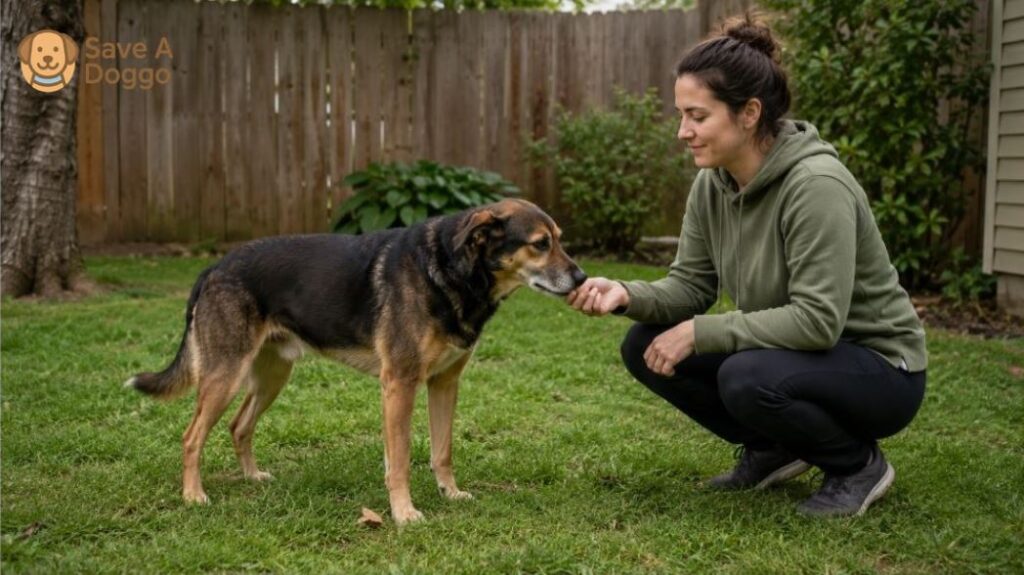
House training an adult rescue dog works best when you begin without assumptions about the dog’s past. Even a dog who was reliable in another home may need help understanding a new door, schedule, surface, and toilet area. Accidents are information—not disobedience or a reason to punish.
Quick Answer: Reset house-training with frequent, predictable toilet opportunities, close supervision, limited but comfortable indoor freedom, and an immediate reward after outdoor elimination. Record each meal, outing, and accident for seven days, then adjust the schedule around the pattern you see. Never punish accidents, and arrange a veterinary examination when elimination changes suddenly or includes pain, straining, blood, unusual thirst, or leakage.
Why Adult Rescue Dogs May Have Accidents
An adult rescue dog may never have learned where people expect them to eliminate. Other dogs previously used a yard, dog door, pee pad, kennel run, or completely different schedule. A move can also interrupt habits that were reliable elsewhere.
Common nonmedical contributors include:
- Unfamiliar doors, surfaces, noises, weather, or outdoor traffic
- Too few toilet opportunities or inconsistent timing
- Fear that prevents the dog from relaxing outside
- Too much freedom before a routine is established
- Missed signals, such as sniffing, circling, wandering away, or approaching an exit
- Stress when left alone or during household disruptions
The Best Friends dog foster manual recommends regularly scheduled meals, walks, and toilet breaks while a dog adjusts. Treat the first week as a fresh start, regardless of what the dog’s previous records say.
Rule Out Medical Causes
House-soiling is not always a training problem. The MSD Veterinary Manual notes that pain, impaired mobility, cognitive changes, increased urine production, frequent elimination, painful elimination, and loss of control can contribute to indoor accidents.
Contact a veterinarian when you notice:
- A sudden change in a previously reliable dog
- Markedly increased thirst or urine volume
- Frequent attempts that produce only small amounts of urine
- Straining, crying, blood, or apparent pain
- Diarrhea, constipation, vomiting, or appetite changes
- Urine leakage while resting or sleeping
- Difficulty reaching the door or assuming an elimination posture
- Disorientation, especially in a senior dog
- A change after starting a medication or undergoing a procedure
Repeated attempts to urinate with little or no output require immediate veterinary attention. The American College of Veterinary Surgeons identifies complete urinary obstruction as an emergency. Do not wait for a house-training plan to solve a possible medical problem.
House Training an Adult Rescue Dog With a Predictable Schedule
Begin by writing down the dog’s current feeding times, known toilet schedule, accident locations, medications, and medical history. Then offer a quiet toilet trip around events that commonly change elimination needs:
- Immediately after waking
- After meals or substantial drinking
- After naps, play, training, or excitement
- Before and after a period of confinement
- When the dog sniffs, circles, wanders away, or approaches an exit
- Before bedtime
Use the same secure exit and a quiet toilet area when practical. If an accident occurs shortly before a planned trip, schedule the next trip earlier. If the dog repeatedly goes outside without eliminating, reduce distractions and allow more calm sniffing time rather than making the outing physically exhausting.
Seven-Day Reset Schedule
| Day | Management goal | What to record |
|---|---|---|
| 1 | Offer toilet trips around every routine transition and limit indoor access to supervised areas. | Meals, water, trips, urine, stool, accidents, and possible signals |
| 2 | Repeat the same schedule without testing longer intervals. | Time between eating, drinking, activity, and elimination |
| 3 | Identify when and where accidents are most likely. | Location, surface, household activity, and whether the dog was supervised |
| 4 | Move the next toilet trip ahead of each predictable accident window. | Successful prevention and outdoor rewards |
| 5 | Continue the successful schedule and allow one additional indoor area only when supervised. | Ability to settle, signal, and remain accident-free in that area |
| 6 | Practice the schedule with all regular caregivers. | Differences between handlers, exits, or toilet locations |
| 7 | Review the log; maintain what works and seek help for unresolved patterns. | Progress, medical concerns, and the next schedule adjustment |
Seven days is an observation and reset period, not a deadline for complete reliability. Continue the effective routine and expand freedom gradually.
Supervision and Confinement Without Isolation
Supervision means keeping the dog in the same general area and noticing changes in movement—not following closely enough to create pressure. Baby gates, exercise pens, or a comfortable dog-proofed room can prevent unsupervised wandering while allowing the dog to remain near normal household activity.
A crate may be used only if the dog has been introduced to it positively and can rest there without distress. Never force a fearful dog inside or use the crate after an accident. If the dog pants intensely, drools, vocalizes continuously, freezes, or attempts to escape, use a safer gated area and request professional guidance.
Give the dog regular toilet breaks, movement, social contact, water, and rest. Management should prevent mistakes while learning occurs; it should not become prolonged isolation. Our guides can help you create a calm first-day routine and help your dog adjust gradually.
Reward Timing Matters
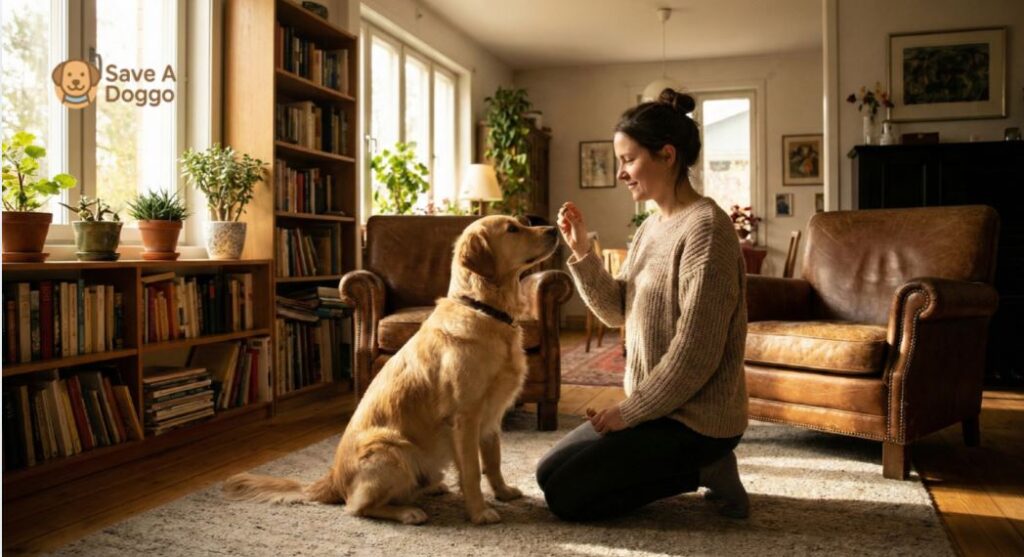
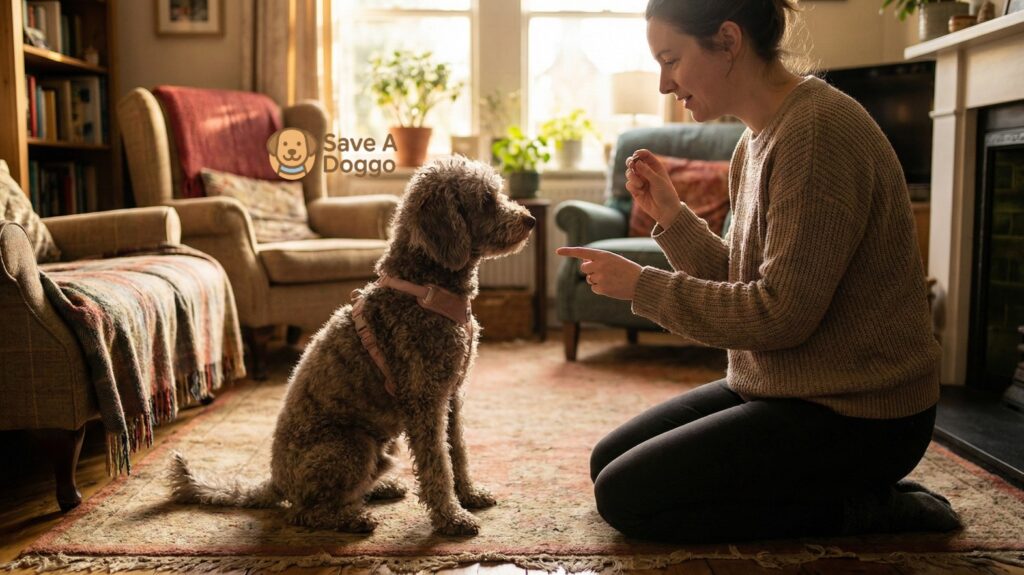
Go outside with the dog so you know whether elimination happened. Wait quietly, then reward immediately after the dog finishes and while you are still at the toilet location. Delayed praise after returning indoors will not identify the outdoor behavior as clearly.
Choose something the dog values: a small food reward, calm praise, a brief sniffing opportunity, or continued outdoor time. Avoid ending every outing the instant the dog eliminates, because some dogs may learn that going to the bathroom makes outdoor access end.
Everyone in the household should use the same sequence:
“Quiet trip outside → dog eliminates → immediate reward → a little more calm outdoor time.”
For more reward-based guidance, see how to use rewards effectively. The American Veterinary Society of Animal Behavior recommends reward-based methods and advises against aversive training.
What to Do After an Accident
If you notice the dog beginning to eliminate, calmly invite or guide them outside if this can be done without startling them. Reward the dog if they finish outdoors. Do not shout, clap, grab, or use an angry tone.
If you discover an accident later, say nothing to the dog. Clean the area thoroughly with a pet-safe enzymatic cleaner and add the event to the log. Record:
- Time and location
- Urine, stool, or both
- What happened immediately beforehand
- Time of the previous toilet trip
- Whether the dog had been supervised
Do not rub the dog’s nose in the accident, carry the dog back to it, or confine them as punishment. The RSPCA advises rewarding desired behavior rather than shouting at or punishing dogs.
Night and Workday Adjustments
At night, provide a final quiet toilet trip immediately before bed. Keep the dog in a safe sleeping area where movement or restlessness can be noticed. If the dog wakes and appears to need to go, take them out calmly and return without turning the trip into an exciting event.
For workdays, arrange a trusted adult, dog walker, or sitter to provide a break before the dog’s usual accident window. Do not expect a newly adopted dog to manage an untested full workday. A camera can help identify whether accidents occur soon after departure and are accompanied by pacing, vocalizing, or other distress.
Do not restrict water to reduce accidents unless a veterinarian has given specific instructions.
Troubleshooting Chart
| Pattern | Possible next step |
|---|---|
| Accidents occur shortly after waking | Take the dog outside immediately upon waking, before other morning activities. |
| The same indoor location is repeatedly used | Clean it thoroughly, block access temporarily, and supervise when the area is reopened. |
| The dog eliminates outdoors but has another accident soon afterward | Record whether elimination appeared complete, shorten the interval, and consult a veterinarian if the pattern persists. |
| Accidents happen only when the dog is alone | Use a camera, reduce absence duration when possible, and discuss separation-related distress with a veterinarian or qualified behavior professional. |
| The dog urinates while sleeping or leaves wet resting spots | Arrange a veterinary examination; this may involve involuntary leakage rather than incomplete training. |
| The dog refuses to eliminate outdoors | Choose a quieter area, reduce social pressure, try an appropriate surface, and reward any success. |
| Frequent squatting produces drops, blood, or no urine | Seek urgent veterinary care rather than increasing training trips. |
| Progress stops despite a consistent plan | Review the log with a veterinarian and a reward-based trainer or behavior professional. |
When to Seek Help
Contact your veterinarian before treating persistent accidents as purely behavioral, particularly when the pattern begins suddenly or includes physical changes. Bring the seven-day log, medication list, shelter records, feeding schedule, and notes about urine or stool.
After medical concerns have been evaluated, seek a qualified reward-based trainer or behavior professional when fear of the outdoors, separation distress, marking, or inconsistent signaling continues. Avoid anyone who recommends punishment, intimidation, leash corrections, or deliberately waiting for the dog to fail.
Frequently Asked Questions
How long does it take to house-train an adult rescue dog?
There is no universal deadline. Progress depends on health, previous learning, fear, the environment, and schedule consistency. Track longer accident-free periods and clearer signaling rather than expecting completion on a specific day.
Should I use puppy pads?
Pads may be useful when outdoor access is temporarily impractical or a veterinarian recommends an indoor option. If the long-term goal is outdoor elimination, keep the pad location consistent and plan a gradual transition.
Should I limit water before bedtime?
Do not restrict water without veterinary guidance. Instead, record evening drinking and provide a predictable final toilet trip. Unusual thirst or urine volume warrants a veterinary conversation.
Is urine marking the same as incomplete house-training?
Not necessarily. Marking often involves small amounts in particular locations, but medical problems can produce similar patterns. Begin with a veterinary check and an objective log rather than assuming intent.
Can I crate my rescue dog for the entire workday?
A crate is not a substitute for toilet breaks, exercise, social contact, or gradual alone-time training. Use it only when the dog is comfortable there and arrange appropriate daytime care.
Sources & Further Reading
- AVSAB: Humane Dog Training Position Statement
- RSPCA: Understanding Dog Behavior
- Best Friends Animal Society: Dog Foster Care Manual
- MSD Veterinary Manual: Behavior Problems of Dogs
- American College of Veterinary Surgeons: Urinary Obstruction in Dogs
Safety note: This guide provides general education, not a diagnosis or individualized treatment plan. Seek immediate veterinary care if the dog repeatedly tries to urinate but produces little or no urine. Do not change medication, restrict water, or treat diarrhea, constipation, pain, or incontinence without veterinary guidance.
Use the seven-day schedule and track progress without punishment.

The Save A Doggo Editorial Team creates practical, welfare-first resources for rescue-dog adopters, foster families, and shelter supporters. We prioritize primary and authoritative sources, distinguish observation from diagnosis, correct material errors transparently, and explain when veterinary or qualified behavior support is needed. We do not claim veterinary credentials or professional review unless a named, verifiable reviewer has approved the final article.