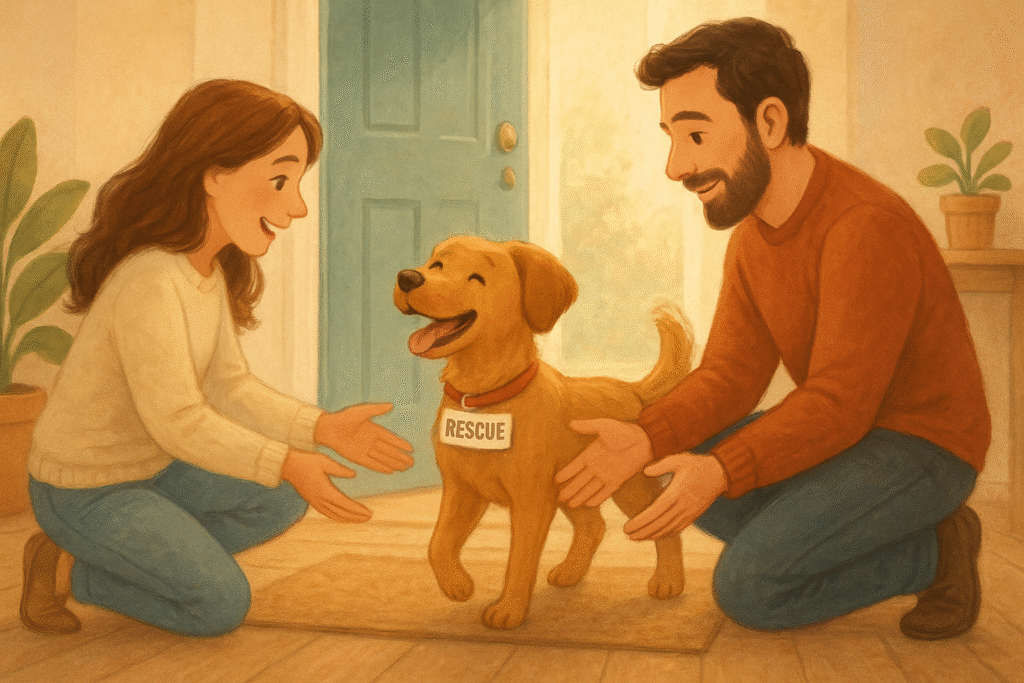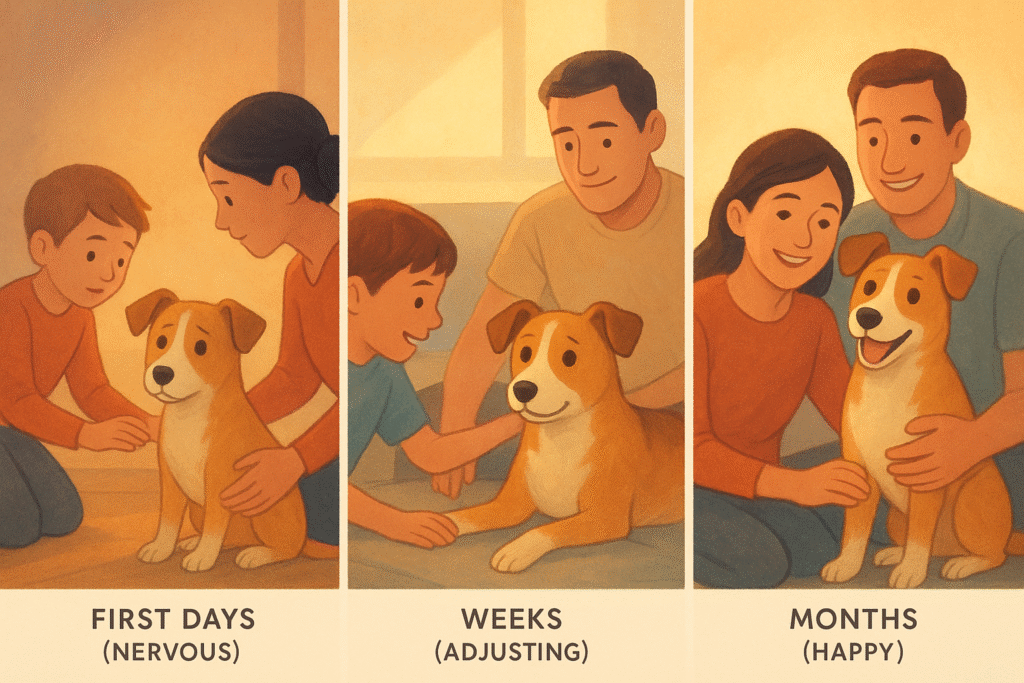
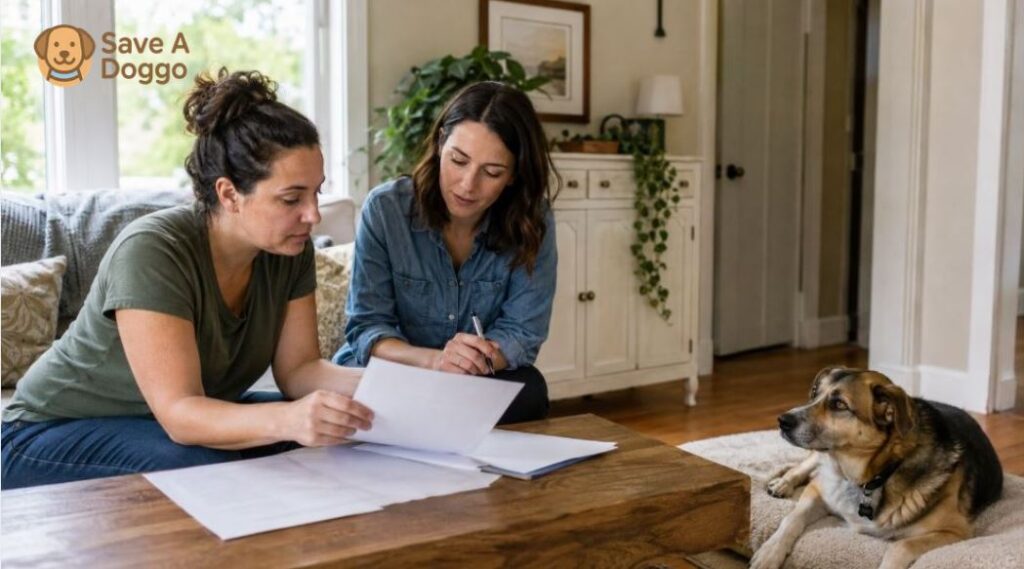
Foster-to-adopt can create valuable breathing room before a lifelong decision, but it should be handled as a carefully supported placement—not as a test of whether a frightened dog performs perfectly. Clear rules, a calm home, and honest records protect both the dog and the people considering adoption.
Quick Answer: Foster-to-adopt is a temporary, organization-approved placement that may lead to adoption. Before taking a dog home, get the timeline, legal ownership, veterinary authorization, expenses, adoption priority, and return process in writing. Keep the first days quiet, record ordinary routines and recovery from stress, and decide whether the match is safe and sustainable—not whether the dog behaves perfectly.
What Foster-to-Adopt Means
In a foster-to-adopt arrangement, a shelter or rescue places a dog in a prospective adopter’s home for an agreed period before the adoption is finalized. The organization may continue to own the dog and control medical care, travel, introductions, and other decisions during that period. The contract—not the program’s name—determines the actual arrangement.
Programs vary widely. Some reserve the dog for the foster household, while others may continue accepting adoption inquiries. Some supply food, equipment, and veterinary care; others assign certain expenses to the foster. For example, Best Friends states that foster-to-adopt is available only at some of its locations and directs prospective participants to confirm availability locally.
Foster-to-adopt is also different from taking a dog home under a completed adoption contract with a return policy. Ask which agreement you are signing and when legal ownership changes.
Who Foster-to-Adopt May Help
A formal evaluation period may be useful when:
- The dog’s behavior in a home is not yet well documented.
- Your household includes another animal and the organization approves gradual introductions.
- You need to observe how the dog manages your ordinary schedule and environment.
- The shelter or rescue believes a quieter home will provide better information than a kennel setting.
- You are willing and able to follow the organization’s foster rules even if you ultimately do not adopt.
It is not a shortcut around landlord approval, household agreement, long-term costs, or safety planning. It should not be used to deliberately expose a dog to crowded gatherings, prolonged isolation, dog parks, or other stressful situations just to see what happens.
Questions to Ask Before Bringing the Dog Home
Ask for the complete policy and agreement before pickup. Do not rely on a brief conversation or assumptions based on another organization’s program.
- Who legally owns the dog during the evaluation period?
- What are the exact start date, end date, and decision deadline?
- Is the dog reserved for us, or may other adopters apply?
- What steps and fees are required to finalize the adoption?
- Who supplies food, medication, a crate, a harness, and other equipment?
- Which veterinary clinic must we use, and who authorizes treatment?
- What is the after-hours medical emergency procedure?
- Which expenses are covered, reimbursed, or our responsibility?
- What medical, vaccination, medication, and behavior records will we receive?
- Are there known fears, escape risks, handling sensitivities, guarding behavior, or bite incidents?
- What are the rules for children, resident pets, visitors, travel, pet sitters, and public outings?
- Whom should we contact for training or behavior support?
- How quickly must we report illness, injury, escape, or a bite?
- Can we request more time if a health problem prevents a fair evaluation?
- What is the return or transfer process if the placement is unsafe or unsuitable?
Program Rules Worksheet
| Item to confirm | Organization’s written answer |
|---|---|
| Organization and coordinator | ____________________________ |
| Evaluation dates | ____________________________ |
| Legal owner during placement | ____________________________ |
| Adoption priority or hold | ____________________________ |
| Approved veterinary clinic | ____________________________ |
| After-hours contact | ____________________________ |
| Covered supplies and expenses | ____________________________ |
| Return or transfer procedure | ____________________________ |
Set Up a Low-Pressure Evaluation Period
Prepare a quiet rest area before the dog arrives. Use closed exterior doors, secure gates, properly fitted walking equipment, and an identification plan approved by the organization. Keep food, water, bedding, and familiar items in a predictable location.
For the first few days, favor a simple routine over outings and introductions. Offer regular toilet breaks, calm walks appropriate for the dog, rest, and low-pressure enrichment. Our guides can help you plan the first 24 hours at home and help your rescue dog adjust gradually.
Do not force physical contact, remove the dog from a hiding place, or insist on greetings. Keep children from approaching the dog while the dog is eating, chewing, sleeping, or retreating. Separate resident animals when nobody can supervise them. Best Friends’ foster guidance likewise recommends giving a new foster dog a dedicated space and limiting early introductions.
Maintain the dog’s existing food and medication instructions unless the organization’s veterinarian approves a change. If confinement causes panic, tell the coordinator rather than forcing the dog into a crate.
What to Observe and Record
Record what happens during ordinary life. Useful notes describe context, visible behavior, duration, recovery, and what helped. Avoid labels such as “dominant,” “stubborn,” or “bad.”
Sample objective note: “Doorbell rang at 6:10 p.m. Dog moved behind the chair and barked three times. I increased the distance and scattered treats. Dog resumed resting after four minutes.”
Daily Foster-to-Adopt Log
| Area | What to record |
|---|---|
| Food and water | Meals offered, approximate amount eaten, drinking changes |
| Sleep and rest | Rest locations, settling, nighttime waking |
| Elimination | Times, location, notable changes or accidents |
| Stress | Trigger, distance, visible response, recovery time |
| Handling | Comfort with leash attachment, touch, grooming, or avoidance |
| Household life | Responses to routine sounds, people, doors, and movement |
| Separation | Duration, camera observations, vocalizing, pacing, or settling |
| Animals | Distance, body language, ability to disengage, barriers used |
| Safety or health | Escape attempts, guarding, bites, injuries, illness, medication |
Do not provoke a feared or unsafe response to complete the log. If an important situation cannot be observed safely, write “not assessed” and discuss it with the coordinator. Building trust often produces better information than testing tolerance, so build trust without rushing the dog.
How to Use the Notes
| Observation | Next step |
|---|---|
| Mild uncertainty followed by recovery | Keep the routine predictable and continue observing without increasing pressure. |
| A repeated but manageable concern | Send objective notes or video to the coordinator and request reward-based guidance. |
| Escalating fear, guarding, inability to settle, or unsafe interactions | Stop rehearsing the situation, use distance or barriers, and contact the organization promptly. |
| Illness, injury, breathing difficulty, collapse, or immediate danger | Follow the written emergency protocol and seek appropriate professional help. |
Support and Veterinary Responsibilities
Confirm medical responsibilities before an illness or injury occurs. You need to know whether you must call the coordinator first, which clinics are approved, who transports the dog, and who pays if you visit an unapproved clinic.
The Best Friends dog foster manual, written for its Utah program, requires staff authorization for foster-dog treatment and use of approved veterinary partners. That rule should not be assumed elsewhere, but it demonstrates why every participant needs a program-specific protocol.
Give medications exactly as documented by the organization or veterinarian. Do not change a dose, stop treatment, add supplements, or use medication belonging to another animal. Report health changes through the prescribed channel and keep copies of instructions, appointments, and receipts.
For behavior support, ask who is qualified to help and who approves the plan. The American Veterinary Society of Animal Behavior recommends reward-based training. Avoid professionals who rely on intimidation, physical corrections, prong or choke collars, or electronic collars.
Decision Day: Look for a Sustainable Match
Do not base the decision on one wonderful afternoon or one difficult incident. Review the full log and ask:
- Can we consistently meet this dog’s exercise, rest, supervision, training, and health needs?
- Can everyone in the household follow the same safety and management plan?
- Are the dog’s known needs compatible with our housing, schedule, finances, and other animals?
- Are concerns improving, manageable with available support, or beyond our safe capacity?
- Do we want to make this commitment after considering the difficult parts as well as the rewarding ones?
A dog does not need to be relaxed in every situation or fully settled before adoption. The practical question is whether the household can safely and compassionately support the dog who is present now, including reasonable uncertainty about future behavior.
If illness, unusual disruption, or missing information prevented a fair evaluation, ask whether the organization permits an extension. Do not assume the deadline can be changed.
If the Match Is Not Right
Recognizing an unsafe or unsustainable match is not a moral failure. Contact the coordinator early and follow the written transfer process. Do not privately give away, sell, or rehome a dog who remains under the organization’s ownership.
Provide factual notes about routines, preferences, triggers, recovery, health, and interactions. Return medication, records, identification, and organization-owned supplies. Ask how to make the handoff quieter and safer for the dog.
A useful message is:
“We want to make a responsible decision for this dog. Our records show repeated difficulty with ______ despite using ______. We can safely manage the placement until ______. Please tell us the approved next steps and what information would help with the dog’s transition.”
Frequently Asked Questions
Is foster-to-adopt the same as a trial adoption?
The terms are sometimes used interchangeably, but they have no universal program definition. The written contract should identify legal ownership, responsibilities, deadlines, and how adoption becomes final.
Can someone else adopt the dog during our evaluation period?
Possibly. Some organizations reserve the dog, while others continue accepting applications. Ask whether you have an exclusive hold, priority, or no guarantee.
Can I take the dog to my own veterinarian?
Only if the organization authorizes it. Contact the coordinator before arranging non-emergency care and follow the written emergency protocol when immediate care is needed.
How long does it take to know whether the dog is a good match?
There is no universal number of days in which every dog reveals a settled personality. Use the organization’s agreed evaluation window, ordinary-life observations, and available professional support rather than treating a calendar date as a behavioral guarantee.
Sources & Further Reading
- Best Friends Animal Society: Adopt from a Shelter or Rescue Group
- Best Friends Animal Society: Foster a Pet
- Best Friends Animal Society: Dog Foster Care Manual
- American Veterinary Society of Animal Behavior: Position Statements
- Centers for Disease Control and Prevention: Dogs and Bite Safety
Safety note: This article provides general education, not veterinary, legal, or individualized behavior advice. For immediate danger, separate people and animals without grabbing or punishing the dog and contact the organization or emergency services. If a bite breaks the skin, the CDC advises washing the wound with soap and water and seeking medical guidance; follow local reporting requirements.
Ask for the program rules in writing before taking the dog home.

The Save A Doggo Editorial Team creates practical, welfare-first resources for rescue-dog adopters, foster families, and shelter supporters. We prioritize primary and authoritative sources, distinguish observation from diagnosis, correct material errors transparently, and explain when veterinary or qualified behavior support is needed. We do not claim veterinary credentials or professional review unless a named, verifiable reviewer has approved the final article.