Quick Answer
Use this foster dog first 72 hours plan to keep the environment secure, quiet, and predictable. Confirm who authorizes veterinary care, use only the rescue’s approved equipment and food, separate the dog from resident animals, and record ordinary behavior without deliberately testing limits. Your most valuable job is to help the dog feel safe while giving the organization accurate information for care and future matching.
The rescue’s written instructions and emergency contacts always take priority over a general online guide.
Before the Dog Arrives: Get the Rules in Writing
Ask the organization to confirm:
- legal ownership of the dog;
- foster dates and expected commitment;
- primary and after-hours contacts;
- approved veterinary clinic and emergency authorization;
- who pays for food, equipment, medication, training, and transport;
- current medication and feeding instructions;
- known bite, escape, handling, or animal-conflict risks;
- rules for visitors, social media, adoption meetings, travel, and dog parks;
- what to do if the placement becomes unsafe;
- how and when the dog can be returned.
Do not sign medical forms, change medication, arrange an adoption, or transfer the dog to another home without the organization’s approval.
Prepare One Safe Zone
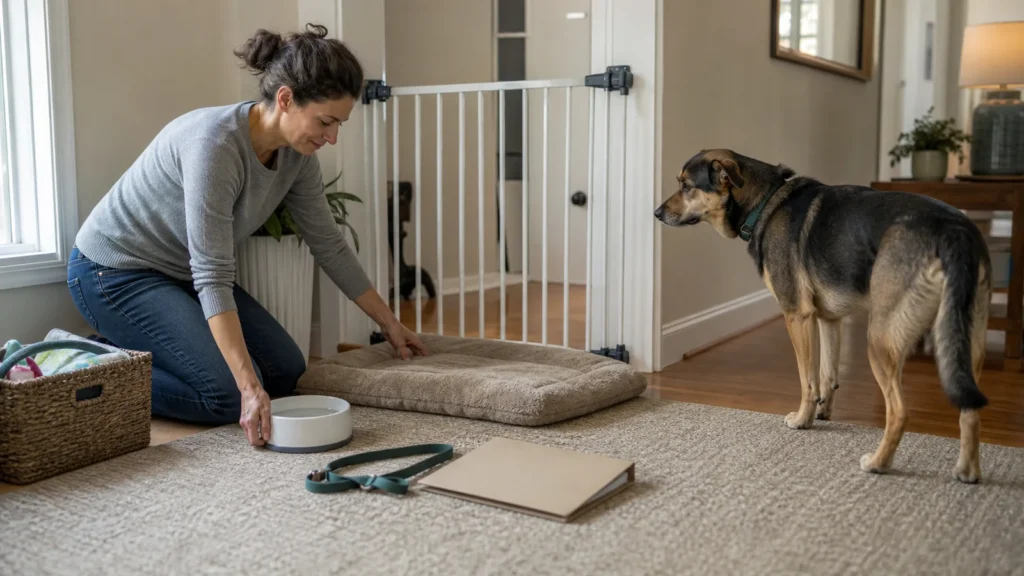
Choose a low-traffic room or gated area with:
- a secure door or barrier;
- non-slip flooring;
- fresh water;
- a washable bed or mat;
- rescue-approved food and treats;
- no exposed cords, medication, chemicals, trash, food, or small objects;
- no direct access to an exterior door;
- a crate only if the rescue recommends it and the dog can use it safely.
Inspect fences, gates, windows, screens, harnesses, collars, leashes, clips, and identification. A newly moved dog may attempt an escape even if the history does not mention it. Keep a second barrier between the dog and exterior doors whenever possible.
A Simple First-Day Routine
Arrival
Bring the dog directly into the prepared area. Keep voices and movement ordinary. Offer water and allow the dog to explore at their own pace.
Do not invite friends over, place the dog in a resident pet’s face, stage a bath, or take a celebratory trip to a store or park.
Bathroom trips
Use the rescue-approved leash and fitted equipment. Take the same quiet route, avoid greetings, and return home without adding an unnecessary walk if the dog is overwhelmed.
Food and medication
Follow the exact written schedule. Do not add rich foods, chews, supplements, or a sudden diet change. Record whether the dog ate and whether medication was given; never repeat a dose because you are unsure.
Rest
Protect uninterrupted sleep. A dog who sleeps for much of the first day may be recovering from transport and shelter activity. A dog who cannot settle may need even less stimulation.
Separate Resident Animals at First
Use closed doors, gates, crates, and turn-taking so animals do not share space, food, toys, or narrow passages. “Let them work it out” can create fear or injury.
Ask the rescue for an introduction plan. The timing depends on the animals, environment, and known history; a calendar alone cannot determine readiness.
Children should not enter the foster dog’s resting area, hug the dog, remove items, or supervise interactions. An adult should manage every contact.
What to Observe Without Testing
Useful observation happens during normal care:
- appetite and water intake;
- urine and stool;
- sleep and ability to settle;
- response to leash and equipment;
- comfort with ordinary household sounds;
- body language when a person enters or leaves;
- interest in toys or food without taking items away;
- behavior at a safe distance from resident animals;
- recovery after a mild, unavoidable surprise.
Do not grab the food bowl, touch a sleeping dog, stare, hug, corner, or create conflict to see what the dog will do.
The 72-Hour Foster Log
| Time | Food/water | Medication | Urine/stool | Activity | Body language | Trigger/context | Recovery | Photo/video saved? |
|---|---|---|---|---|---|---|---|---|
Describe what happened instead of using a label. “Barked three times when a man entered, moved behind the chair, took food after two minutes” is more useful than “doesn’t like men.”
When recording video, protect private household information and follow the rescue’s rules. Do not post medical, behavior, or adoption claims publicly without approval.
Contact the Rescue Promptly When
- the dog will not eat or drink according to the organization’s medical threshold;
- vomiting, diarrhea, coughing, pain, injury, lethargy, or another health change appears;
- medication is missed, vomited, spilled, or given incorrectly;
- the dog escapes, is lost, or equipment fails;
- there is a bite, snap, fight, or serious safety concern;
- the dog cannot be handled for essential care;
- you cannot maintain safe separation;
- your housing, work, health, or family situation threatens the placement.
For a life-threatening emergency, follow the rescue’s emergency protocol and contact the authorized veterinary service. Do not wait for a social-media reply.
Days Two and Three: Add Information, Not Pressure
If the dog is eating, eliminating, resting, and moving comfortably, continue the same routine. You may add a short sniff walk, one simple enrichment activity, or a brief reward-based skill the rescue recommends.
Do not confuse a calmer dog with permission to remove all management. Continue door security and animal separation until the rescue approves a change.
Send a concise update:
- one paragraph on eating, drinking, elimination, and sleep;
- one paragraph on handling, home sounds, and outdoor behavior;
- any health or safety concern;
- two or three clear photos;
- questions requiring staff guidance.
Related Save A Doggo Guides
- First 24 Hours With a Rescue Dog: A Calm Step-by-Step Guide
- Rescue Dog First Week Schedule: Meals, Walks, Rest, and Training
- Rescue Dog Not Drinking Water After Adoption: When to Worry
Frequently Asked Questions
Should I let a foster dog sleep in my bedroom?
Follow the rescue’s guidance and choose a setup you can manage safely. Some dogs settle near people; others need a quiet separate area. Keep the arrangement consistent for the first nights.
Can I take my foster dog to a dog park?
Not unless the organization explicitly approves it. Dog parks add unknown health, conflict, and escape risks and provide poor conditions for a careful introduction.
When can the foster dog meet my dog?
Ask the rescue. Begin with separation and scent/visual management. Known history, health status, space, and both dogs’ body language determine the plan.
What if the foster dog hides?
Provide distance, water, rest, and an unobstructed route. Do not pull the dog out. Contact the rescue if hiding prevents eating, drinking, elimination, medication, or safe care.
Sources and Further Reading
- Best Friends Animal Society, Adoption and Foster Information
- ASPCA, Find Local Shelter Resources
- RSPCA, Getting Ready for Your Rescue Dog
- CDC, Dogs and Healthy Pet Practices

The Save A Doggo Editorial Team creates practical, welfare-first resources for rescue-dog adopters, foster families, and shelter supporters. We prioritize primary and authoritative sources, distinguish observation from diagnosis, correct material errors transparently, and explain when veterinary or qualified behavior support is needed. We do not claim veterinary credentials or professional review unless a named, verifiable reviewer has approved the final article.