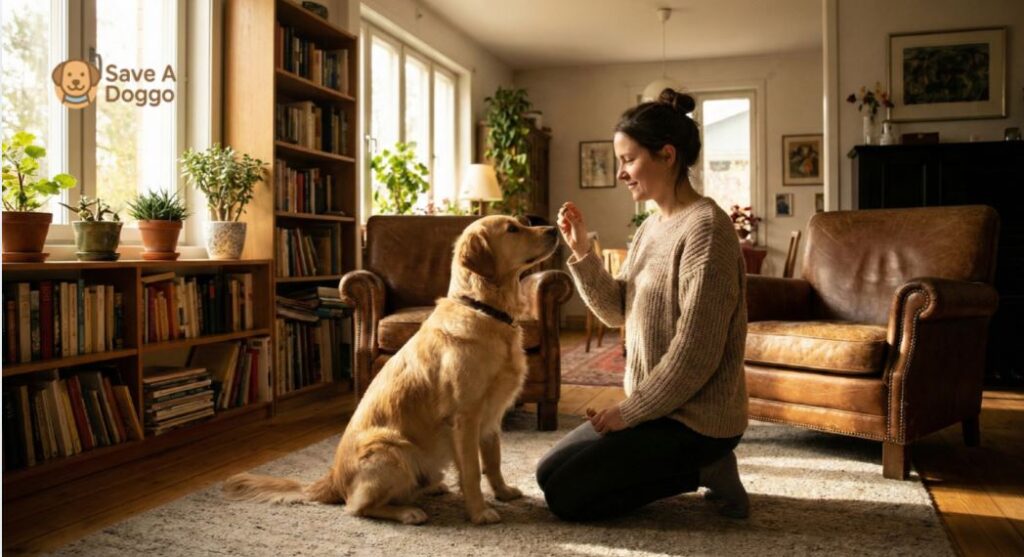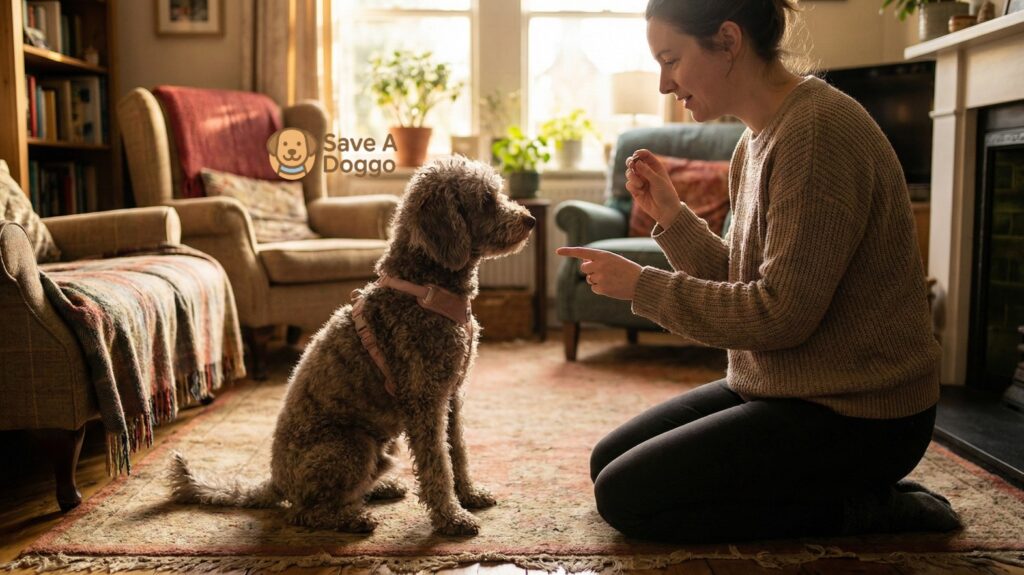
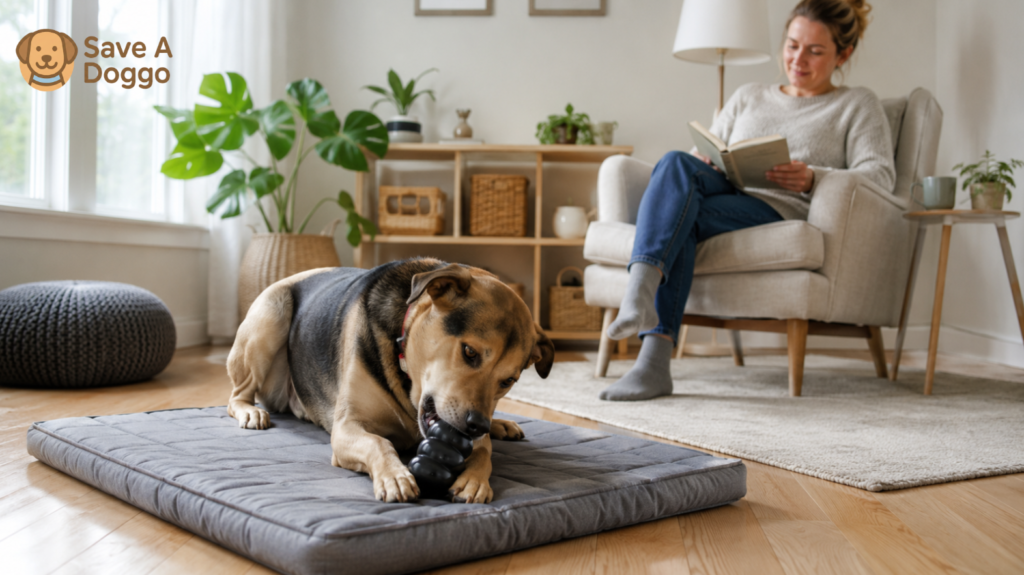
If your rescue dog is chewing everything after adoption, begin with management rather than punishment. Put shoes, laundry, trash, medication, cords, children’s toys, and other unsafe items out of reach. Limit the dog to a safely prepared area when you cannot supervise, and offer size-appropriate chew options selected with your veterinarian.
Chewing is normal dog behavior, but the pattern matters. Chewing can reflect exploration, teething, insufficient appropriate outlets, stress, frustration, hunger, pain, pica, or separation-related distress. If your dog may have swallowed part of an object, contact a veterinarian promptly. Vomiting, loss of appetite, abdominal pain, diarrhea, dehydration, or lethargy can occur with a gastrointestinal obstruction and require urgent assessment.
Quick Answer: How Do You Stop Destructive Chewing?
- Prevent access. Close doors, use gates, clear surfaces, secure trash, and cover electrical cords.
- Supervise or use a dog-safe area. Do not give unrestricted access to the home before the behavior is reliable.
- Offer appropriate alternatives. Choose chews and toys for the dog’s size, health, and chewing style.
- Redirect calmly. Trade rather than chase, grab, or pry an object from the dog’s mouth.
- Meet daily needs. Include toilet breaks, quiet sniffing, short training, enrichment, social contact, and sufficient sleep.
- Track when chewing happens. Chewing only during absences needs a different plan from chewing during play or teething.
- Rule out medical problems. Sudden, compulsive, painful, or non-food ingestion should be discussed with a veterinarian.
Your dog cannot practice chewing items they cannot reach. Management is not cheating; it is the foundation that allows safer habits to develop.
Why Is Your Rescue Dog Chewing Everything?
| Pattern | What may be contributing | Best first step |
|---|---|---|
| Chews many objects while exploring, even when you are home | Normal exploration, adolescent behavior, unclear household boundaries | Supervise, reduce access, and provide appropriate alternatives |
| Chewing increased after a busy or stressful day | Stress, frustration, overarousal, insufficient recovery | Reduce stimulation and provide calm rest and enrichment |
| Chews doors, windows, crate bars, or exit areas only when alone | Separation-related distress or confinement distress | Record the absence safely and seek qualified guidance |
| Chews shoes, laundry, or food packaging | Easy access, attractive scent, food seeking | Secure items and provide legal scent- or food-based enrichment |
| Puppy chews continuously | Teething and exploration | Use puppy-appropriate chew options and close supervision |
| Senior dog suddenly begins destructive chewing | Pain, dental disease, anxiety, sensory or cognitive change | Arrange a veterinary examination |
| Dog repeatedly eats fabric, rocks, plastic, or other non-food items | Pica, medical issue, compulsive behavior, hunger, stress | Prevent ingestion and contact a veterinarian |
| Dog growls or freezes when someone approaches the object | Resource guarding | Stop approaching; do not take the item by force |
One dog may fit more than one pattern. Describe the location, object, time, people present, and behavior before choosing a solution.
Chewing Is Normal—Swallowing Objects Is Not Safe
Dogs use their mouths to explore, play, self-soothe, and interact with objects. Puppies also chew during teething. The goal is not to eliminate all chewing; it is to direct chewing toward safer items and prevent ingestion.
Destructive chewing becomes a concern when:
- The dog damages electrical cords, batteries, medication containers, sharp objects, or toxic products.
- Pieces are torn off and swallowed.
- Teeth, gums, lips, or tongue are injured.
- Chewing occurs with panic during separation or confinement.
- The behavior is repetitive, difficult to interrupt, or focused on non-food materials.
- Chewing begins suddenly in an adult or senior dog.
- The dog guards objects or threatens anyone who approaches.
- The home cannot be managed safely.
The ASPCA’s destructive-chewing guide notes that normal chewing, boredom, mild anxiety, frustration, hunger, teething, and separation anxiety can produce different chewing patterns. The cause determines the plan.
Start With a Room-by-Room Safety Check
Do not rely on the dog knowing which objects are valuable or dangerous. Make the environment clear.
Living room
- Route cords behind furniture or use appropriate cord protection.
- Remove remotes, glasses, books, cushions, children’s toys, and small objects.
- Block access to houseplants until you have confirmed they are pet-safe.
- Check gaps under furniture for batteries, medication, food wrappers, and lost toys.
- Prevent access to reclining-chair mechanisms and other moving parts.
Kitchen and dining area
- Use a latched or inaccessible trash container.
- Keep food, packaging, knives, cleaning products, and medication off counters.
- Close pantry and cabinet doors.
- Prevent access to used napkins, skewers, corn cobs, bones, and food wrappers.
- Keep the dog away while cooking if dropped food or hot surfaces create risk.
Bedroom and bathroom
- Put shoes and clothing inside closed storage.
- Use a lidded laundry hamper.
- Secure tissues, sanitary products, razors, cosmetics, and medication.
- Close toilet lids when cleaners or medications may be present.
- Keep charging cables out of reach.
Yard, balcony, or outdoor area
- Remove string, rope fragments, stones, sharp sticks, tools, chemicals, and treated wood.
- Check fencing and gates before leaving the dog outside.
- Do not assume outdoor time is safe without supervision.
- Provide shade and fresh water appropriate to the weather.
Repeat the check at dog-eye level. An object that seems high enough may still be reachable from a chair, sofa, or counter edge.
Create a Dog-Safe Area
A safe area may be a gated room, exercise pen, or section of the home that contains:
- Fresh water
- A comfortable resting surface
- A non-slip floor when needed
- A small selection of approved toys or chews
- No cords, trash, fabric piles, toxic plants, or swallowable objects
- Enough space for the dog to change position and settle
The area should not be used as punishment. Introduce it while you are present and observe whether the dog can relax.
A crate is appropriate only when the dog has been trained to feel safe inside and can remain calm for the planned duration. A dog chewing crate bars, bending wire, drooling, screaming, or injuring their mouth and paws needs a different setup and professional assessment. Follow How to Crate Train a Rescue Dog Without Fear or Force instead of using longer confinement to suppress chewing.
How to Choose Safer Chews and Toys
No chew is completely risk-free for every dog. Age, tooth health, jaw strength, chewing style, allergies, digestive history, and resource guarding all affect what is appropriate.
Use these selection rules:
- Choose an item too large to swallow whole.
- Match durability to the individual dog’s chewing style.
- Inspect for cracks, sharp edges, loose threads, and missing pieces before and after use.
- Supervise the first several sessions with any new item.
- Remove and replace items that become small enough to swallow.
- Separate animals when chews could create competition.
- Count edible chews and food toys as part of the dog’s daily calorie intake.
- Ask the veterinarian before offering very hard, edible, raw, or unfamiliar chews.
Avoid cooked bones and objects that splinter. Household items such as old shoes, socks, plastic bottles, and cushions can confuse the boundary between allowed and forbidden objects and may create swallowing hazards.
The ASPCA position on dog chews and treats recommends matching products to the dog’s size and chewing style, actively observing the dog, and consulting a veterinarian if chew material is consumed.
What to Do When the Dog Grabs the Wrong Item
Do not chase, corner, or pry the dog’s mouth open. Chasing can turn the event into a game, while forced removal can trigger guarding or a bite.
Use this sequence when the object is not immediately life-threatening:
- Stay calm and stop moving toward the dog.
- Toss several high-value treats a short distance away from the object.
- Wait for the dog to move away to eat.
- Pick up the object only when you can do so without approaching the dog closely.
- Offer an approved chew in a different location.
- Change the environment so the object cannot be taken again.
Practice a trade later with low-value, safe objects when the dog is relaxed. Do not begin training during an active guarding incident.
If the dog freezes, lowers over the item, eats faster, gives a hard stare, growls, snaps, or has a bite history, stop attempting removal and follow the resource-guarding safety plan.
Redirect Without Punishment
Redirection works best when the approved option is already nearby.
- Interrupt before the dog is deeply engaged when you can do so without confrontation.
- Guide the dog away with a treat toss, cheerful movement cue, or another safe activity.
- Present the approved item after the dog has left the forbidden object.
- Reward sustained chewing of the approved item.
- Store the original object rather than repeatedly correcting the dog.
Do not show the dog damaged furniture and scold them later. Delayed punishment does not teach which earlier action caused your reaction and may create fear around your return or approach.
The American Veterinary Society of Animal Behavior recommends reward-based training and environmental management instead of aversive methods.
Build a Daily Routine That Reduces Chewing
Destructive chewing often improves when the day includes predictable outlets and sufficient recovery.
For a generally healthy adult dog, a flexible routine may include:
- A toilet break after waking
- A measured breakfast, with part used in simple enrichment
- A quiet sniff-focused walk
- A protected rest period
- A midday toilet break and one-to-three-minute training session
- Calm enrichment or an approved chew
- Another rest period
- Dinner and a short evening walk
- Low-key household time and a final toilet break
More exercise is not automatically better. A dog who returns from a crowded or intense outing unable to settle may need a quieter route, more distance, and more sleep—not another long walk.
Use the rescue dog first-week schedule to build predictable meals, walks, rest, and training around the dog’s comfort and health.
Enrichment That Does Not Increase Arousal
Try one activity at a time and monitor whether the dog becomes relaxed or frantic.
- Scatter part of a meal in a clean, safe area.
- Use a simple food toy the dog can operate without frustration.
- Hide a few pieces of kibble in open boxes under supervision.
- Practice name response, hand target, or moving to a mat for one to three minutes.
- Let the dog sniff on a quiet route.
- Offer an approved chew in a protected area.
- Encourage rest after activity.
Avoid making enrichment progressively harder when the dog gives up, bites the toy frantically, guards it, or becomes agitated. The goal is an appropriate outlet, not a puzzle the dog must defeat.
Chewing When Alone: Boredom or Separation Distress?
Chewing during an absence should not automatically be labeled boredom.
| Signs more consistent with an unmet activity need | Signs that may indicate separation-related distress |
|---|---|
| Dog also chews inappropriate items while people are home | Destruction happens only or most intensely during absences |
| Dog can eat enrichment and later settle | Dog refuses food when alone despite eating it when people are home |
| Damage is spread among accessible objects | Damage concentrates around doors, windows, crates, or exit routes |
| No persistent vocalizing, pacing, drooling, or escape attempts | Barking, howling, pacing, drooling, toileting, or escape attempts occur |
| Behavior improves with prevention and appropriate outlets | Behavior begins soon after departure and may cause self-injury |
Record a short, ordinary absence with a camera only when the dog can be left safely. Video may reveal behavior that is not visible when you return.
If you see panic, do not extend the absence to test the dog and do not simply crate for longer. Arrange safe human support for unavoidable absences and use a veterinarian or qualified separation-behavior professional. SaveADoggo’s separation anxiety guide explains how to start gradually.
Puppies, Adult Dogs, and Senior Dogs Need Different Plans
Puppies and adolescents
Young dogs need close supervision, frequent appropriate chew opportunities, short activity, and substantial sleep. Teething and exploration may increase chewing, but puppy status does not make swallowing hazards safe.
Adult rescue dogs
Adult dogs may arrive without experience living around shoes, furniture, cords, or children’s toys. Teach the household setup through prevention and reinforcement rather than assuming the dog understands human property.
Senior dogs
New destructive chewing in a senior dog warrants veterinary attention. Dental pain, other physical discomfort, sensory loss, anxiety, medication effects, or cognitive change may alter behavior. Do not respond by merely increasing exercise or confinement.
When Chewing May Be Pica or a Compulsive Behavior
Pica means repeatedly eating non-food material. Fabric, rocks, plastic, wood, dirt, or other objects may be involved. The behavior can have medical or behavioral contributors and creates a risk of dental injury, toxicity, or obstruction.
Contact a veterinarian when the dog:
- Repeatedly swallows non-food items
- Seeks one material obsessively
- Is difficult to interrupt even with valued food
- Shows weight, appetite, stool, vomiting, or energy changes
- Damages teeth or gums
- Has a sudden change in chewing or eating behavior
Prevent access while the cause is evaluated. Do not use a muzzle as an unsupervised anti-chewing device. If a basket muzzle is recommended for a specific safety plan, it should be introduced positively, fitted correctly, and used under qualified guidance.
What to Do If Your Dog Swallowed Something
Call a veterinarian or emergency veterinary service promptly if you know or suspect the dog swallowed a sock, fabric, string, toy piece, bone fragment, battery, medication, sharp object, toxic substance, or another non-food item.
Do not wait for symptoms when the object is known to be dangerous, and do not induce vomiting unless a veterinarian or animal poison professional specifically instructs you to do so.
According to Cornell University’s College of Veterinary Medicine, possible signs of gastrointestinal obstruction include:
- Vomiting
- Loss of appetite
- Abdominal pain
- Diarrhea
- Dehydration
- Lethargy
A gastrointestinal obstruction is an emergency and may require surgery. Tell the clinic what the item was, how much may be missing, when ingestion may have occurred, and what symptoms you see. Bring packaging or a matching object when it is safe to do so.
When to Call the Veterinarian
Contact a veterinarian when:
- A foreign object or chew material may have been swallowed.
- Chewing begins suddenly in an adult or senior dog.
- The dog has bad breath, drooling, bleeding gums, broken teeth, facial swelling, or difficulty eating.
- Chewing is paired with vomiting, diarrhea, appetite change, abdominal pain, dehydration, or lethargy.
- The dog repeatedly eats non-food materials.
- Hunger or food seeking changes suddenly.
- The dog is taking medication or has a medical condition that affects food, activity, or behavior.
- You need help selecting chew items for dental or digestive safety.
If your dog has not yet received a post-adoption health assessment, prepare for the first vet visit after adoption.
When to Get Behavior Help
Contact a qualified, reward-based behavior professional when:
- Chewing occurs with panic during absence or confinement.
- The dog growls, snaps, or bites over objects.
- Destruction creates repeated escape or injury risk.
- Chewing is repetitive or difficult to interrupt.
- Children or other pets cannot be kept safe around objects and chews.
- Management and appropriate outlets do not improve the pattern.
- You cannot identify when or why the behavior occurs.
- The dog is too stressed to learn in ordinary situations.
Look for a professional who coordinates with veterinarians and uses reward-based methods. Avoid anyone who recommends frightening the dog, booby traps that can cause injury, punishment after the fact, or prolonged confinement. SaveADoggo explains when to call a trainer or behaviorist.
A Seven-Day Management Plan
Day 1: Prevent access
Complete the room-by-room safety check, set up a safe area, and remove all known targets.
Day 2: Track the pattern
Record the time, object, location, people present, previous activity, and whether the dog was alone.
Day 3: Test approved options
Offer one veterinarian-approved chew or toy at a time under supervision. Note what the dog uses safely.
Day 4: Add calm enrichment
Use part of a meal for simple sniffing or a food toy, then provide a rest period.
Day 5: Practice an easy trade
Use a low-value safe object, reward the dog for moving away, and return the item when appropriate. Stop if the dog becomes tense.
Day 6: Review absence behavior
If safe, record a short ordinary absence. Look for panic signs rather than judging the damage alone.
Day 7: Adjust the plan
Keep successful management, remove unsafe options, and decide whether veterinary or behavior support is needed. Do not restore full access simply because the dog had one damage-free day.
Chewing Tracker
| Date/time | Object and location | Alone or supervised? | Activity before chewing | Body language | Redirected successfully? | Pieces missing? | Follow-up |
|---|---|---|---|---|---|---|---|
Frequently Asked Questions
Why is my rescue dog chewing everything after adoption?
Possible reasons include normal exploration, teething, stress, frustration, lack of appropriate outlets, hunger, separation distress, pain, or pica. The time, location, object, and whether the dog is alone help distinguish the cause.
Should I punish my dog for chewing furniture?
No. Punishment after finding damage does not teach the dog which earlier action caused your reaction. Prevent access, provide appropriate alternatives, redirect calmly, and address the reason the chewing occurs.
Will my rescue dog grow out of destructive chewing?
Some puppy and adolescent chewing decreases with maturity, but waiting without management leaves the dog at risk and allows the habit to continue. Dog-proof the environment and teach appropriate outlets now.
What chew toy is safest for a rescue dog?
No single product is safest for every dog. Choose based on body size, tooth health, chewing strength, allergies, digestive history, and whether the dog swallows pieces. Supervise new items and ask your veterinarian for individualized recommendations.
Why does my rescue dog chew only when I leave?
Chewing only during absences—especially around doors, windows, or crates—may indicate separation-related distress. Look for barking, howling, pacing, drooling, toileting, escape attempts, or refusal to eat. Do not assume the dog is bored or spiteful.
Is crate training the answer to destructive chewing?
Only when the dog is already comfortable in the crate and the duration is appropriate. A panicking dog may break teeth, injure paws, or intensify distress while trying to escape. Use a safer area and professional guidance when confinement causes panic.
What should I do if my dog growls over a stolen item?
Stop approaching and create distance. Do not chase, grab the collar, or take the item by force. Move children and pets away, manage the area, and obtain professional help when the dog has snapped, bitten, or guards dangerous objects.
How do I know if my dog swallowed part of an object?
Compare the damaged object with an intact version when possible and check whether pieces are missing, but do not delay calling a veterinarian when ingestion is suspected. Vomiting, appetite loss, abdominal pain, diarrhea, dehydration, and lethargy can occur with an obstruction.
Sources and Further Reading
- ASPCA: Destructive Chewing
- ASPCA: Separation Anxiety
- ASPCA: Position Statement on Dog Chews and Treats
- Cornell University College of Veterinary Medicine: Gastrointestinal Foreign Body Obstruction in Dogs
- American Veterinary Medical Association: Household Hazards
- American Veterinary Society of Animal Behavior: Position Statements and Humane Dog Training
The Save A Doggo Editorial Team creates practical, welfare-first resources for rescue-dog adopters, foster families, and shelter supporters. We prioritize primary and authoritative sources, distinguish observation from diagnosis, correct material errors transparently, and explain when veterinary or qualified behavior support is needed. We do not claim veterinary credentials or professional review unless a named, verifiable reviewer has approved the final article.