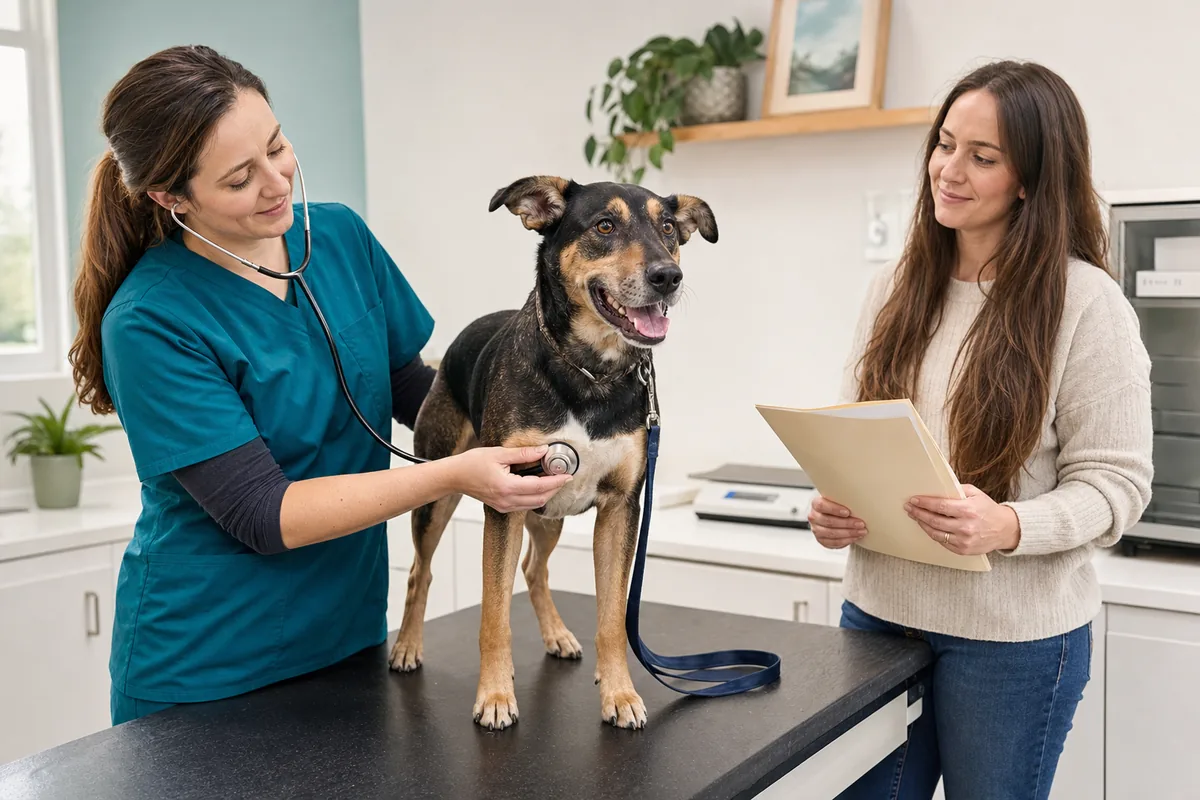
A new rescue dog health checklist should cover five essentials: a prompt veterinary appointment, complete records, an individualized vaccine plan, parasite testing and prevention, and a simple home monitoring log. Bring every document and medication you received, but let the veterinarian decide what needs repeating. Unknown history is a reason to assess carefully, not to guess at treatment.
This guide is designed for the awkward period between bringing a dog home and having a clear medical baseline. It will help you prepare useful information, ask better questions, and recognize when a routine appointment should become an urgent call. It does not diagnose illness or provide drug doses; those decisions belong to a licensed veterinarian who has examined your dog.
New rescue dog health checklist: the quick version
- Choose a veterinary clinic and save its daytime and emergency contact details.
- Book an appointment based on the shelter’s instructions, your dog’s age, current symptoms, medications, and the completeness of their records.
- Collect vaccination, deworming, microchip, surgery, laboratory, medication, and diet information.
- Write down what you have observed at home: appetite, water intake, stool, urine, coughing, itching, mobility, sleep, and behavior.
- Transport the dog in a secure harness, carrier, crate, or vehicle restraint appropriate for that dog.
- Ask the veterinarian to create a written plan for vaccines, parasites, nutrition, dental care, follow-up tests, and the next appointment.
- Do not give human pain medicine, leftover prescriptions, or another pet’s parasite product.
How soon should a newly adopted rescue dog see a veterinarian?
Arrange the first visit as soon as practical and follow any deadline in the adoption agreement. The exact timing is individual. A young puppy, senior dog, pregnant dog, dog taking medication, or dog with missing records may need to be seen sooner than a healthy adult with recent shelter veterinary notes. Call the clinic when booking and describe anything that concerns you so staff can triage appropriately.
Do not wait for a routine wellness slot if your dog is struggling to breathe, collapses, has repeated vomiting, cannot urinate, has a seizure, may have swallowed a toxin, is bleeding heavily, or is deteriorating quickly. Contact a veterinarian or emergency animal hospital. The FDA likewise directs owners with a sick pet or veterinary emergency to a veterinarian, emergency hospital, or animal poison control service rather than relying on general online advice.
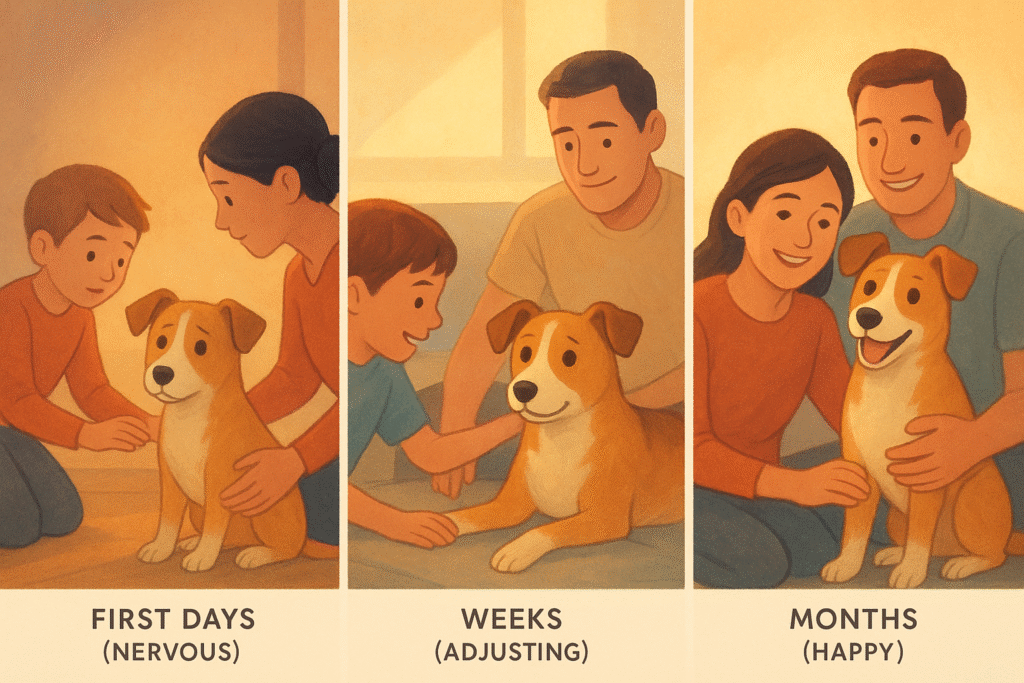
If your dog seems stable but frightened, tell the clinic before you arrive. Ask about a quiet waiting area, waiting in the car, a direct-to-exam-room option, or pre-visit guidance. A health assessment matters, but so does preventing an overwhelmed dog from rehearsing panic during their first trip.
What should you bring to the first vet visit?
Use this new rescue dog health checklist to gather the original documents if you have them and keep a digital copy. Do not discard incomplete or handwritten records; a date, product label, shelter name, or clinic phone number may help the new veterinary team verify what was given. If a record cannot be confirmed, say so plainly.
| Bring or record | Why it helps |
|---|---|
| Adoption and foster records | Shows known history, intake date, previous concerns, and whom the clinic can contact. |
| Vaccination certificates | Dates, products, and administering clinic help the veterinarian avoid unnecessary duplication. |
| Deworming and parasite records | Clarifies what was tested or given and when follow-up may be due. |
| All medication containers | The label confirms the drug name, strength, directions, prescriber, and remaining supply. |
| Microchip number | Allows the clinic to scan, compare, and help update registration details. |
| Food and treat details | Supports nutrition, stool, allergy, and weight discussions without abrupt diet guesses. |
| Photos or short videos | Can document coughing, limping, unusual movements, stool, or behavior that may not appear in clinic. |
| Your observation log | Gives the veterinarian a timeline instead of a vague impression that something feels different. |
Before leaving the shelter, you can also use our rescue dog adoption checklist. For the first evening, the first-night plan for a rescue dog explains how to keep arrival calm while you begin observing health and behavior.
What may the veterinarian check?
A first visit is more than a vaccine appointment. The veterinary team will usually start with history and a physical examination, then recommend tests or treatment based on what they find. AAHA’s canine life-stage guidance emphasizes individualized care based on age, size, breed, lifestyle, and health status rather than a single package for every dog.
Depending on the dog, the visit may include weight and body condition, temperature and other vital assessments, heart and lung sounds, eyes and ears, mouth and teeth, skin and coat, lymph nodes, abdomen, joints, gait, pain, reproductive status, and behavior during handling. The veterinarian may discuss dental disease, nutrition, spay or neuter status, chronic conditions, mobility, or age-related screening.
Laboratory testing is not identical for every rescue dog. A veterinarian may recommend fecal testing, heartworm testing, tick-borne disease screening, blood work, urinalysis, or other diagnostics according to age, region, symptoms, travel, exposure, and available records. Ask what each test is looking for and whether the result will change the plan.
Vaccines: build an individual plan instead of copying a schedule
The vaccination section of a new rescue dog health checklist should begin with verification. Show the veterinarian every certificate and ask which doses are documented, which are legally required, and which are appropriate for this dog’s current risk. Do not assume a shelter sticker, an undated note, or a verbal recollection provides enough detail.
AAHA’s canine vaccination guidelines group vaccines into core recommendations and additional vaccines selected according to lifestyle, geography, and exposure. Its guidance was updated in 2024 to include leptospirosis as a core recommendation for dogs, alongside distemper, adenovirus, parvovirus and rabies; local law and an individual dog’s medical circumstances still matter. Bordetella, canine influenza, Lyme disease, and other vaccines may be important for some dogs rather than all dogs.
Useful risk details include boarding or daycare plans, dog-park visits, wildlife and rodent exposure, hiking, travel, tick exposure, contact with standing water, and local disease patterns. If history is missing or overdue, the veterinarian will decide how to proceed. Avoid publishing or following a universal calendar detached from the dog’s age, product history, health, and jurisdiction.
Parasites: ask about testing and year-round protection
For the parasite section of a new rescue dog health checklist, both past and future exposure matter because rescue dogs may have lived in more than one region. Tell the clinic where the dog came from, where you live, recent travel, whether the dog hunted or ate prey, and whether fleas, ticks, worms, diarrhea, coughing, or skin irritation have been noticed.
The Companion Animal Parasite Council’s general guidelines, updated in 2025, recommend veterinarian-guided plans, regular preventive examinations, annual heartworm testing in dogs, and testing for tick-transmitted pathogens where they are endemic or emerging. Fecal testing and broad internal and external parasite control are also tailored to age, lifestyle, local prevalence, and prior results.
The American Heartworm Society notes that prevention and testing decisions require veterinary oversight. A newly adopted dog may have uncertain prior prevention, and an infection can be present before it is detectable. That is why restarting a leftover product or improvising a schedule is not a safe substitute for a veterinary plan.
Bring the packaging of any flea, tick, deworming, or heartworm product already used. Product selection depends on species, weight, age, health, location, and other medications. Never share a product between pets unless a veterinarian has specifically approved it.
Medication safety when the history is incomplete
Write down every prescription, over-the-counter product, supplement, shampoo, topical treatment, and recent injection you know about. Photograph labels before a container is lost. Ask what the medication treats, how it should be given, what to do about a missed dose, which side effects matter, how it should be stored, and whether follow-up monitoring is required.
The FDA warns that medication errors can result from confusing drug names, strengths, labels, or instructions. It recommends keeping medicines in original labeled containers and not sharing one animal’s medication with another. Human pain relievers can also harm dogs; do not give aspirin, ibuprofen, naproxen, acetaminophen, or anything else from a household medicine cabinet unless a veterinarian directs you.
If the shelter supply will run out before the appointment, call the shelter and clinic instead of changing the dose. Never abruptly stop a prescription solely because the dog appears better or because the purpose is unclear.
Microchip, identification, and medical records
Ask the clinic to scan the dog even if you already have a microchip number. Confirm that the number on the scanner matches the adoption paperwork, then update the registry with your current phone number and an emergency contact. A microchip is permanent identification, not a GPS tracker, so the dog should also wear a readable ID tag when safe and appropriate.
Create one health folder containing adoption paperwork, vaccine certificates, laboratory results, invoices, medication changes, weight, microchip information, insurance details, and emergency contacts. Keep a secure digital backup. Each time you visit, ask for an updated vaccine record and written follow-up instructions.
Nutrition, teeth, mobility, and behavior belong on the health checklist
Health is not limited to vaccines and parasites. Bring the food name, recipe or product label, daily amount, treats, supplements, and any sudden diet changes. The WSAVA nutrition guidelines support an individualized nutrition assessment, including diet history and body condition. Ask the veterinarian whether the current food and amount suit the dog’s age, size, health, and body condition.
Mention bad breath, difficulty chewing, dropping food, pawing at the mouth, or reluctance to eat hard food. Also report stiffness after rest, limping, difficulty with stairs, reduced stamina, or sensitivity to touch. A dog may hide discomfort in a new home, and subtle changes become easier to recognize after you have a baseline.
Behavior is medical information too. Tell the veterinarian about panic, shutdown, sleep disruption, house-soiling, guarding, unusual vocalizing, compulsive licking, or a sudden behavior change. Pain, gastrointestinal illness, urinary problems, itching, sensory loss, and neurological conditions can all affect behavior. Our new-home adjustment guide and rescue dog anxiety guide can help you record context without labeling the dog.
A practical first-30-days health timeline
This timeline turns the new rescue dog health checklist into manageable steps instead of one overwhelming appointment.
| Stage | Useful actions | Avoid |
|---|---|---|
| Before or at adoption | Collect records, medications, food details, microchip information, and clinic contacts. | Assuming the absence of a record means a treatment definitely did or did not happen. |
| First 24–72 hours | Keep routines quiet; log eating, drinking, stool, urine, sleep, coughing, vomiting, itching, and energy. | Changing food, adding many treats, bathing, or giving unapproved medication without a clear need. |
| First veterinary visit | Share records and observations; agree on vaccines, tests, parasite control, nutrition, and follow-up. | Treating the visit as a vaccine-only transaction. |
| Following weeks | Follow written instructions, record medication and results, update the microchip, and attend rechecks. | Stopping treatment early or missing follow-up because the dog seems normal. |
| Ongoing care | Maintain preventive visits and reassess needs when age, health, travel, boarding, or lifestyle changes. | Using the first plan forever without reviewing new risks. |
For a broader transition plan, pair this timeline with our first 30 days with a rescue dog guide.
What should you monitor at home?
Keep the new rescue dog health checklist useful by choosing a log brief enough to maintain. Once or twice a day, record appetite, water intake, urine, stool, vomiting, coughing, sneezing, scratching, medication, energy, mobility, and one sentence about behavior. Note the date and time of anything unusual. Photos of stool, skin changes, swelling, or a short video of coughing or limping may help, provided you do not delay care to document it.
Look for trends instead of expecting a rescue dog to act the same every hour. Stress can temporarily affect appetite, stool, sleep, and social behavior, but stress should not be used to explain away severe, persistent, or worsening symptoms. Call the clinic when you are unsure; a receptionist or veterinary nurse can help determine the next step.
Questions to ask at the appointment
- Which parts of the medical history are confirmed, and which remain uncertain?
- Which vaccines are due, legally required, or recommended for this dog’s lifestyle?
- Which parasite tests and preventives are appropriate in our region?
- Is the current diet and amount suitable for this dog’s body condition and health?
- Are dental, skin, ear, joint, or behavior concerns present?
- Should the dog have blood work, urinalysis, fecal testing, or another baseline test?
- What should I monitor after today’s vaccines, tests, or medications?
- Which signs mean call today, seek emergency care, or monitor at home?
- When is the next dose, result review, or recheck due?
- Can I have the plan and updated records in writing?
Frequently asked questions
What if my rescue dog’s vaccine records are missing?
Tell the veterinarian exactly what is known and what cannot be verified. Do not reconstruct dates from memory or assume the dog is protected. The veterinarian will consider age, health, exposure risk, local rabies law, available documentation, and current guidelines before recommending a plan.
Should I bring a stool sample?
Ask the clinic when booking because collection and storage instructions vary. If they request one, follow their directions and label it with the collection date and time. Do not delay urgent care while trying to obtain a sample.
Can stress cause diarrhea or a poor appetite after adoption?
Stress can contribute to short-term digestive and appetite changes, but it is not the only possible cause. Parasites, infection, diet changes, medication, pain, and other illnesses may look similar. Contact the veterinarian if symptoms are severe, repeated, accompanied by weakness or pain, or not improving as advised.
Can I give my new dog the same flea medicine as my other dog?
Not unless a veterinarian approves the exact product for this dog. Species, weight, age, medical conditions, current drugs, prior treatment, and regional parasite risk all affect product choice. Sharing or estimating a dose can cause treatment failure or harm.
Is this checklist a substitute for a veterinary exam?
No. The purpose of a new rescue dog health checklist is to help you arrive prepared and leave with a clear, individualized plan. It cannot identify the cause of symptoms, confirm immunity, prescribe medication, or replace examination and diagnostic testing.
Final takeaway
A new rescue dog health checklist is most valuable when it leads to clear decisions, not the longest possible list of tests or treatments. It is the one that turns uncertain history into a sensible baseline and gives you clear next steps. Bring everything, observe without diagnosing, ask why each recommendation matters, and keep the written plan where every caregiver can find it.
Sources: AAHA Canine Vaccination Guidelines; AAHA Canine Life Stage Checklist; Companion Animal Parasite Council General Guidelines; American Heartworm Society: Heartworm in Dogs; FDA: Veterinary Medication Errors; WSAVA Global Nutrition Guidelines.
This article provides general educational information and does not replace an examination, diagnosis, or treatment plan from a licensed veterinarian. If your dog may be having an emergency, contact a veterinarian, emergency animal hospital, or animal poison control service immediately.
The Save A Doggo Editorial Team creates practical, welfare-first resources for rescue-dog adopters, foster families, and shelter supporters. We prioritize primary and authoritative sources, distinguish observation from diagnosis, correct material errors transparently, and explain when veterinary or qualified behavior support is needed. We do not claim veterinary credentials or professional review unless a named, verifiable reviewer has approved the final article.