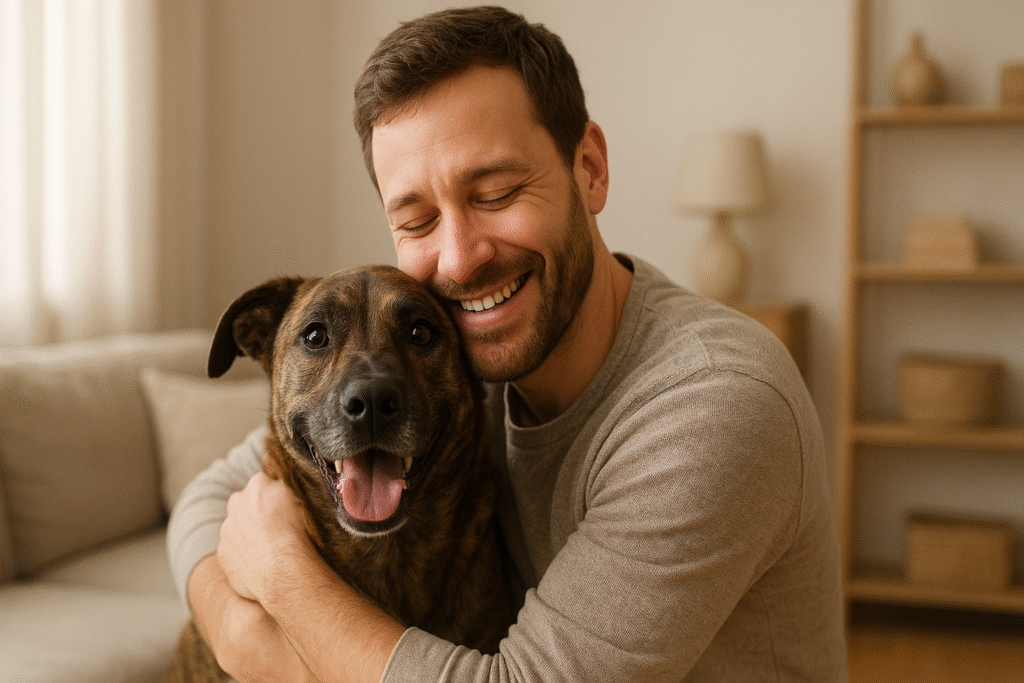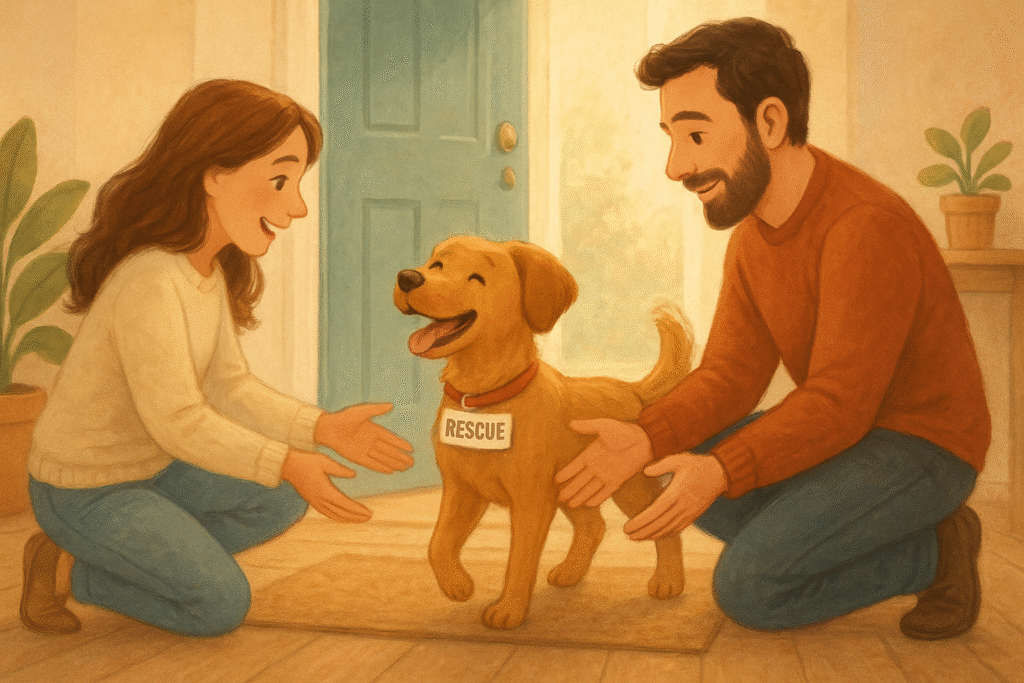
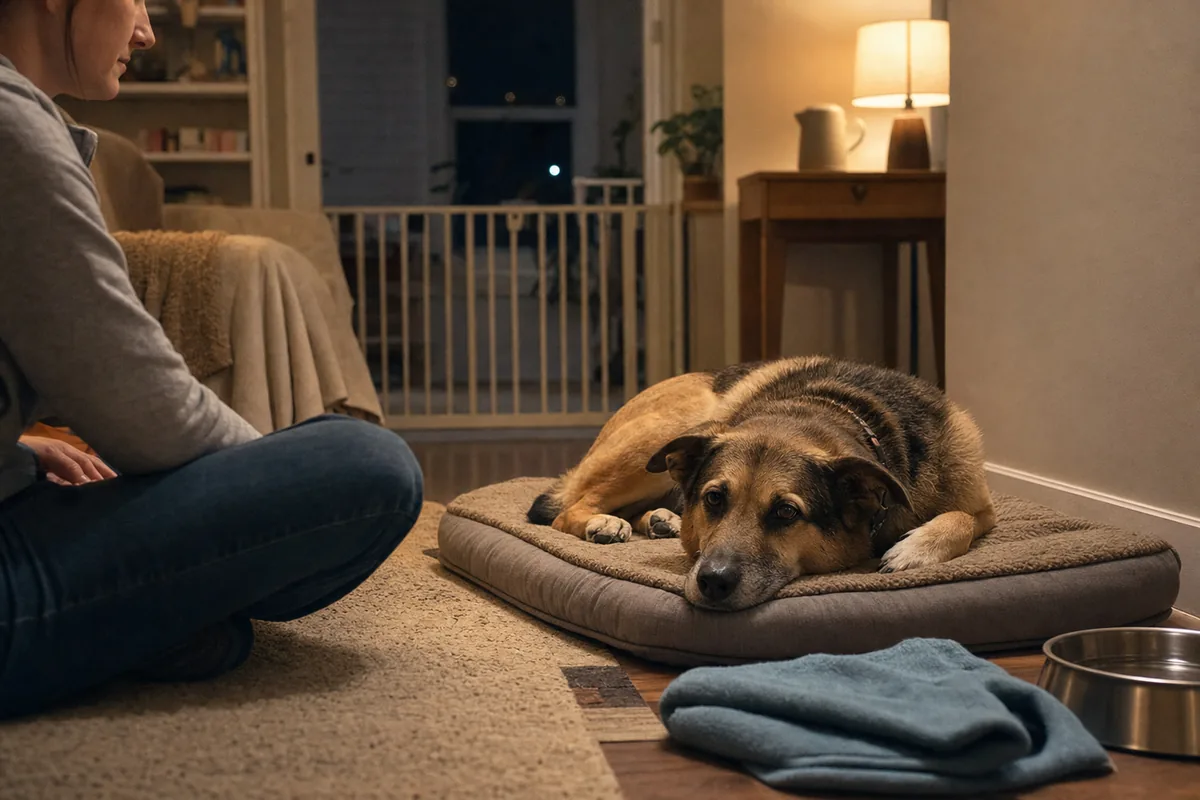
The first night with a rescue dog is not a test of obedience. It is the first evening in a completely unfamiliar place. Your dog may sleep, hide, pace, whine, follow you, refuse food, or change their mind every few minutes. None of those reactions automatically means the adoption is going badly. The useful question is: what can make tonight feel safer and more predictable?
This guide gives you a calm, practical plan for the journey home, the first hour, bedtime, toilet breaks, whining, resident pets, children, food, and warning signs that need professional help. It is written for adult rescue dogs and adopted puppies; adjust the routine to your dog’s age, health, mobility, and advice from the shelter or veterinarian.
What should you do on a rescue dog’s first night?
For a first night with a rescue dog, the safest default is deliberately small: one safe area, one calm toilet routine, familiar food and water, minimal visitors, and plenty of uninterrupted rest. Let the dog observe you instead of asking for cuddles, play, or training. If they approach, respond gently; if they retreat, give them space. A rescue dog does not need to understand the whole house tonight. They only need to learn that doors stay closed, people move predictably, and their needs are noticed.
The RSPCA recommends preparing for disrupted sleep and choosing a sleeping arrangement that helps the dog settle, while the ASPCA advises a dedicated safe space, a routine, patience, and no forced interactions during the first days. Those principles are more useful than a rigid “perfect first night” checklist because every dog arrives with a different history.
Before you leave the shelter or foster home
A few questions can prevent a difficult first evening. Ask when your dog last ate and toileted, what food and portion they receive, whether they take medication, how they travel, and which signals mean they need a break. Ask the carer to show you how the collar, harness, and lead fit. If the dog has a known escape history, mention it again when you collect them.
- Bring a secure harness, collar with identification, and a lead you trust.
- Take a second lead or slip lead as backup, but use it only as the shelter or trainer advises.
- Bring a towel, water, familiar food if offered, and a secure travel crate or crash-tested restraint.
- Confirm the emergency veterinary clinic and save its phone number before you drive away.
- Ask for medical records, microchip details, vaccination information, and written medication instructions.
Keep the lead attached until you are inside a closed, secure space. A frightened dog can slip through equipment they tolerated calmly at the shelter, especially when a car door, gate, or unfamiliar sound surprises them.
The first hour at home: a slower arrival plan
- Go straight to the toilet area. Choose the quiet place you prepared. Keep the lead on, wait patiently, and praise calmly if your dog toilets.
- Enter through a closed route. Close the car door and exterior door before unclipping anything. Avoid greeting neighbours or taking a celebratory walk.
- Show one home base. Lead your dog to the prepared room or corner with water, a bed, a blanket, and one safe chew. Do not tour the entire house.
- Let the nose lead. Sniffing, pausing, and looking around are information-gathering, not disobedience. Keep your voice low and your movements ordinary.
- Offer, do not insist. Put down a small portion of the familiar food. If your dog does not eat immediately, remove it after a reasonable interval and try again later.
It is normal for the first hour to feel anticlimactic. A dog who lies down, drinks water, or watches you from a distance may be coping well. Resist the urge to create a special welcome party; quiet is often the kindest welcome.
First night with a rescue dog: how to set up a safe sleeping area
Choose a place where you can hear your dog but where people will not walk over them. A bed beside a wall, a gated corner, or an open crate can work. The space should contain water, a washable blanket, and enough room to stand, turn, and stretch. Remove cables, medications, toxic plants, food wrappers, small objects, and anything the dog might chew or swallow.
There is no single correct bedroom arrangement. Some dogs settle more easily near your bed for a few nights. Others relax downstairs or in a quiet room. If you eventually want the dog to sleep elsewhere, you can move the bed gradually after they have a basic sense of safety. The first night is a poor time to prove a long-term rule through a battle.
If you use a crate, keep the door open unless a qualified professional has helped you create a positive, safe crate plan. Never force a panicked dog into a crate, block an exit, or use the crate as punishment. A safe space only works when the dog can trust that it is not a trap.
What if your rescue dog whines, pants, or paces?
Start with practical needs rather than assuming the dog is being difficult. Check whether they need the toilet, have access to water, are too hot or cold, are tangled in equipment, or are reacting to a sound. Look for signs of pain or illness. Keep the room dim, speak softly, and move slowly. You can sit nearby without staring or repeatedly touching the dog.
If a toilet break is needed, keep it boring and brief: lead on, quiet praise for toileting, then back to the sleeping area. If the dog settles after you sit nearby, that is useful information. You may choose to sleep closer for a few nights and then create distance gradually. The RSPCA notes that disrupted sleep is common at first and that a calm toilet break or gentle reassurance may help.
Do not yell at whining, bark, growl, pacing, or an accident. A warning or attempt to create distance is communication. Punishing it may silence the signal without making the fear disappear. Increase space and seek qualified behavior advice if you see freezing, repeated escape attempts, snapping, or escalating distress.
Should visitors or resident pets meet the dog that night?
Usually, no. Ask friends and family to wait. The first night already contains new smells, sounds, surfaces, rooms, and expectations. A dog who appears friendly in a shelter may still become overwhelmed when several people lean over them in a smaller home.
If you have another dog, keep the dogs separate while everyone decompresses. Use closed doors or secure gates, exchange bedding scents, and plan a gradual introduction on neutral ground when both dogs are calm. Keep cats and small animals behind secure barriers. Never leave a new dog and a resident pet together unsupervised because the first meeting looked quiet.
Children need a clear rule: no hugging, climbing, chasing, waking, or touching the dog while eating or sleeping. An adult should supervise every interaction. Give the dog a route to retreat without being followed.
Food, water, and first-night toilet accidents
Keep the food the dog already knows unless a veterinarian recommends a change. Stress can reduce appetite and alter stools, so one missed meal is not automatically an emergency. Offer fresh water, avoid a sudden buffet of treats, and record what the dog eats, drinks, and eliminates. That simple note can help your veterinarian spot a change.
Take the dog to the toilet after the journey, after waking, after eating, and before bed. If there is an accident, clean it thoroughly with an enzymatic product and stay neutral. Do not punish a dog for a mess you found later; they cannot connect a delayed scolding with the earlier action. Supervision and frequent opportunities teach more effectively.
A realistic first-night schedule
Think of the first night with a rescue dog as a low-pressure reset, not a performance review. The table below gives you a rhythm you can adjust when the dog, your household, or your veterinarian needs something different.
| Time | What to do | What to avoid |
|---|---|---|
| Arrival | Quiet toilet break, secure entry, water, and one home base | Visitors, photos, greetings at the gate, or a full-house tour |
| First meal | Small portion of familiar food; leave the bowl in a calm place | Changing food, hand-feeding insistently, or adding many treats |
| Evening | Short toilet opportunity, low-key observation, and protected rest | Exciting games, baths, grooming, or obedience drills |
| Bedtime | Safe sleeping area, dim lights, predictable words, lead ready | Forcing a crate, correcting vocalizing, or repeatedly waking the dog |
| Overnight | Respond to genuine toilet or safety needs, then return calmly | Turning every wake-up into a play session |
| Morning | Toilet, breakfast, medication as directed, and a quiet check-in | A long outing before you know how the dog copes outdoors |
What does a “good” first night look like?
Good does not mean silent, affectionate, or perfectly house-trained. It may mean your dog drinks, sleeps for ten minutes, accepts a treat, looks toward you, or chooses the bed instead of hiding behind furniture. Progress often arrives in tiny pieces. Notice recovery: after a sound or surprise, can the dog return to resting, sniffing, or eating?
Keep a short note of what helped and what made things harder. That turns a stressful night into useful information for the shelter, veterinarian, or reward-based behavior professional. It also stops you judging the whole adoption by one exhausted evening.
When should you call a veterinarian?
Contact a veterinarian promptly for breathing difficulty, collapse, suspected poisoning, repeated vomiting, repeated watery diarrhea, severe pain, inability to urinate, uncontrolled bleeding, a seizure, or marked weakness. Call sooner if the dog has a known medical condition, is very young, is elderly, or has been prescribed medication with unclear instructions. Do not give human medication or change a prescribed dose without veterinary guidance.
For behavior, seek help if the dog repeatedly attempts to escape, cannot settle at all, guards access to people or spaces, threatens a household member, or shows escalating fear. Choose a qualified, reward-based professional who will explain management and work with your veterinarian when health may affect behavior.
Questions new adopters ask about the first night
Should I sleep beside my rescue dog?
You can choose the arrangement that keeps everyone safe and helps the dog settle. Sleeping nearby for a few nights does not permanently “spoil” a dog. If you want more distance later, move the bed or your sleeping position in small steps once the dog is resting more easily.
Should I comfort a rescue dog who is crying?
Calm reassurance is different from frantic attention. Check practical needs, offer a brief toilet break, and sit quietly nearby. Avoid shouting, repeated excitement, or forcing physical contact. Let the dog decide whether touch feels welcome.
Is it normal for a rescue dog not to eat on the first night?
Some dogs eat less during a stressful transition. Offer familiar food and water without pressure, then monitor appetite and other signs. Call your veterinarian if refusal continues, the dog is very young or medically vulnerable, or it occurs with vomiting, diarrhea, pain, or unusual lethargy.
Should I use the 3-3-3 rule as a deadline?
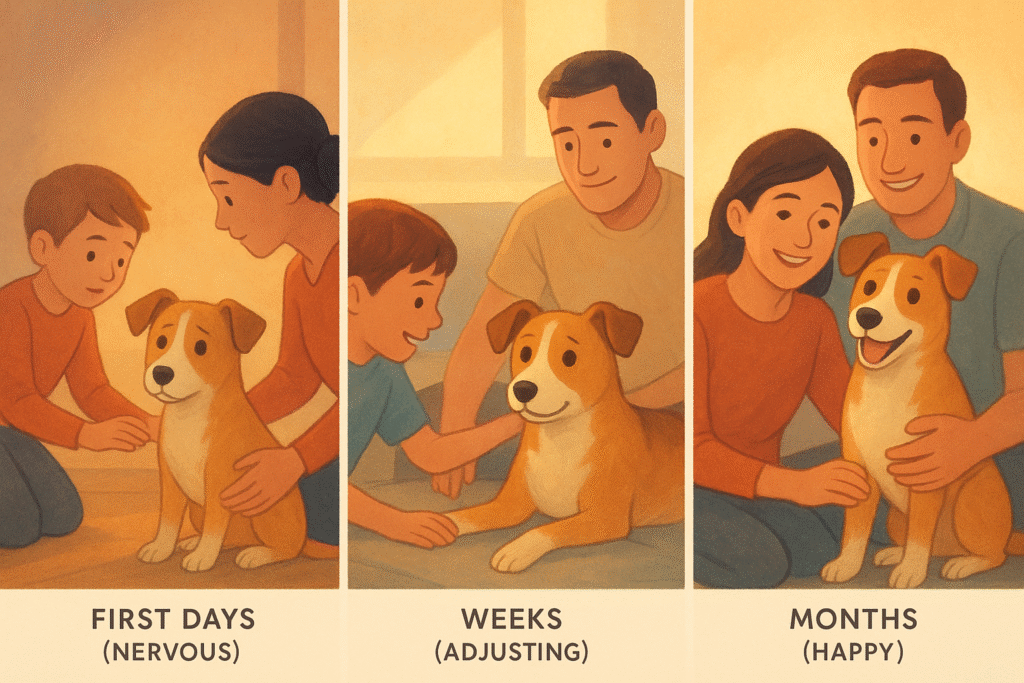
No. The 3-3-3 idea can help set expectations, but it is not a timetable or a promise. Some dogs need less time; others need much more. Read it alongside our 3-3-3 rule guide and measure progress by safety and recovery, not a calendar.
Your first-night checklist
- Secure harness, collar, identification, lead, and a closed route into the home
- Quiet toilet area prepared before arrival
- One dog-safe home base with water, bed, blanket, and a safe chew
- Familiar food and written medication instructions
- Resident pets and visitors kept separate for the first evening
- Low lights, protected sleep, and a plan for overnight toilet breaks
- Enzymatic cleaner and spare towels ready for accidents
- Emergency veterinarian and qualified behavior contact saved
Keep the first night with a rescue dog small
The first night with a rescue dog is a beginning, not a verdict. Make the environment predictable, notice the small signs of coping, and give your dog choices wherever safety allows. A quiet room, a calm human, and a consistent next step can do more than a packed schedule of introductions.
For the next stages, use our rescue dog adoption checklist, new-home adjustment guide, and first 30 days guide. If anxiety remains intense, read the signs of rescue dog anxiety and speak with your veterinarian.
Sources: RSPCA: Getting ready for your rescue dog; ASPCA: Adoption tips and preparing your home; ASPCA: General dog care; Blue Cross: House and toilet training.
This article is educational and does not replace advice from a licensed veterinarian or qualified animal-behavior professional. Emergency symptoms should be assessed by a veterinarian.

The Save A Doggo Editorial Team creates practical, welfare-first resources for rescue-dog adopters, foster families, and shelter supporters. We prioritize primary and authoritative sources, distinguish observation from diagnosis, correct material errors transparently, and explain when veterinary or qualified behavior support is needed. We do not claim veterinary credentials or professional review unless a named, verifiable reviewer has approved the final article.