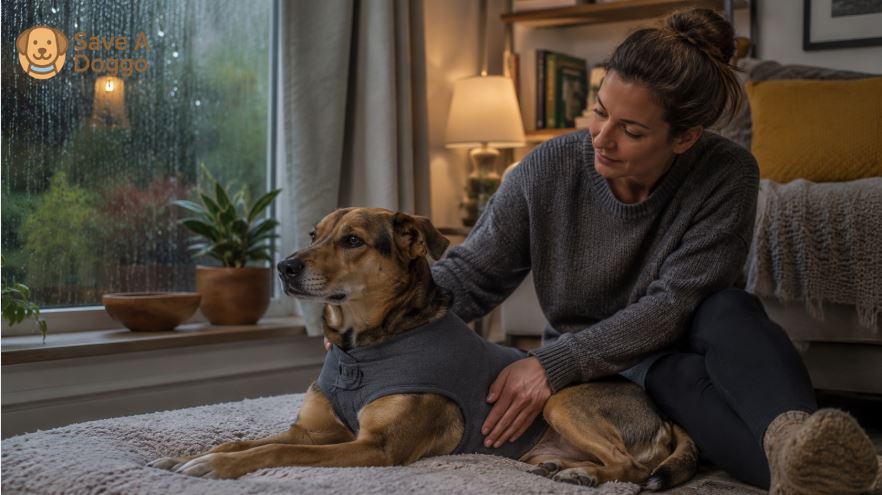
A Thundershirt may help some dogs feel calmer during mild anxiety, storms, fireworks, car rides, or stressful handling, but it is not a cure for panic, pain, or severe separation anxiety. If you are comparing thundershirt for dogs reviews, the most honest answer is: treat it as a comfort tool to test carefully, not as a replacement for training, safety planning, or veterinary care.
This Thundershirt review is based on product information, veterinary behavior guidance, and practical rescue-dog care principles—not a claimed hands-on trial or a promise that one vest will work for every dog.
Quick verdict
A Thundershirt can be worth trying if your dog has mild to moderate situational anxiety and tolerates clothing or harness-like gear. It may be especially useful as one part of a larger plan for storms, fireworks, car rides, vet visits, grooming, or short stressful handling moments.
It is not enough by itself if your dog is panicking, injuring themselves, trying to escape, destroying doors during alone time, snapping, biting, or showing sudden new anxiety. In those cases, call your veterinarian or a qualified behavior professional instead of relying on a vest alone.
| Best fit | Use caution | Skip or call your vet first |
|---|---|---|
| Mild storm worry, car nervousness, vet-office unease, grooming sensitivity | Dogs who dislike body handling, overheat easily, or chew clothing | Panic, pain signs, severe separation anxiety, escape attempts, aggression, sudden behavior change |
What a Thundershirt is
The brand styles the product as ThunderShirt. It is a dog anxiety vest or calming wrap designed to apply gentle, steady pressure around a dog’s torso. You may also see people call similar products a thunder jacket, anxiety wrap, calming vest, or pressure vest.
The idea is simple: some dogs seem to settle when they feel steady body pressure, similar to how some dogs relax with a snug harness, close contact, or predictable handling. That does not mean pressure therapy is proven to solve every type of anxiety in dogs. It means the vest may be one low-effort support tool for dogs who find that sensation comforting.
If you want a broader explanation before buying, see Do Anxiety Vests for Dogs Really Work.
When it may help
A Thundershirt may help most when the anxiety is situational, predictable, and not extreme. Think “my dog gets worried when the thunder starts” rather than “my dog is in full panic every time I leave the house.”
- Storms and fireworks: Some dogs may settle more easily when the vest is paired with an interior room, white noise, closed curtains, and calm enrichment. For a fuller event plan, read Rescue Dog Afraid of Stairs.
- Car rides: It may help dogs who are mildly uneasy in the car, especially when combined with gradual practice and safe restraint.
- Vet visits and grooming: A pressure wrap may support calmer handling if your dog already tolerates wearing it and the appointment is not overwhelming.
- Visitors or household commotion: Some dogs relax with the vest during predictable, low-level stress at home.
- Newly adopted dogs: For some rescue dogs, gentle pressure may be soothing during the adjustment period, but it should never replace decompression, routine, and choice.
The ASPCA notes that anxiety vests may work in some cases for noise fear and suggests pairing noise events with a quiet interior space and calming enrichment. Cornell’s canine anxiety guidance also emphasizes consistency, predictability, and behavior plans rather than quick fixes.
When it is not enough
A Thundershirt is not a treatment plan. It does not diagnose the cause of anxiety, teach alone-time skills, remove pain, or make scary triggers safe by itself.
It is not enough if your dog:
- panics, screams, digs, or crashes into doors or windows
- tries to escape the house, crate, car, yard, or leash
- injures themselves during storms, fireworks, or alone time
- shows sudden anxiety that was not there before
- has aggression, snapping, or bite risk around handling
- freezes or shuts down when the vest is placed on them
- has severe separation anxiety or cannot be left alone safely
If anxiety appears after adoption, look at the whole picture: sleep, appetite, pain, routine changes, triggers, and recovery time. This is where a simple log from Signs of Dog Anxiety After Adoption can help you explain patterns to your vet.
When to call a vet or professional
Call your veterinarian if anxiety is intense, sudden, worsening, paired with pain signs, or affecting your dog’s ability to eat, sleep, rest, eliminate, or stay safe. Ask about a medical rule-out and whether a veterinary behaviorist, certified applied animal behaviorist, or qualified force-free trainer is appropriate.
For separation distress, do not depend on a vest alone. Dogs with true separation anxiety usually need a structured alone-time plan and, in some cases, veterinary support. Start with How to Help a Rescue Dog With Separation Anxiety.
Fit and safety checklist
The best dog Thundershirt review is the one your own dog gives you through body language. A good fit should look comfortable, not restrictive.
- Measure first: Use the manufacturer’s current size chart and measure your dog’s chest/girth carefully.
- Introduce it before the scary event: Let your dog sniff the vest, pair it with treats, and practice during calm moments.
- Check pressure: It should feel snug, not tight. Your dog should breathe, walk, sit, lie down, and turn normally.
- Watch movement: Remove it if your dog walks oddly, freezes, scratches, chews at it, pants heavily, or seems more distressed.
- Watch heat: Use extra caution in warm weather, cars, outdoor events, or homes without good cooling.
- Supervise early uses: Do not leave it on for long periods until you know your dog is comfortable and safe.
- Do not force it: If your dog hates body handling or clothing, forcing the vest can add stress.
- Keep it positive: Put it on with treats, calm praise, and short sessions. Do not use it as a “time-out” signal.
Simple test: If your dog becomes softer, looser, and more able to rest, the vest may be helping. If your dog freezes, avoids you, pants, hides, or tries to remove it, the vest is not the right tool right now.
Pros and cons
| Pros | Cons |
|---|---|
| Drug-free support tool for some dogs | Not a cure for panic, pain, or severe anxiety |
| Can be used during predictable events like storms or vet visits | Some dogs dislike clothing or pressure |
| Easy to combine with safe rooms, white noise, enrichment, and training | May give owners false confidence if the dog needs veterinary care |
| Reusable and simple to pack for travel | Fit matters; poor fit can cause discomfort |
| May help mild stress without sedation | Does not teach separation skills or change fear by itself |
So, does Thundershirt work for dogs? Sometimes. The better question is: does your dog look more comfortable, recover faster, and stay safer when it is used as part of a kind, evidence-informed plan?
Alternatives
If you are reading thunder jacket reviews because your dog is struggling, it helps to think in layers. A vest is only one layer.
- Safe room: Use an interior room, closed curtains, soft bedding, water, and low noise.
- White noise or music: Mask outdoor sounds during storms, fireworks, or hallway noise.
- Enrichment: Offer a safe chew, lick mat, food puzzle, or stuffed toy if your dog can eat calmly.
- Desensitization and counterconditioning: Work below your dog’s fear level with gradual exposure and rewards. AVSAB supports reward-based approaches and warns against harsh, punitive methods.
- Predictable routines: Cornell notes that consistency and predictability can help dogs cope with unsettling situations.
- Veterinary medication: For severe noise fear, panic, or separation anxiety, ask your vet. Do not give medication, supplements, or sedatives without veterinary guidance.
- Professional behavior help: Choose a qualified force-free trainer, certified behavior consultant, or veterinary behaviorist for fear, panic, aggression, or complex separation issues.
FAQ
Does Thundershirt work for dogs?
It may help some dogs with mild situational anxiety, especially when paired with a quiet space, predictable routine, and reward-based behavior support. It does not work for every dog and should not be treated as a cure.
Is a Thundershirt good for fireworks or thunderstorms?
It can be worth trying before the event if your dog tolerates wearing it. Pair it with an interior room, closed windows, white noise, and calming enrichment. If your dog panics or tries to escape, ask your vet for a stronger plan.
Can a Thundershirt help separation anxiety?
It may comfort some dogs with mild distress, but severe separation anxiety usually needs a structured behavior plan and veterinary guidance. A vest alone will not teach a dog to feel safe when left alone.
How tight should a Thundershirt be?
It should be snug enough to apply gentle pressure but not so tight that it restricts breathing, walking, sitting, lying down, or normal movement. Follow the current manufacturer fit guide and remove it if your dog seems uncomfortable.
Can my dog sleep in a Thundershirt?
Ask your vet if your dog has health concerns, skin issues, overheating risk, or mobility problems. For most dogs, supervise early use first and make sure the vest does not rub, twist, trap heat, or cause chewing.
Are there risks or side effects?
The main risks are poor fit, overheating, rubbing, chewing, increased stress, or using the vest instead of getting help for severe anxiety. Remove it if your dog looks worse, not better.
Sources & further reading
- ThunderShirt official product information
- ASPCA Fourth of July Safety Tips
- Cornell Riney Canine Health Center: Anxious Behavior in Dogs
- AVSAB Position Statements and Humane Dog Training
Next step: Save the fit checklist and ask your veterinarian if your dog’s anxiety is intense, sudden, or worsening.
The Save A Doggo Editorial Team creates practical, welfare-first resources for rescue-dog adopters, foster families, and shelter supporters. We prioritize primary and authoritative sources, distinguish observation from diagnosis, correct material errors transparently, and explain when veterinary or qualified behavior support is needed. We do not claim veterinary credentials or professional review unless a named, verifiable reviewer has approved the final article.