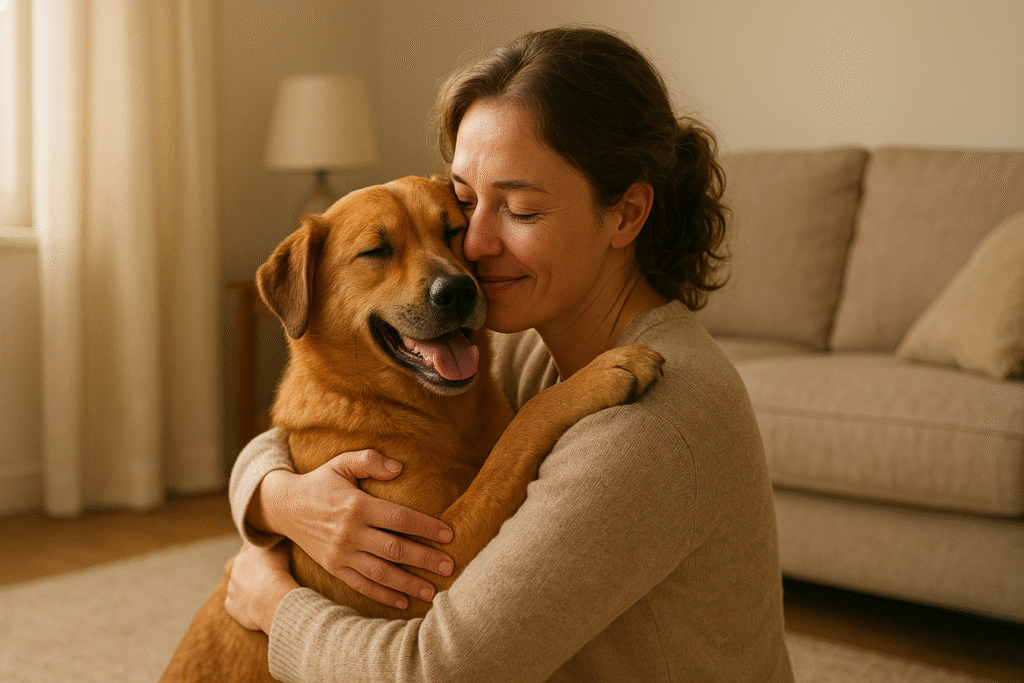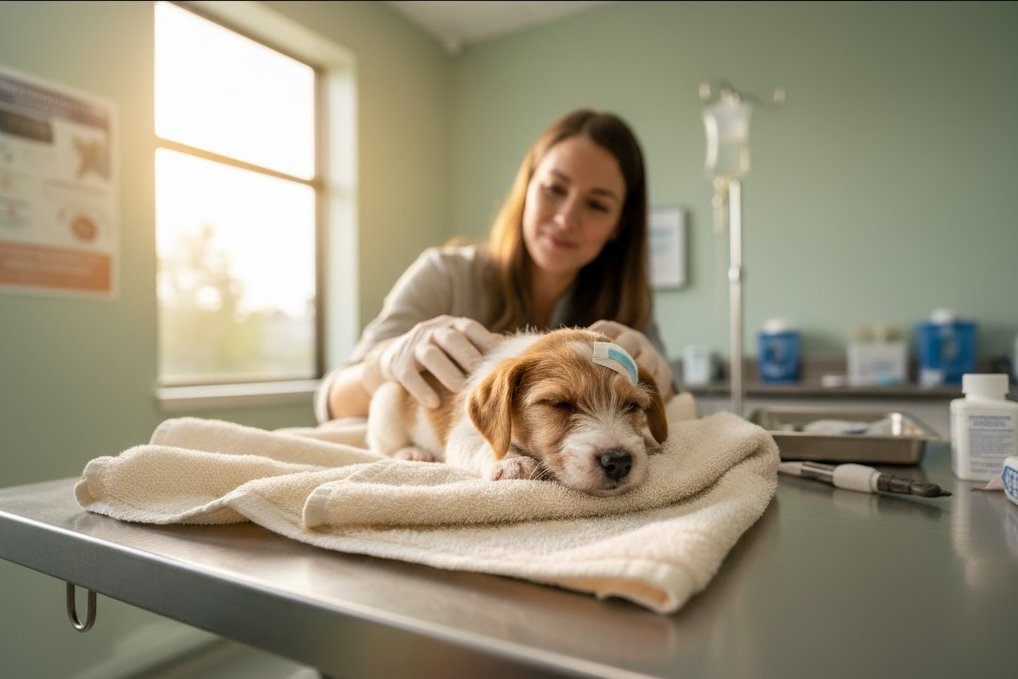

What rescue dogs teach us is simple but demanding: trust cannot be rushed, safety is built through repetition, and a second chance is a daily practice rather than one dramatic adoption-day moment.
For adopters, what rescue dogs teach us becomes visible in the details: a dog may show progress by sleeping in an open room, taking a treat with a softer body, choosing to approach, or recovering more quickly after a surprise.
These changes can look small from the outside. To the dog, they may represent a completely new expectation of the world.
This article is for adopters, foster carers, volunteers, and anyone who loves rescue dogs. It combines reflection with practical, humane guidance. It is not a verified case report about one identifiable dog, and it does not assume that every rescue dog has experienced trauma.
What rescue dogs teach us at a glance
| Lesson | What it looks like in real life | What the person can do |
|---|---|---|
| Patience | Progress arrives in uneven, sometimes tiny steps | Lower pressure and repeat easy successes |
| Trust | The dog begins to predict safe outcomes | Be consistent and keep promises |
| Consent | The dog can approach, pause, or move away | Notice body language and respect “not now” |
| Resilience | The dog recovers after manageable stress | Support recovery instead of testing limits |
| Second chances | A new life grows without erasing the past | Meet the dog in front of you today |
What rescue dogs teach us: nine lessons for daily life
1. Patience is active support, not passive waiting
Patience does not mean doing nothing while hoping a dog “gets over it.” It means arranging the environment so the dog can succeed: fewer visitors at first, shorter walks, a quiet bed, predictable meals, and distance from triggers.
Dogs Trust advises letting a newly adopted dog settle at their own pace, avoiding forced interaction, providing an undisturbed safe space, and keeping early routines calm. That is patience translated into practical care.
A useful question is not “Why is this taking so long?” but “What would make the next step easier?” The first question measures the dog against our schedule. The second invites us to solve the problem together.
2. Trust is built through hundreds of ordinary moments
Trust is not the same as instant affection. A dog can enjoy treats or petting and still feel uncertain about handling, doorways, strangers, or being left alone.
One of the most practical things what rescue dogs teach us is that trust grows when outcomes become predictable. The leash is clipped gently. The food bowl arrives. A raised hand does not grab. A resting dog is not disturbed. A worried glance leads to more distance instead of more pressure.
Veterinary behavior guidance emphasizes that predictability can build confidence. When our cues and rewards are consistent, the dog learns that their choices can influence what happens next. That sense of control matters.
3. Choice can be a form of kindness
Choice does not mean the dog makes every household decision. It means the dog has safe options wherever possible: approach or stay back, rest on one bed or another, take a break from petting, or observe a visitor behind a gate.
Watch for voluntary participation. Does the dog lean toward your hand or turn away? Return after a pause or remain at a distance? A brief consent check—pet for a few seconds, stop, and observe—can reveal more than continued touching.
Respecting “not now” often creates more willingness later. The dog learns that communication works, so louder signals such as growling, snapping, or fleeing may become less necessary.
4. Behavior is information before it is a problem
A dog who barks, freezes, hides, jumps, guards, or refuses a walk is communicating something about arousal, fear, discomfort, learning history, or unmet needs. The behavior may still require management, especially when safety is involved, but punishment alone does not explain or resolve its cause.
Describe what you can observe. “She backed away when the harness appeared” is more useful than “She is stubborn.” “He barked when the visitor stood up” is more useful than “He is unpredictable.” Specific descriptions help adopters, veterinarians, and behavior professionals find patterns.
Body language belongs in that evidence. The RSPCA recommends watching posture, eyes, ears, mouth, tail, and changes in normal behavior. A loose body and soft face tell a different story from freezing, leaning away, lip licking, or a tucked tail.
5. Progress is real even when it is not linear
A rescue dog may explore confidently on Monday and hide during a storm on Tuesday. A visitor, pain, poor sleep, a new sound, or a change in routine can temporarily reduce coping ability. One difficult day does not erase previous learning.
Measure trends instead of demanding a perfect upward line. Is recovery becoming faster? Is the dog choosing to re-engage? Can they eat at a slightly closer distance from a trigger? Those are meaningful indicators.
This is one of the clearest answers to what rescue dogs teach us: a setback is data, not a moral failure. Adjust the plan, protect safety, and return to a step the dog can handle.
6. Routine can be a form of compassion
Routine is sometimes dismissed as boring, but predictability reduces the number of questions a new dog must answer. Where do I sleep? When do I go outside? Who approaches my bowl? What happens when the door opens?
A steady schedule for meals, toilet breaks, walks, rest, and short training sessions can make the home easier to understand. The ASPCA and Dogs Trust both recommend giving adopted pets time, space, and a consistent routine during adjustment.
Routine should support the individual dog rather than force a universal timetable. Some dogs need more sleep, fewer outings, or a quieter first week. Our rescue dog first-week schedule offers a starting framework that you can adapt.
7. Reward-based teaching protects the relationship
The American Veterinary Society of Animal Behavior states that evidence supports reward-based methods for canine training. These methods focus on teaching the dog what to do, arranging the environment, and reinforcing desirable responses instead of relying on fear or pain.
Rewards are not only food. They can include distance from something scary, access to a sniff, a toy, permission to go outside, or calm social contact—if the dog actually values it.
Humane training is not permissive. It still uses management, clear cues, repetition, and boundaries. The difference is that the dog learns a safer alternative rather than merely learning to fear the consequence of being wrong.
8. Compassion and boundaries can coexist
Understanding why a dog behaves a certain way does not require allowing unsafe behavior. A dog who guards food may need gates, structured feeding, and professional guidance. A dog who panics alone may need temporary absence management while a gradual plan is developed.
A boundary is most useful when it is predictable and paired with an achievable alternative. Instead of repeatedly pushing a dog off the sofa, teach a comfortable mat and reward going there. Instead of forcing greetings, create distance and teach a calm station.
Compassion asks, “How do we keep everyone safe while helping this dog learn?” It does not ask people to ignore risk or manage beyond their capacity.
9. A second chance does not erase a dog’s past
Adoption changes the address immediately; emotional adjustment takes its own time. We may never know every detail of a dog’s history, and we should avoid inventing a trauma narrative to make the rescue story more dramatic.
The dog in front of us is more than what may have happened before. Their preferences, play style, learning pace, health, and relationships continue to develop. A second chance means creating conditions for a new future without demanding that the past disappear on our schedule.
It also means accepting that love is not a treatment plan. Veterinary care, behavior support, medication when prescribed, management, and skilled training can all be acts of love.
What rescue dogs teach us about growing trust
- The dog chooses to rest in a more open part of the room.
- Their body stays loose when you stand up or walk past.
- They approach, then move away without being followed.
- They recover more quickly after a sound or surprise.
- They explore, sniff, play, or chew in your presence.
- They look to you for information without freezing.
- They can settle after a predictable routine.
- They communicate discomfort earlier and more subtly.
Not every dog will show every sign. Health, age, sensory changes, temperament, and previous learning all shape behavior. If you want a more detailed checklist, see 10 signs your rescue dog is relaxing and feeling safe.
What rescue dogs teach us: a 30-day reflection plan
A short weekly note can make quiet progress visible. Record behavior without judgment and include the context.
- Week one: notice safety. Where does the dog rest? Which sounds, rooms, people, or handling moments create tension?
- Week two: notice choice. When does the dog approach, pause, retreat, or re-engage? Which interactions appear genuinely welcome?
- Week three: notice recovery. After a manageable stressor, how long does it take the dog to eat, sniff, play, or rest again?
- Week four: notice the relationship. Which routines now feel shared? What support helped most, and what still needs professional input?
Use concrete notes: “settled on the mat for five minutes while I cooked” is more informative than “better today.” A diary can also help a veterinarian or behavior professional understand changes over time.
What not to learn from rescue-dog stories
Do not turn every dog into a tragedy
A dog can be cautious without having been abused. Shelter transitions, limited socialization, pain, genetics, unfamiliar environments, and ordinary learning history can all influence behavior. Tell only what is known.
Do not make the adopter the hero of every sentence
Adoption matters, but the dog is not a prop in a human redemption story. Respect the animal’s agency, preferences, and ongoing needs. A good rescue story includes the work after the photograph.
Do not treat the 3-3-3 guideline as a deadline
Rules of thumb can help people expect an adjustment period, but individual dogs do not follow a universal calendar. Support the dog you have rather than comparing them with a graphic or another adopter’s timeline.
Do not confuse closeness with complete recovery
A dog may cuddle and still struggle with handling, visitors, separation, or noise. Trust can be context-specific. Keep observing and avoid exposing the dog to a difficult situation just to prove progress.
When patience needs professional support
Patience should never mean waiting through self-injury, severe panic, escalating aggression, persistent pain, refusal to eat, or sudden behavior change. Contact a veterinarian promptly when health may be involved.
For fear, anxiety, guarding, aggression, or separation-related distress, work with a qualified reward-based professional. Ask how they assess body language, prevent rehearsal, coordinate with veterinarians, and keep training below the dog’s threshold.
You may also find our gentle guide to helping a rescue dog adjust, first night with a rescue dog plan, and signs a rescue dog is starting to trust you useful.
Frequently asked questions
What rescue dogs teach us about patience
They show that patience works best when it is active: reduce pressure, create predictable routines, repeat manageable steps, and notice recovery. Waiting without changing the environment is not the same as helping.
How long does it take a rescue dog to trust you?
There is no universal timeline. Some dogs relax quickly; others need weeks, months, or ongoing support in specific situations. Measure the dog’s body language and ability to recover rather than counting days.
Does a setback mean my rescue dog no longer trusts me?
Usually not. Stress, pain, sleep, weather, visitors, and context can affect behavior. Return to an easier step, identify what changed, and seek professional help if the setback is severe or persistent.
Can love alone heal a rescue dog?
Love can motivate good care, but it cannot replace veterinary evaluation, safe management, or evidence-based behavior support. Practical help is often one of the clearest ways love is expressed.
What is the most important lesson from rescue dogs?
Perhaps it is this: safety must be experienced, not merely promised. Repeated respectful actions make trust possible, and trust gives learning and connection room to grow.
The lasting lesson
What rescue dogs teach us is not that every hardship has a neat ending. They teach us to notice small changes, make room for uncertainty, and keep showing up in ways that are safe and understandable.
What rescue dogs teach us stays with us when patience becomes structure and trust becomes a pattern of kept promises. A second chance becomes thousands of ordinary choices that make a different future possible.
This rescue-inspired educational article is not a verified case report or a substitute for veterinary or behavior care. Seek prompt professional help for pain, self-injury, severe distress, sudden behavior changes, or safety risks.
Sources and further reading
- Dogs Trust: How to help a rescue dog settle into your home
- ASPCA: Adoption tips and welcoming a pet home
- RSPCA: Understanding dog body language
- AVSAB: Humane Dog Training Position Statement
- VCA Animal Hospitals: Using predictable rewards to train your dog

The Save A Doggo Editorial Team creates practical, welfare-first resources for rescue-dog adopters, foster families, and shelter supporters. We prioritize primary and authoritative sources, distinguish observation from diagnosis, correct material errors transparently, and explain when veterinary or qualified behavior support is needed. We do not claim veterinary credentials or professional review unless a named, verifiable reviewer has approved the final article.