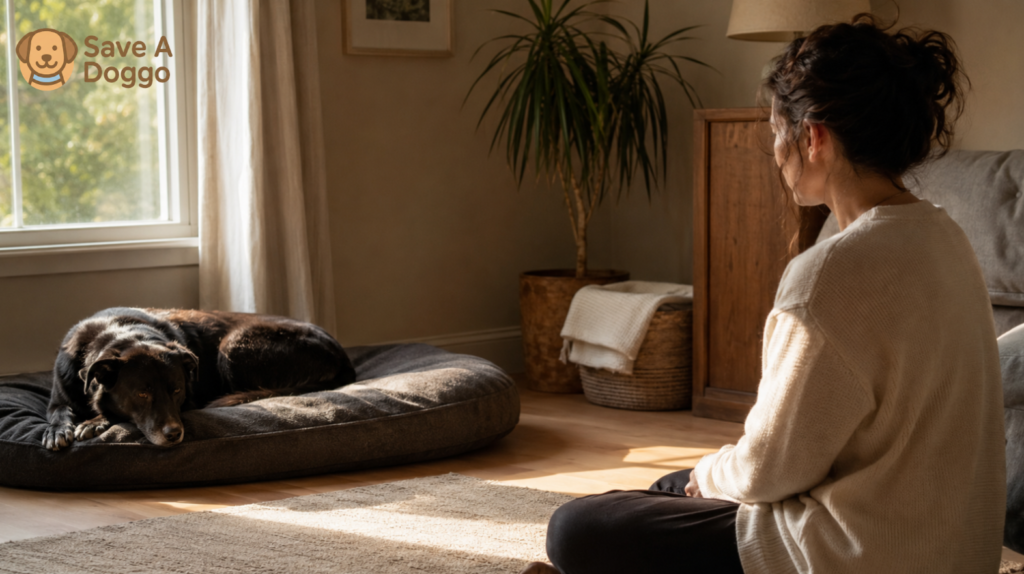
If your rescue dog growls at you after adoption, stop moving closer, turn slightly sideways, and calmly give the dog space. A growl is a warning that often means, “I am uncomfortable—please stop or move away.” Fear, unwanted handling, resource guarding, exhaustion, feeling trapped, and pain are common triggers.
Do not yell, punish, stare down, pin, or force contact. Those responses may increase fear and the risk of escalation. Once everyone is safe, note what happened immediately before the growl and prevent that setup from happening again. Sudden growling, growling when touched, repeated escalation, snapping, biting, or any incident involving a child calls for prompt professional help.
At a Glance
- A growl is information, not disobedience. It tells you the dog is uncomfortable or highly aroused.
- Your first response should be distance. Stop the interaction and let the dog settle.
- Do not punish the warning. Address the emotion and trigger instead.
- Check the context. Food, toys, sleep, touch, confinement, visitors, and pain are common factors.
- Use barriers and management. Baby gates, separate feeding areas, and protected rest spaces prevent repeat incidents.
- Get help early when safety is uncertain. A veterinarian should rule out pain; a qualified, reward-based behavior professional can build a case-specific plan.
What Does It Mean When a Rescue Dog Growls at a New Owner?
A growl does not have one universal meaning. Dogs may growl during play, but a growl paired with a stiff body, hard stare, freezing, avoidance, guarding, or bared teeth is a request for distance and should be taken seriously.
For a newly adopted dog, the behavior is rarely about being “ungrateful,” “dominant,” or deliberately challenging you. The dog is responding to the situation with the coping skills available to them. Their history may be incomplete, and ordinary household actions—reaching for a collar, leaning over a bed, touching a sore area, or approaching a food bowl—may feel unsafe.
There is no fixed adjustment timeline that applies to every rescue dog. Some relax quickly; others reveal fear or guarding only after they have been home long enough to interact more freely. Focus on the individual dog’s body language and triggers rather than expecting progress by a particular day or week.
What to Do the Moment Your Rescue Dog Growls
Use this five-step response every time:
- Stop the pressure. Freeze briefly and stop reaching, petting, leaning, moving the dog, or approaching the item or space.
- Create distance. Move away slowly if you can do so safely. Angle your body rather than facing the dog head-on, and avoid direct staring.
- Protect other people and pets. Calmly move children and animals away. Use a door, gate, or other barrier instead of grabbing the dog.
- Let the dog recover. Do not immediately test, comfort, scold, or resume the interaction. Give the dog quiet time.
- Record the trigger. Write down the location, people present, the dog’s activity, your action, nearby resources, and body-language changes before the growl.
If the dog has a dangerous object, do not corner them or reach into their mouth. Move people away and seek urgent guidance if you cannot resolve the situation without risking a bite.
Match the Trigger to the Safest Next Step
| When the growl happens | What may be contributing | Safest first step |
|---|---|---|
| During petting, grooming, lifting, or collar handling | Fear, touch sensitivity, pain, or too much contact | Stop touching; allow the dog to move away; arrange a vet check if the response is sudden or body-area specific |
| Near food, toys, chews, stolen items, beds, or people | Resource guarding | Increase distance; separate meals; do not take the resource by force |
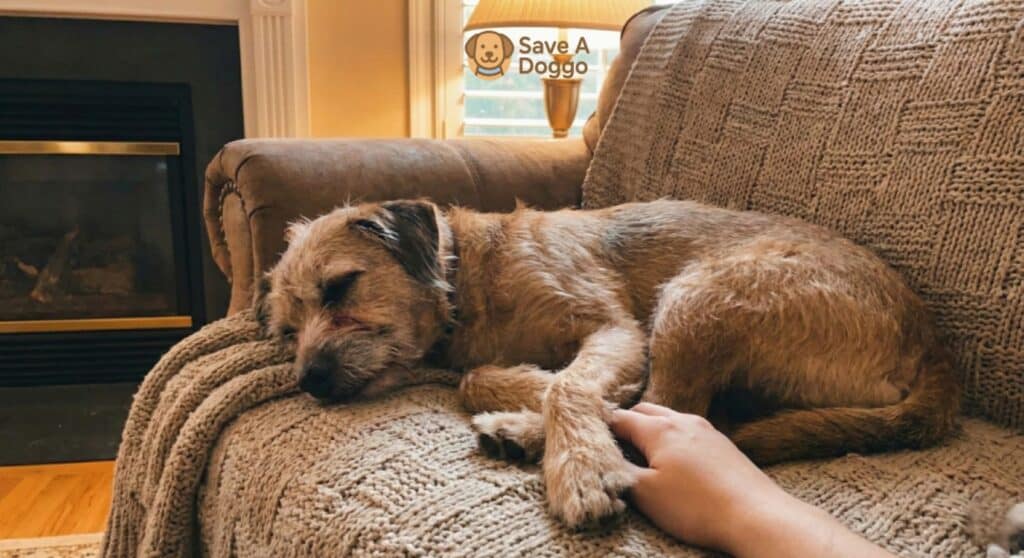
| While sleeping or resting | Startle, exhaustion, pain, or protection of a safe space | Let sleeping dogs lie; create a protected rest area; call the dog away rather than moving them physically |
| In a crate, corner, hallway, car, or doorway | Feeling trapped or unable to retreat | Open a safe exit if possible; reduce crowding; use gates to change traffic flow |
| Around visitors, children, fast movement, or loud sounds | Fear, overstimulation, or inadequate distance | Separate with a secure barrier before exposure; reduce noise and activity |
| Suddenly, or when no clear trigger is visible | Pain, illness, sensory change, or a subtle environmental trigger | Schedule a veterinary exam and keep an incident log |
This table helps with immediate management; it is not a diagnosis. More than one factor may be involved.
Read the Whole Dog, Not Only the Sound
Growling becomes more concerning when you also see:
- A sudden freeze or very still body
- A hard stare or prolonged eye contact
- The whites of the eyes showing (“whale eye”)
- A tightly closed mouth
- Ears pinned back or held very stiffly
- A tucked, high, or rigid tail
- Turning the head or body away
- Lip licking or yawning outside a normal context
- Lowering the head over an object
- Showing teeth, air snapping, or lunging
Early signs such as looking away, lip licking, moving away, or becoming still may appear before a growl. Responding at that stage can keep the dog from needing to communicate more forcefully.
A loose, wiggly body during mutual play is different from a rigid dog guarding a bed. When you are unsure, choose the safer interpretation: stop, add distance, and observe.
Why You Should Not Punish a Growl
The growl is not the underlying problem. The fear, pain, conflict, or perceived threat behind it is the problem.
Punishment—such as yelling, leash corrections, shock or prong collars, pinning, alpha rolls, intimidation, or forcing the dog to “submit”—does not make the trigger feel safer. It can add fear and conflict to an already tense moment. The American Veterinary Society of Animal Behavior recommends reward-based methods for training and behavior modification and advises against aversive methods.
Stepping away during an active incident is a safety response, not the complete behavior plan. Long-term improvement comes from preventing unsafe situations, treating medical contributors, and using carefully planned desensitization and counterconditioning at a level the dog can handle.
Common Trigger 1: Touching or Handling Too Soon
People often use touch to show love. A new rescue dog may experience hugging, leaning, lifting, grooming, paw handling, or a hand reaching over the head as pressure.
Try lower-pressure interaction instead:
- Invite the dog to approach rather than following them.
- Pet briefly on the chest or shoulder, then pause.
- Continue only if the dog stays close and clearly seeks more contact.
- Stop if the dog turns away, stiffens, licks their lips, lowers their head, or leaves.
- Avoid hugging and face-to-face contact.
- Never disturb the dog to test whether they now “allow” touch.
Choice helps build trust. For a broader plan, see this rescue dog first-week schedule.
Common Trigger 2: Food, Toys, Chews, or Resting Places
Growling as someone approaches food, a toy, a chew, a stolen object, a bed, a sofa, or even a favorite person may be resource guarding. Guarding can range from moving away with an object to freezing, growling, snapping, or biting.
For now:
- Feed the dog alone in a quiet, low-traffic area.
- Keep children and other pets away during meals and chews.
- Do not put hands in the bowl or repeatedly remove food.
- Do not chase the dog or pry an item from their mouth.
- Put trash, laundry, medication, and unsafe objects out of reach.
- Limit high-value chews until you have a safe plan for giving and removing them.
- Practice trades only with low-value items while the dog is relaxed—not during an active guarding incident.
The ASPCA’s food-guarding guidance recommends precautions and professional support when bite risk is present, especially in a home with children. Read the full SaveADoggo guide to rescue dog resource guarding before attempting training exercises.
Common Trigger 3: Sleep, Confinement, or Feeling Trapped
A dog resting in a bed, crate, corner, or under furniture may growl because approaching removes their escape route. A sleeping dog may also startle before recognizing who is nearby.
Create a rest area that household members leave undisturbed. Do not reach into the crate, crawl under furniture, pull the dog’s collar, or drag them from a sofa. When movement is necessary, call the dog away with a familiar cue and reward them after they move. Until that skill is reliable, use gates and closed doors to prevent access to places where conflict is likely.
Children should never climb on, hug, corner, or wake a resting dog.
Common Trigger 4: Pain or Illness
Pain can lower a dog’s tolerance for touch, approach, grooming, or movement. According to Cornell University’s College of Veterinary Medicine, uncharacteristic growling or snapping can be a behavioral sign of pain.
Contact your veterinarian if the growling is new, suddenly worse, or connected with any of the following:
- Flinching or reacting when one area is touched
- Limping, stiffness, or difficulty standing or climbing stairs
- Reluctance to be lifted, leashed, brushed, or moved
- Changes in appetite, sleep, toileting, or activity
- Panting at rest, pacing, or inability to settle
- Hiding, withdrawal, or behavior that seems out of character
Do not give human pain medication unless a veterinarian explicitly directs you to do so. Some common human medicines are dangerous to dogs.
A Lower-Pressure Plan for the Next Seven Days
Management is useful immediately, even before the exact cause is known:
- Keep meals, walks, sleep, and toilet breaks predictable.
- Limit visitors, busy outings, forced greetings, and crowded spaces.
- Favor calm, sniff-focused walks over intense exercise.
- Give the dog one or more quiet places where no one follows or touches them.
- Use gates, pens, doors, and separate rooms to prevent conflict.
- Toss treats for calm voluntary check-ins without requiring petting.
- Keep training sessions brief and reward-based.
- Make sure every household member follows the same safety rules.
- Continue logging incidents and note whether their frequency or intensity changes.
This is not a promise that the growling will disappear in a week. It is a way to reduce stress, prevent rehearsal, and collect useful information for your veterinarian or behavior professional.
When Is Growling an Urgent Safety Concern?
Arrange professional help promptly if:
- The dog has snapped, lunged, or bitten—even if the bite did not break skin.
- A bite broke skin; wash the wound and seek appropriate medical care.
- Growling is becoming more frequent, intense, or difficult to predict.
- The dog guards several resources, a person, a doorway, or a large area of the home.
- The dog growls when someone is still several feet away.
- Children, older adults, or anyone unable to follow the safety plan live in or visit the home.
- You cannot safely feed, leash, move around, or perform normal care.
- The behavior appeared suddenly or pain may be involved.
- You feel afraid of the dog.
If teeth have already made contact, also read Rescue Dog Biting or Mouthing After Adoption.
Who Should You Contact?
Start with a veterinarian when the behavior is sudden, touch-related, unexplained, or accompanied by physical or routine changes. A medical exam can identify or rule out pain and illness that training alone cannot fix.
For a behavior plan, look for a professional with documented experience in fear, resource guarding, or aggression who uses reward-based methods. Appropriate options may include:
- A board-certified veterinary behaviorist, especially for severe, complex, or medically influenced cases; use the American College of Veterinary Behaviorists directory.
- A certified behavior consultant with relevant aggression experience; the IAABC consultant locator includes location and specialty filters.
- A qualified reward-based trainer working in coordination with your veterinarian for lower-risk cases.
Ask exactly what tools and methods the professional uses. Avoid anyone who recommends provoking the dog, punishing warnings, dominance-based confrontation, or guaranteed timelines.
What Does Progress Look Like?
Progress is not measured by how much discomfort the dog can be made to tolerate. Useful signs include:
- The dog chooses to move away instead of freezing or growling.
- Their body stays loose when a known trigger is present at a safe distance.
- They eat or rest calmly in a protected area.
- They approach household members voluntarily.
- You recognize early stress signals and respond before escalation.
- Growling incidents become less frequent or less intense.
- The household can follow a consistent management plan.
Small, repeatable improvements matter more than forced affection.
Frequently Asked Questions
Is it normal for a rescue dog to growl after adoption?
Growling can occur during the adjustment period because a rescue dog is stressed, frightened, guarding a resource, uncomfortable with handling, or in pain. It is understandable, but it should not be ignored. Create distance, identify the trigger, and prevent a repeat while you decide whether veterinary or behavior support is needed.
Does growling mean my rescue dog is aggressive?
Not necessarily. Growling is a form of communication and can occur during play as well as fear, pain, guarding, or conflict. Context and the dog’s full body language determine the level of concern. A stiff body, freezing, hard stare, snapping, or lunging warrants extra caution.
Should I correct my rescue dog for growling at me?
No. Do not punish or physically confront the dog. Stop the interaction, add distance, manage the trigger, and use reward-based professional support. The goal is to change the dog’s underlying discomfort, not silence the warning.
Why does my new rescue dog growl when I pet them?
The dog may dislike that type of touch, feel trapped, be overwhelmed, or have pain in the area being touched. Stop petting and let the dog move away. If the response is sudden, consistent, or linked to a particular body part, schedule a veterinary exam.
What should I do if my rescue dog growls at my child?
Calmly separate the child and dog with a secure barrier and prevent further close contact. Do not ask the child to feed, train, or “make friends” with the dog. Because children may miss warning signals or move unpredictably, contact a veterinarian and a qualified behavior professional promptly for an individualized safety plan.
Will my rescue dog stop growling once they trust me?
Some transition-related growling may decrease as the dog feels safer, but time alone is not a treatment plan. Pain, resource guarding, handling sensitivity, and learned fear may persist. Management, medical care when needed, and reward-based behavior work provide a safer path than waiting or repeatedly testing the dog.
Sources and Further Reading
- American Veterinary Society of Animal Behavior: Position Statements and Humane Dog Training
- ASPCA: Food Guarding
- Cornell University College of Veterinary Medicine: Recognizing Pain in Dogs
- Cornell University College of Veterinary Medicine: Anxious Behavior in Dogs
- VCA Animal Hospitals: Aggression Diagnosis and Overview
The Save A Doggo Editorial Team creates practical, welfare-first resources for rescue-dog adopters, foster families, and shelter supporters. We prioritize primary and authoritative sources, distinguish observation from diagnosis, correct material errors transparently, and explain when veterinary or qualified behavior support is needed. We do not claim veterinary credentials or professional review unless a named, verifiable reviewer has approved the final article.