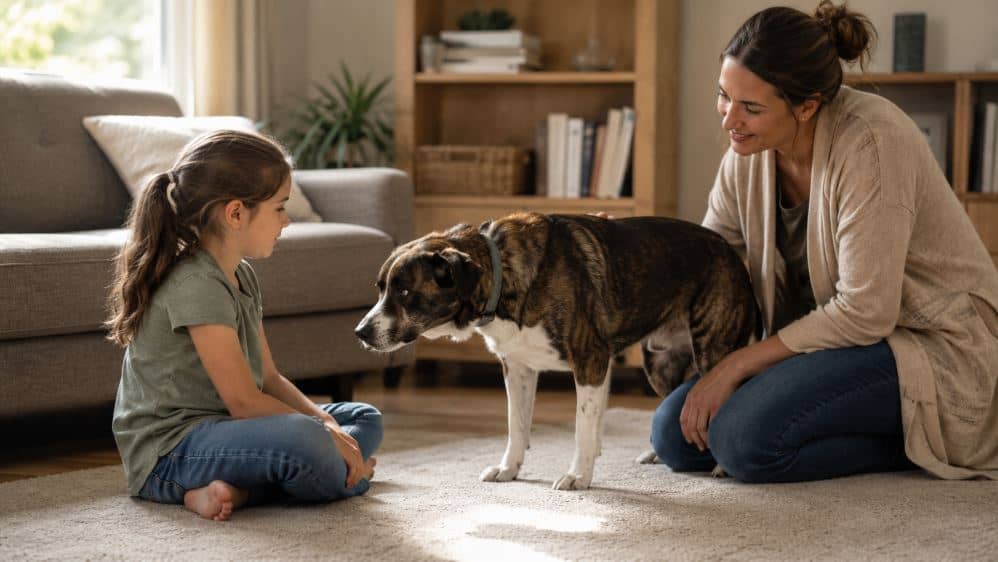
How to Introduce a Rescue Dog to Children Safely
Bringing a rescue dog into a home with children can be beautiful, but it should never be rushed. Children are curious. Dogs are observant. A newly adopted dog may be tired, unsure, excited, overwhelmed, or still trying to understand where they are.
The safest introductions are calm, structured, and supervised. Your child does not need to become the dog’s best friend on day one. Your rescue dog does not need to prove they are “good with kids” immediately. Everyone needs time, space, and clear rules.
Quick Answer
To introduce a rescue dog to children safely, prepare kids before the dog comes home, keep the first meeting calm and brief, let the dog approach at their own pace, teach children basic dog body language, and supervise every interaction. Pause immediately if the dog or child becomes too excited, scared, rough, or overwhelmed.
Prepare Children Before the Dog Comes Home
The introduction starts before the dog arrives. Children do better when they know what to expect, and dogs do better when children have clear boundaries.
Before adoption day, explain that the dog is not a toy, visitor, or surprise party guest. The dog is a living being who may need quiet time before they feel comfortable.
Teach children these simple rules:
- Let the dog come to you.
- Use quiet voices.
- Move slowly around the dog.
- Do not hug, grab, chase, climb on, or ride the dog.
- Do not touch the dog while they are eating or sleeping.
- Do not take toys, treats, or bones from the dog.
- Do not put your face near the dog’s face.
- Ask an adult before petting.
- Stop when the dog walks away.
A helpful phrase for kids is: “We invite, we don’t insist.” They can invite the dog with calm body language, but the dog gets to say no by walking away, looking away, or choosing space.
For training foundations after adoption, Save A Doggo’s Training an Adopted Dog guide can help the whole family use consistent, gentle cues.
First Meeting Rules
The first meeting should be short, quiet, and boring in the best possible way.
Choose a calm space with room for the dog to move away. Avoid tight hallways, crowded entryways, noisy kitchens, or a room full of excited relatives.
For the first introduction:
- Have an adult hold the leash.
- Ask the child to sit or stand still.
- Keep voices soft.
- Let the dog notice the child from a distance.
- Do not force the dog closer.
- Let the dog approach if they choose.
- Keep petting brief.
- End the interaction before anyone gets too excited.
If the dog sniffs and walks away, that is a successful first meeting. If the dog lies down across the room, also successful. Safety grows from low-pressure moments.
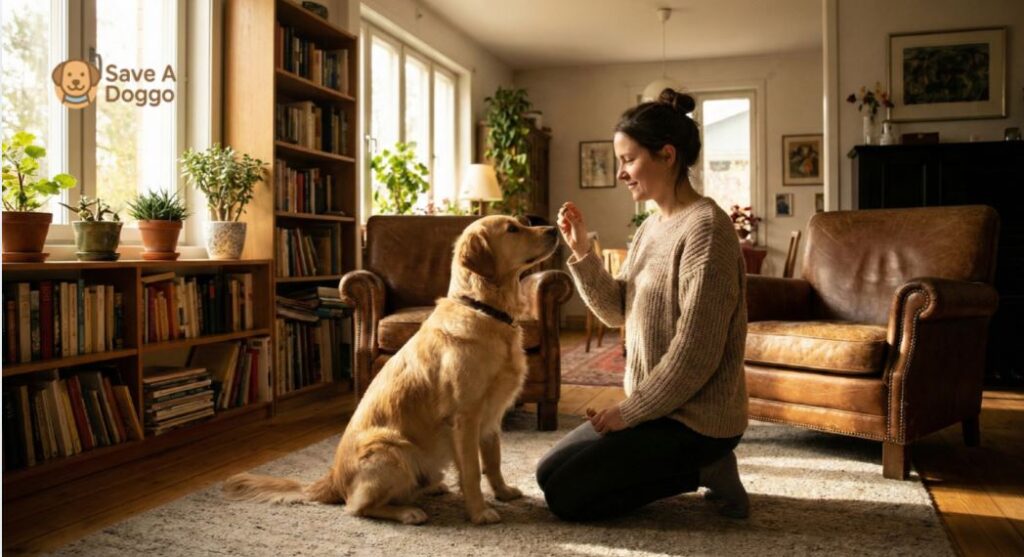
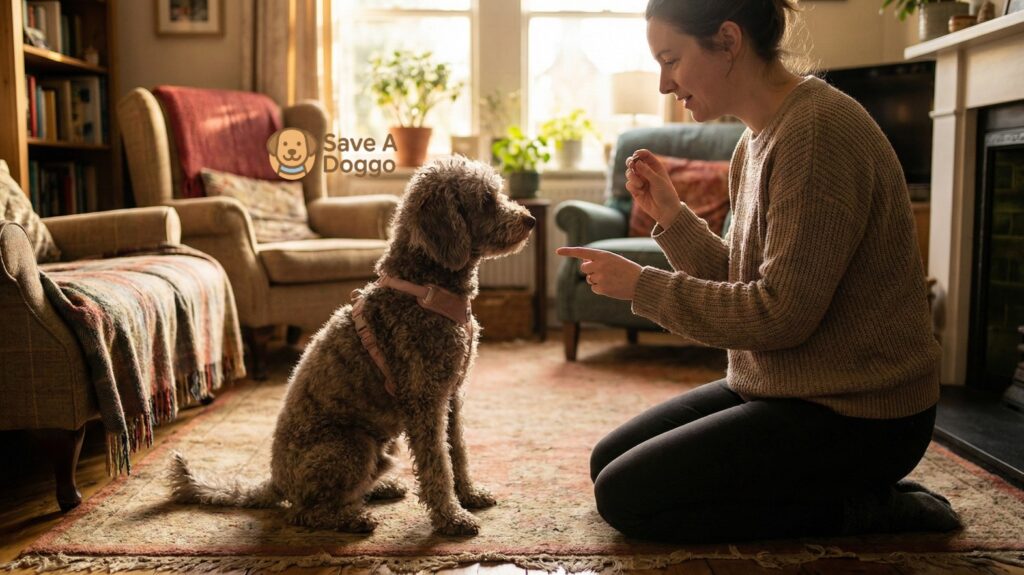
For very young children, skip direct petting at first. Let the child toss a treat gently away from their body, so the dog can move away rather than toward the child’s hands. This creates a pleasant association without pressure.
A practical family insight: many introductions go wrong not because the dog is “bad,” but because humans try to make the moment meaningful. The safest first meeting may look uneventful. That is exactly what you want.
Body Language Kids Should Learn
Children often recognize barking or growling, but many stress signs happen earlier. Teaching children to notice the small signals can prevent bigger problems.
Teach kids to give the dog space if they see:
- Turning the head away
- Moving away
- Hiding behind furniture or people
- Yawning when not tired
- Lip licking when food is not present
- Whale eye, where the whites of the eyes show
- Tail tucked low
- Body stiff or frozen
- Ears pinned back
- Panting when not hot or exercised
- Pacing
- Growling
- Snapping
- Showing teeth
Explain that growling is communication, not “being naughty.” A growl means the dog is uncomfortable and needs help. Do not punish a growl. Calmly create distance and ask a qualified professional for guidance if it happens.
Kids should also learn that a wagging tail does not always mean a dog wants to be touched. Look at the whole dog: body softness, movement, distance, mouth, eyes, and whether the dog is choosing to stay.
For more help reading stress signals, use Save A Doggo’s 15 Signs Your Dog Is Stressed as a family learning tool.
Safe Touch and No-Touch Zones
Children need specific instructions, not vague reminders to “be gentle.”
Safe touch usually means:
- Petting with one hand
- Touching the chest, shoulder, or side
- Keeping petting short
- Stopping after a few seconds
- Watching whether the dog asks for more
A good rule is “pet, pause, see.” The child pets for two or three seconds, then stops. If the dog leans in or stays relaxed, the adult may allow another short pet. If the dog turns away, moves away, licks lips, stiffens, or avoids eye contact, petting stops.
No-touch zones should include:
- Face
- Ears
- Tail
- Paws
- Belly, unless the dog clearly enjoys it and an adult approves
- Food bowl
- Chews
- Toys in the dog’s mouth
- Crate or bed when the dog is resting
Children should never hug a rescue dog around the neck. Many dogs tolerate hugs from trusted adults, but that does not mean they enjoy them, especially from children. Hugging can make a dog feel trapped.
Also avoid kissing the dog, lying on the dog, dressing the dog up, pulling collars, or using the dog as a pillow. These behaviors may look cute in photos, but they can be stressful or unsafe.
Supervision Checklist
Supervision means more than being in the same room. Active supervision means an adult is close enough to intervene immediately and is paying attention to both the child and the dog.
Use this checklist during early interactions:
- The dog has a clear escape route.
- The child is calm enough to follow instructions.
- An adult is within arm’s reach.
- Food, chews, and high-value toys are put away.
- The dog is not cornered.
- The dog is not sleeping.
- The dog is not eating.
- The child is not running, screaming, or grabbing.
- The dog’s body looks loose, not stiff.
- The interaction stays short.
- The dog has a quiet space where children are not allowed.
Set up physical management before you need it. Baby gates, crates, pens, closed doors, and leashes are not failures. They are safety tools.
A strong family rule: if an adult cannot actively supervise, the dog and child are separated. This applies even if the dog is sweet. This applies even if the child is gentle. This applies even if nothing has ever happened before.
When to Pause Introductions
Pausing is not a setback. It is responsible.
Pause introductions if the dog:
- Growls
- Snaps
- Freezes
- Stares hard
- Repeatedly moves away
- Hides
- Guards food, toys, beds, or people
- Jumps intensely on the child
- Mouths or nips during excitement
- Barks and cannot settle
- Seems overwhelmed by child movement or noise
Pause introductions if the child:
- Cannot follow safety rules
- Runs toward the dog
- Screams near the dog
- Grabs fur, ears, tail, or collar
- Tries to hug or climb on the dog
- Ignores adult instructions
- Becomes frightened or overly excited
If there has been a bite, broken skin, repeated growling, snapping, guarding, or intense fear, stop direct interaction and contact a veterinarian, veterinary behaviorist, or certified force-free trainer. If someone is bitten, wash the wound and seek medical guidance, especially if the skin is broken or vaccination history is unclear.
This guide is educational and cannot assess your individual dog or child. When safety is uncertain, get qualified help early.
FAQ
How long should I wait before my child pets a new rescue dog?
Wait until the dog is calm, has had time to explore, and is choosing to approach. For some dogs, that may be later the same day. For others, it may take several days or longer. There is no need to rush.
What is the safest way for a child to greet a rescue dog?
The child should stay still, avoid staring, keep hands to themselves at first, and let the dog approach. If the dog remains relaxed, an adult may allow brief petting on the chest or side, then pause and reassess.
Should children give treats to a rescue dog?
Only with adult supervision. Treat tossing can be safer than hand-feeding at first because it gives the dog space. If the dog grabs treats roughly, guards food, or gets overexcited, adults should handle treats instead.
What if my rescue dog growls at my child?
Do not punish the growl. Calmly separate the dog and child, give the dog space, and review what happened. Growling is a warning sign that should be respected. Contact a certified trainer or veterinary behavior professional for help.
Can a rescue dog sleep in a child’s room?
Not at first. Wait until the dog is fully settled, the child consistently follows safety rules, and adults understand the dog’s behavior well. Many families choose to keep sleeping spaces separate long term.
How do I know if my rescue dog is comfortable with kids?
Look for loose body language, voluntary approach, relaxed movement, soft eyes, and the ability to disengage calmly. Comfort should be consistent over time, not based on one cute moment.
Final Thought
The goal is not to make your rescue dog tolerate children. The goal is to help the dog and children feel safe around each other.
Go slowly. Supervise closely. Teach children that kindness includes giving space. A calm, respectful introduction gives your family the best chance to build trust that lasts.
Share this guide with every family member before adoption day.
Sources and further reading
- CDC: Dogs | Healthy Pets, Healthy People
- AVSAB Humane Dog Training Position Statement
- Family Paws Parent Education
The Save A Doggo Editorial Team creates practical, welfare-first resources for rescue-dog adopters, foster families, and shelter supporters. We prioritize primary and authoritative sources, distinguish observation from diagnosis, correct material errors transparently, and explain when veterinary or qualified behavior support is needed. We do not claim veterinary credentials or professional review unless a named, verifiable reviewer has approved the final article.