How to Introduce a Rescue Dog to Another Dog at Home
Bringing a rescue dog into a home with another dog is a big moment for both animals. Your new dog is entering unfamiliar territory, and your resident dog is suddenly being asked to share space, people, smells, routines, and resources.
A good introduction is not about seeing whether they “like each other” in the first five minutes. It is about lowering pressure, preventing conflict, and giving both dogs repeated chances to feel safe.
Quick Answer
To introduce a rescue dog to another dog, start on neutral territory, use parallel walks, keep leashes loose, and avoid face-to-face pressure. At home, manage space carefully, separate food and toys, supervise closely, and move slowly over several days. Separate the dogs immediately if you see stiffness, hard staring, growling, lunging, or guarding.
Why Neutral Territory Matters
Your resident dog already has a relationship with your home. The couch, yard, hallway, food area, bed, and even your attention may feel like theirs. A new dog walking straight into that space can create tension before either dog has a fair chance.
Neutral territory helps because neither dog is defending a familiar place. A quiet park, calm street, or open outdoor area can work well. Avoid crowded dog parks, tight sidewalks, pet stores, or busy events. You want space, not stimulation.
A first meeting should feel almost uneventful. If both dogs can notice each other, sniff the air, walk, disengage, and keep moving, that is a win. Excitement is not always friendliness. Some dogs bark, bounce, or pull because they are stressed, not because they are ready for close contact.
If either dog has a bite history, severe reactivity, intense fear, or known aggression toward dogs, do not attempt a casual introduction. Work with a certified force-free trainer, veterinary behaviorist, or qualified behavior professional.
Parallel Walk Method
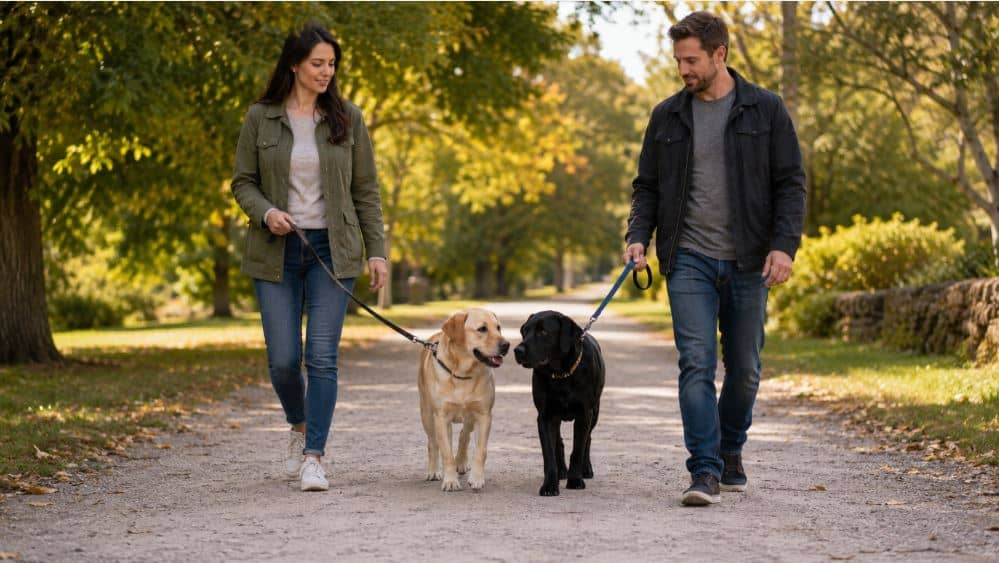
Parallel walking is one of the safest ways to begin. Instead of putting two dogs nose-to-nose, you let them move in the same direction with distance between them.
You will need:
- Two adults
- One dog per handler
- Secure collars or harnesses
- Standard leashes, not retractable leashes
- High-value treats
- A quiet outdoor space
Start with enough distance that both dogs can think clearly. For some dogs, that may be 10 feet. For others, it may be across the street.
During the walk:
- Move in the same direction.
- Keep leashes relaxed.
- Reward calm glances and check-ins.
- Avoid letting the dogs rush each other.
- Do not tighten the leash every time they look.
- Let them sniff the ground and decompress.
- Gradually reduce distance only if both dogs stay loose and calm.
Healthy signs include soft bodies, curved movement, sniffing, brief glances, loose tails, and the ability to look away. Concerning signs include freezing, hard staring, stiff posture, raised hackles with tension, growling, lunging, and frantic pulling.
If things feel too intense, increase distance. Distance is not failure. It is information.
First Home Entry
After a successful outdoor walk, do not simply open the front door and let both dogs rush inside together. Home entry is a common pressure point.
A calmer plan:
- Have the resident dog enter first and move to a separate area.
- Let the rescue dog enter on leash and explore one safe space.
- Keep both dogs separated by a gate, door, pen, or crate at first.
- Allow scent and sound without direct access.
- Keep greetings short if you try another interaction later.
- End before excitement rises.
Do not give the new rescue dog full access to the home immediately. Start with a decompression space where they can rest, drink water, and learn the sounds of the house.
Your resident dog also needs reassurance through routine. Keep their normal feeding, walks, sleeping spot, and one-on-one time as consistent as possible. Many issues come from sudden change, not from the new dog alone.
For broader trust-building and routine work, read Save A Doggo’s Training an Adopted Dog before the first meeting.
Feeding, Toys, and Resting Spaces
Resource tension is one of the biggest risks in multi-dog homes. Even friendly dogs can become uncomfortable around food, chews, toys, beds, doorways, or people.
For the first days or weeks, manage resources carefully:
- Feed dogs in separate rooms or behind barriers.
- Pick up bowls after meals.
- Avoid high-value chews when dogs are together.
- Keep toys put away during early interactions.
- Provide separate beds.
- Do not let one dog crowd the other’s crate or resting place.
- Give both dogs individual attention.
- Use gates and closed doors without guilt.
A practical tip: do not test whether they can “share.” Sharing is not the goal in the beginning. Peaceful separation around valuable items is safer and kinder.
Rest matters too. A rescue dog may be exhausted from transition, while your resident dog may be emotionally tired from the change. Schedule quiet breaks where each dog can fully relax without watching the other.
Warning Signs to Separate
Separate early, calmly, and without punishment. You are not trying to see how far things go. You are preventing rehearsal of conflict.
Separate the dogs if you see:
- Hard staring
- Stiff, still posture
- Freezing over food, toys, beds, or people
- Growling
- Snarling or showing teeth
- Lunging
- Snapping
- Chasing that looks one-sided or tense
- One dog repeatedly trying to escape
- Blocking doorways or body-checking
- Mounting that does not stop when interrupted
- Escalating barking
- One dog pinning or cornering the other
Also separate if one dog seems overwhelmed, even without obvious aggression. Avoid punishing growling. A growl is useful communication. Calmly create space and reassess the setup.
This article is educational and cannot evaluate your individual dogs. If there is a bite, repeated fighting, puncture wounds, severe fear, or guarding that escalates, contact a veterinarian and a certified force-free trainer or veterinary behavior professional.
7-Day Introduction Plan
Every pair of dogs moves at a different pace. This plan is a gentle starting point, not a deadline.
Day 1: Neutral Walk and Separate Spaces
Begin with a parallel walk on neutral ground if both dogs are ready. Keep the first meeting short and controlled. At home, set up separate spaces with no shared food, toys, or beds.
Goal: calm awareness, not friendship.
Day 2: Scent and Routine
Keep dogs separated but allow them to smell each other’s presence through bedding, rooms, or closed doors. Continue normal routines for your resident dog. Give the rescue dog decompression time.
Goal: reduce novelty.
Day 3: Another Parallel Walk
Repeat the parallel walk. If both dogs are relaxed, decrease distance slightly. If either dog is tense, increase distance and reward calm behavior.
Goal: calm movement near each other.
Day 4: Short Indoor Visual Access
Use a baby gate or barrier for brief visual contact indoors. Keep treats ready. Reward both dogs for looking calmly, disengaging, and relaxing.
Goal: seeing each other without direct pressure.
Day 5: Brief Shared Space
If previous steps went well, allow a short shared-space session with leashes dragging or handlers present, depending on your dogs’ needs. Remove toys, chews, and food first.
Goal: a boring, successful few minutes.
Day 6: Supervised Calm Time
Try a slightly longer supervised session after exercise, when both dogs are calmer. Keep it low-key. Interrupt intense play or fixation early.
Goal: relaxed coexistence.
Day 7: Review and Adjust
Ask yourself:
- Are both dogs eating normally?
- Can they rest in separate spaces?
- Is either dog avoiding rooms or people?
- Are greetings getting calmer?
- Are there warning signs around food, toys, doors, or attention?
If the week went smoothly, continue gradual access. If there were tense moments, slow down. A slower introduction often creates a better long-term household.
For anxious reactions, Save A Doggo’s Rescue Dog Anxiety Triggers can help you identify what may be adding pressure.
FAQ
How long does it take for a rescue dog and resident dog to get along?
It varies. Some dogs relax within days, while others need weeks or months. The goal is not instant friendship. Peaceful coexistence, safe routines, and lower stress are the first milestones.
Should dogs meet on leash or off leash?
For most home introductions, start with leashed parallel walks handled by two adults. Avoid tight leashes and face-to-face greetings. Off-leash meetings should only happen in a secure area when both dogs have shown calm, appropriate behavior.
Can my rescue dog meet my resident dog inside the house first?
It is usually better to start outside on neutral territory. Indoor first meetings can add pressure because your resident dog may feel territorial and your rescue dog may feel trapped.
What if one dog growls?
Do not punish the growl. Calmly separate the dogs and give them space. Growling means the dog is uncomfortable. Review distance, resources, fatigue, and setup before trying again.
When can I leave both dogs alone together?
Only after they have shown consistent calm behavior over time. For many households, that means weeks or longer. Until then, use crates, gates, closed doors, or separate rooms when you cannot supervise.
What if they play rough?
Play should be mutual, loose, and interruptible. Pause play often. If one dog keeps chasing, pinning, body-slamming, or ignoring the other dog’s attempts to disengage, separate them and slow the process down.
Final Thought
Introducing a rescue dog to another dog is not a single event. It is a series of small, thoughtful choices that help both dogs feel secure.
Start neutral. Walk in parallel. Protect food and rest. Watch body language. Separate early when needed. The best introductions often look calm, slow, and almost boring.
Read the training guide before the first meeting so everyone in the home starts with the same gentle plan.
Sources and further reading

The Save A Doggo Editorial Team creates practical, welfare-first resources for rescue-dog adopters, foster families, and shelter supporters. We prioritize primary and authoritative sources, distinguish observation from diagnosis, correct material errors transparently, and explain when veterinary or qualified behavior support is needed. We do not claim veterinary credentials or professional review unless a named, verifiable reviewer has approved the final article.