
🐾 How to Help a Rescue Dog Settle In (What Most New Adopters Get Wrong)
Bringing a rescue dog home is often described as a joyful, life-changing moment. And it is—but it’s also emotionally complex in ways many new adopters don’t expect.
Your dog may not wag their tail.
They may not cuddle.
They may seem distant, anxious, or unsure how to exist in a home at all.
If you’re wondering “Am I doing something wrong?”—you’re not alone. And more importantly, you’re probably doing better than you think.
Learning how to help a rescue dog settle in isn’t about training tricks or doing everything perfectly. It’s about understanding emotional recovery, respecting invisible scars, and creating safety before expecting connection.
This guide explains:
- Why rescue dogs struggle during the adjustment period
- What most adopters unintentionally get wrong
- How to support trust, calm, and emotional healing—step by step
All through a compassionate, beginner-friendly lens that puts the dog’s emotional well-being first.
🧠 Why Rescue Dogs Need Time to Adjust
Every rescue dog comes with a story—even if you don’t know all the details.
Before adoption, many dogs experience:
- Sudden separation from familiar people or environments
- Shelter stress (noise, confinement, constant change)
- Uncertainty about food, safety, and permanence
When a dog enters your home, they’re not just learning new rules. They’re asking one critical question:
“Is this place finally safe?”
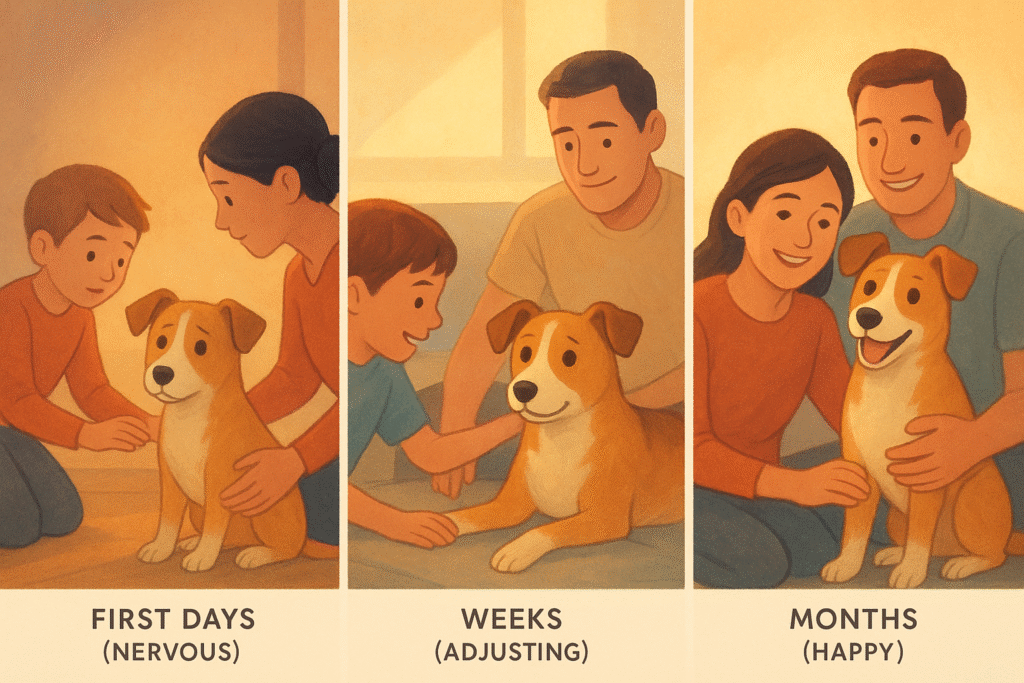
This emotional transition is often explained through the 3-3-3 Rule for Adopting a Rescue Dog, which outlines how many dogs behave during:
- The first 3 days (overwhelmed, shut down)
- The first 3 weeks (testing boundaries)
- The first 3 months (starting to feel at home)
Understanding this framework prevents unrealistic expectations—and replaces frustration with empathy.
🚫 Mistake #1: Expecting Instant Trust or Gratitude
One of the most common adoption myths is that rescue dogs should be immediately affectionate.
In reality, trust is not automatic—it’s earned through consistency and safety.
Early signs of trust are subtle:
- Choosing to stay near you
- Relaxing their body language
- Making brief eye contact
Many adopters mistake neutrality for rejection. But emotional neutrality is often the first stage of healing.
🚫 Mistake #2: Overwhelming Your Dog With “Love”
Love, when delivered too fast, can feel like pressure.
New adopters often:
- Invite visitors immediately
- Take long, stimulating walks
- Introduce toys, treats, and constant interaction
For a rescue dog adjusting to a new home, this can increase anxiety rather than reduce it.
What helps more in the early days:
- Quiet routines
- Fewer expectations
- Predictable environments
🏡 What Actually Helps a Rescue Dog Settle In
🕰️ Consistency Builds Safety
Feed, walk, and rest your dog at roughly the same times each day. Predictability lowers stress faster than affection.
🛏️ Create a Safe Retreat Space
A bed, crate, or quiet corner gives your dog something priceless: control.
They should never be forced out of this space.
🗣️ Calm Communication
Soft voices, slow movements, and neutral reactions teach your dog that humans are emotionally safe.
Many adopters follow principles similar to those in How to Care for a Rescue Dog: A Compassionate Guide for the First 30 Days, which prioritizes emotional stability over obedience.
🧠 Emotional Shutdown vs. “Good Behavior”
Some rescue dogs appear unusually calm or obedient in the first weeks. While this seems ideal, it can actually indicate emotional shutdown.
As trust grows, you may notice:
- Increased energy
- Fear responses
- Boundary testing
This doesn’t mean things are getting worse—it often means your dog finally feels safe enough to express themselves.
😟 Helping an Anxious Rescue Dog Adjust
Anxiety is extremely common in rescue dogs.
Signs may include:
- Pacing or trembling
- Hiding or freezing
- Hyper-vigilance
Helpful strategies:
- Short, calm walks
- Gentle enrichment
- Predictable quiet time
Some adopters consider calming tools. If you’re exploring this option, read Do Anxiety Vests for Dogs Really Work? for a balanced, evidence-based perspective.
⏳ How Long Does It Take for a Rescue Dog to Settle In?
There is no universal timeline.
Adjustment depends on:
- Age and past experiences
- Environment stability
- Human patience and consistency
Some dogs relax within weeks. Others take months. What matters is progress, not speed.
Real-life examples shared in Heartwarming True Dog Rescue Stories That Bring Tears show how emotional healing unfolds gradually—and beautifully.
🤝 When Professional Help Is the Right Choice
If anxiety or fear interferes with daily life, working with a qualified trainer or behavior professional can be transformative.
Seeking help:
- Is not failure
- Does not mean your dog is “broken”
- Often prevents long-term stress
Advocacy is love in action.
❤️ You’re Not Behind
If you’re worried about whether your rescue dog is settling in correctly, that concern itself is a sign of commitment.
Helping a rescue dog settle in is not about perfection.
It’s about patience, safety, and allowing trust to grow on the dog’s timeline—not ours.
With time and compassion, many dogs who once seemed distant form deep, lifelong bonds—proof that healing doesn’t need to be rushed to be real.
❓ FAQs – Helping a Rescue Dog Settle In
How long does it take for a rescue dog to feel at home?
Most dogs begin adjusting within 3 months, but emotional comfort can take longer depending on past experiences.
Should I train my rescue dog right away?
Focus on trust and routine first. Formal training works best once your dog feels safe.
Is it normal if my rescue dog doesn’t want affection?
Yes. Affection often comes later, after trust is established.
What if my rescue dog seems worse after a few weeks?
This is often a sign your dog is opening up emotionally—not regressing.

SaveADoggo Team is a group of animal lovers passionate about rescue dogs, adoption education, and emotional healing for both dogs and humans. Our content is created with research, real-life experience, and compassion to support responsible adoption and stronger human–dog bonds.
All articles are carefully reviewed for clarity, accuracy, and responsible dog care guidance, and updated regularly to ensure trustworthy rescue-focused information.
Our mission is simple: help rescue dogs feel safe, loved, and understood—one home at a time.