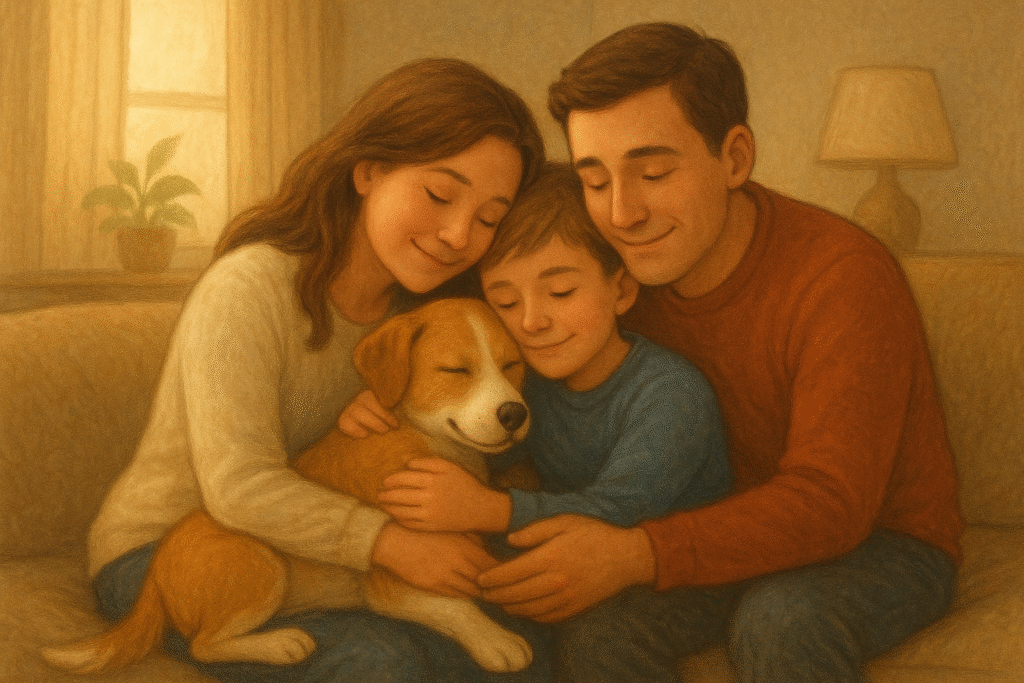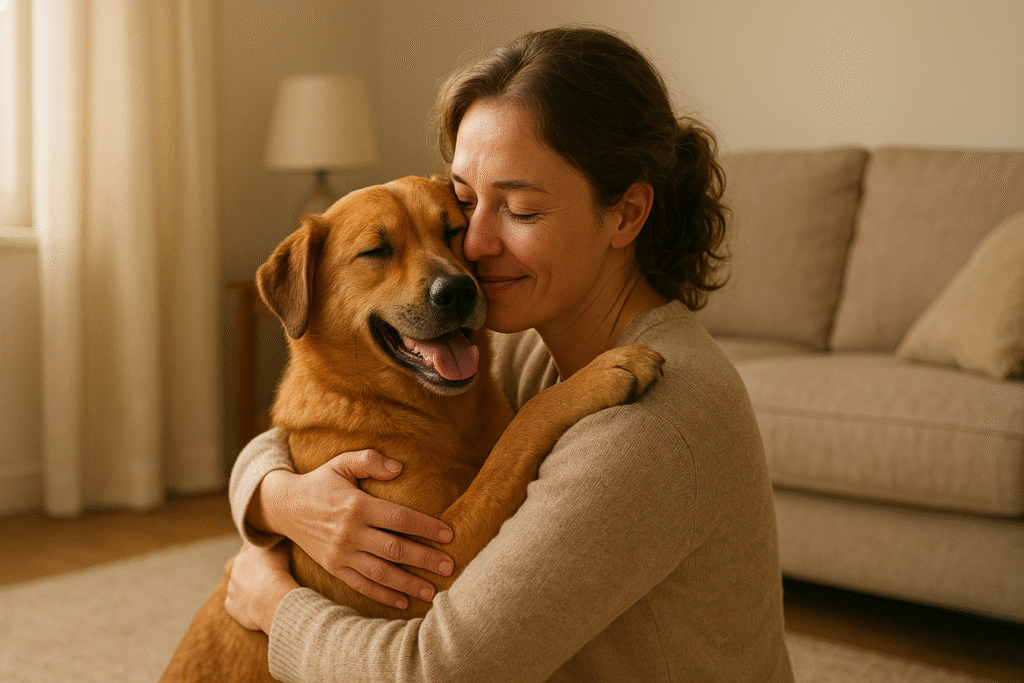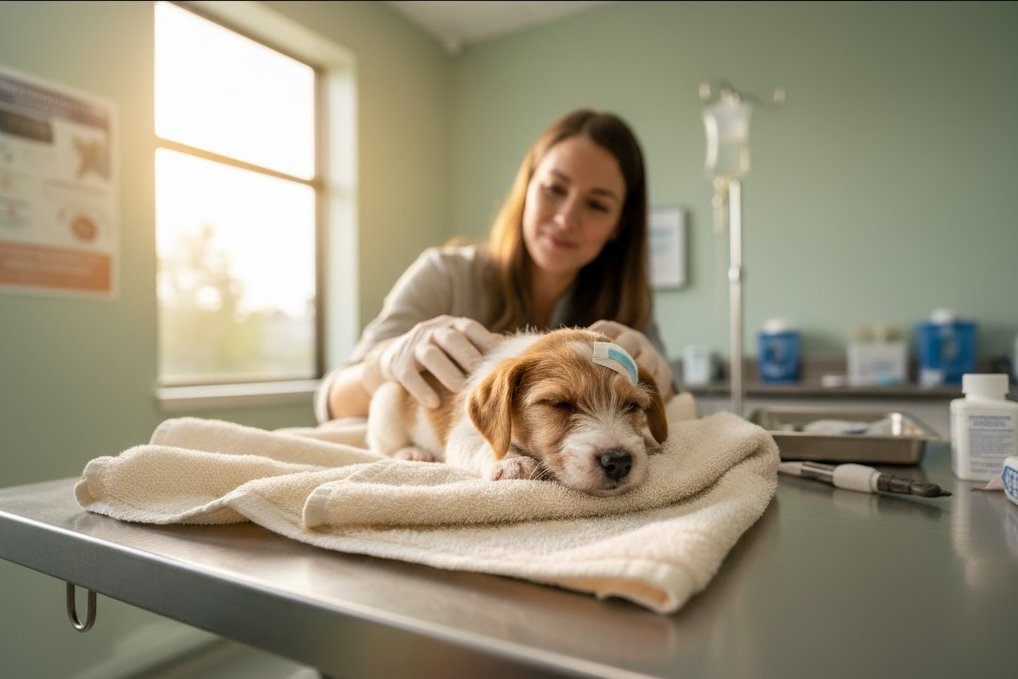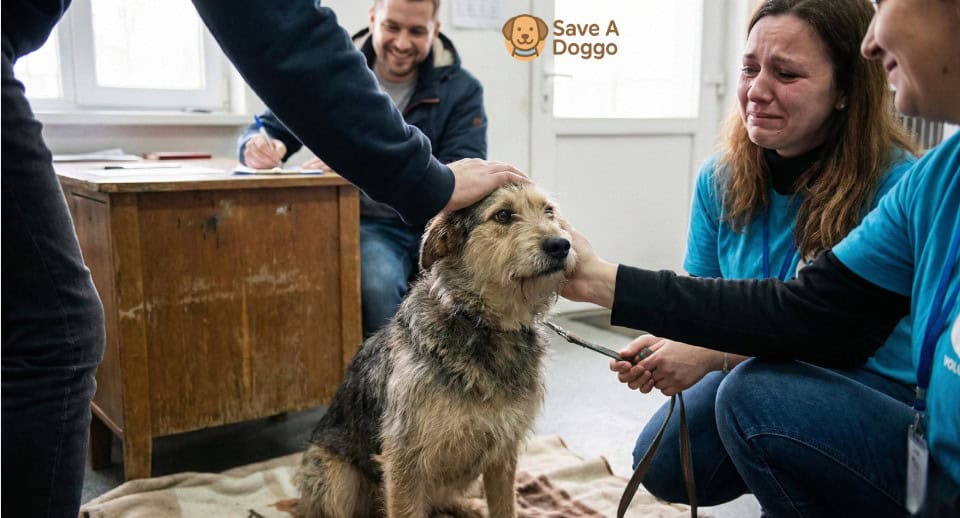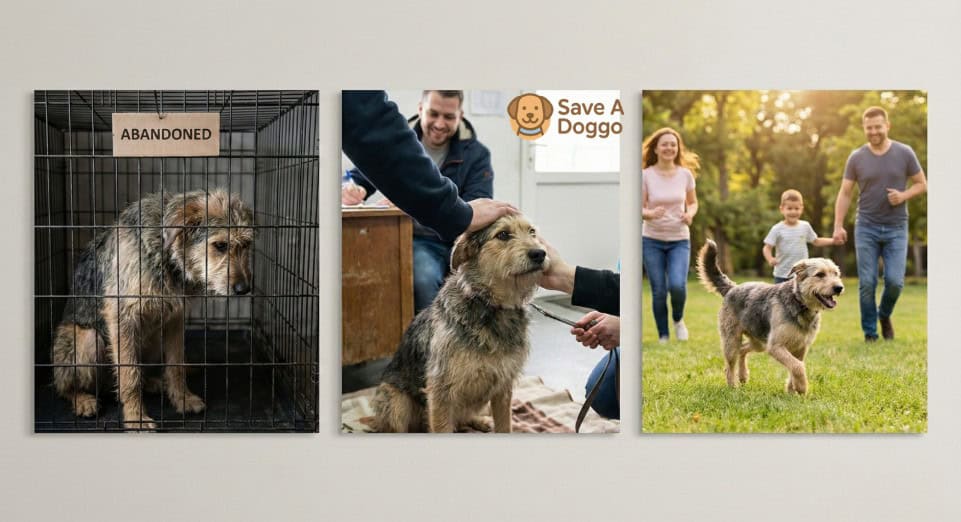
Composite rescue dog stories can help adopters recognize patterns without pretending that an invented animal is a documented case. The three short narratives below combine common experiences reported by adopters, foster families, shelters, and behavior professionals. Names, places, timelines, dialogue, and identifying details are fictional. They are teaching examples—not verified rescue reports.
Quick answer: Rescue progress is rarely a straight line. A dog may need quieter days, predictable routines, choice, medical care, and reward-based support before trust becomes visible. The useful question is not “When will this dog be normal?” but “What does this dog need to feel safe enough for the next small step?”
These stories are deliberately ordinary. No dog saves a child from a burning building, travels hundreds of miles home, or changes overnight because one person offered love. Real adjustment is usually less dramatic and more practical: a dog eats while a person is in the room, rests without monitoring the door, accepts a harness without freezing, or recovers more quickly after a frightening sound.
That slower version of hope is worth telling because it gives new adopters realistic expectations. It also protects dogs from being pushed into greetings, outings, handling, or training before they are ready.
How to read these rescue-inspired stories
- They are composite narratives. Each story blends recurring situations rather than describing one identifiable dog.
- Behavior has more than one possible cause. Pain, illness, fear, learning history, environment, and unmet needs can look similar from the outside.
- Progress is individual. A timeline that fits one dog should not become a deadline for another.
- Safety comes before storytelling. Sudden behavior change, persistent appetite or elimination changes, signs of pain, repeated panic, or any bite risk deserves prompt professional help.
Story 1: The dog who watched the doorway
Milo entered a foster home on a rainy afternoon and chose the far corner of the living room. He did not hide completely. Instead, he kept his body low and watched every trip through the doorway. When someone stood up, his ears shifted back and his muscles tightened. If a hand reached toward him, he turned his head away.
The family wanted to reassure him, but they changed their plan. They placed water, bedding, and a food bowl within easy reach. They used a gate to keep the room quiet, moved sideways instead of approaching directly, and let him decide whether to come closer. Meals arrived on a consistent schedule. Nobody tested his tolerance by petting him while he ate or slept.
On the fourth evening, Milo walked across the room after everyone sat down. He took a piece of food tossed a few feet away, then returned to his bed. A week later he rested with one hip rolled to the side. The change was small, but it mattered: he was beginning to spend less energy monitoring the room.
What this story illustrates
Avoidance is communication. Turning away, freezing, lowering the body, lip licking, and retreating can mean a dog needs more distance. Respecting those signals does not “reward fear.” It gives the dog a predictable way to make an uncomfortable interaction stop.
If your new dog avoids touch, use our consent-based trust plan for a rescue dog who will not allow handling. Arrange a veterinary exam when pain or illness could be contributing, and do not corner the dog to prove that petting is safe.
Story 2: The dog who could not settle at night
Juniper spent her first nights pacing between the bedroom and the front door. She lay down for a minute, stood again, listened, and circled. Her adopter wondered whether she needed more exercise and added a long evening walk. The busy route exposed Juniper to traffic, unfamiliar dogs, and people leaning toward her. That night, she paced even longer.
The next evening was simpler. Juniper had a quiet sniffing walk before dark, a toilet break close to home, and a food puzzle that did not frustrate her. The lights dimmed at the same time. Her bed stayed beside the adopter rather than being moved to a separate room. A fan softened hallway noise.
She still woke twice. Nothing magical happened. Over the following days, however, her first period of sleep became longer. When a noise woke her, she checked the doorway and returned to bed more quickly. Her adopter tracked sleep, appetite, stool, and stressful events instead of judging each night in isolation.
What this story illustrates
More activity is not always more calming. A newly adopted dog may be tired and still unable to relax because the environment is unfamiliar. Predictability, adequate sleep, low-pressure exploration, and a manageable routine can be more helpful than trying to “wear the dog out.”
Persistent nighttime restlessness can also accompany pain, gastrointestinal discomfort, urinary problems, medication effects, or cognitive changes. Contact a veterinarian if pacing is intense, new, worsening, or accompanied by panting at rest, repeated attempts to eliminate, vomiting, diarrhea, appetite loss, disorientation, or signs of pain. Our first-night rescue dog plan explains how to arrange a quieter arrival.
Story 3: The dog who barked at the world
Atlas walked calmly in the yard but lunged and barked when another dog appeared on the sidewalk. His adopter first tried shortening the leash and asking for a sit while the other dog passed. Atlas could not respond. His body leaned forward, his mouth closed, and the barking began as the distance disappeared.
The new plan started farther away. The adopter crossed the street early, stepped behind parked cars when necessary, and chose quieter routes. At a distance where Atlas could notice another dog and still eat, the appearance of the dog predicted food and an easy retreat. Sessions ended before he was exhausted.
There were setbacks. One dog emerged suddenly from a driveway, and Atlas barked again. The adopter did not call the week a failure. She recorded the distance, location, and recovery time, then adjusted the next walk. Success meant fewer unavoidable close encounters and faster recovery—not forcing Atlas to greet dogs.
What this story illustrates
A dog who is already lunging or barking is usually not in the best state for a lesson. Distance is a training tool and a safety measure. Reward-based work begins where the dog can observe the trigger without losing the ability to eat, move away, or respond to a familiar cue.
The American Veterinary Society of Animal Behavior recommends reward-based training methods and advises against aversive tools and techniques. Read its position statements on humane dog training. For a practical setup, see our distance plan for leash reactivity.
A realistic rescue-progress checklist
| What you notice | What it may suggest | A helpful next step |
|---|---|---|
| The dog chooses to approach, sniff, or remain nearby | Curiosity is beginning to compete with caution | Stay low-pressure; let the dog leave without being followed |
| Eating, sleeping, and elimination become more regular | The routine may be becoming predictable | Keep meals, rest, walks, and toilet opportunities consistent |
| Recovery after a sound or sight becomes faster | The dog may be building coping skills | Track recovery time, not only whether a reaction occurred |
| The dog can disengage from a trigger at a greater distance | The training setup may be manageable | Protect that distance; do not rush closer |
| Behavior suddenly worsens or basic functions change | Stress, pain, illness, or an environmental change may be involved | Reduce demands and contact a veterinarian when indicated |
What compassionate help looks like
- Prevent situations the dog cannot yet handle instead of repeatedly testing them.
- Reward behavior you want to see and make the environment easier enough for learning.
- Use barriers, distance, quiet routes, predictable routines, and rest as legitimate support tools.
- Ask the shelter or foster carer what they observed, while remembering that behavior can change across environments.
- Rule out medical contributors when behavior changes suddenly or handling seems painful.
- Seek a qualified reward-based professional for aggression, separation-related distress, severe fear, repeated panic, or safety concerns.
The ASPCA overview of common dog behavior concerns can help you identify when a problem needs a more specific plan. For professional support, the American College of Veterinary Behaviorists directory lists board-certified veterinary behaviorists.
The honest meaning of a second chance
A second chance does not promise that every dog will enjoy every person, place, animal, or activity. It means the dog is given humane care, realistic choices, and a plan based on the animal in front of us. Some dogs become social companions. Others prefer a smaller circle and a quieter life. Both outcomes can be successful when welfare and safety guide the decisions.
The most heartwarming part of rescue is not a dramatic ending. It is the accumulation of small, observable changes made possible by patience, appropriate support, and respect for the dog’s communication.
Frequently asked questions
Are these true rescue dog stories?
No. They are original composite narratives created to illustrate common rescue-dog adjustment patterns. Names, events, locations, timelines, and dialogue are fictional, and the stories are not presented as identifiable case reports.
How long does it take a rescue dog to trust a new person?
There is no reliable universal timeline. History, health, age, environment, genetics, prior learning, household activity, and the adopter’s approach all matter. Watch for trends in eating, sleep, proximity, exploration, recovery, and voluntary interaction rather than expecting trust by a particular day.
Should I ignore a fearful rescue dog?
You do not need to withdraw all support. Provide food, water, toilet opportunities, rest, and calm company while avoiding forced touch, looming, cornering, and repeated approaches. Let the dog control distance whenever safety allows.
When should I get professional help?
Start with a veterinarian for sudden behavior change, pain concerns, appetite or elimination changes, persistent restlessness, or other health signs. Seek qualified behavior help promptly for bites, escalating aggression, severe fear, panic when alone, self-injury, or situations you cannot manage safely.
Editorial note: This article uses fictional composite narratives for education and does not describe verified individual cases. It was reviewed for clear labeling, welfare-first advice, source quality, and medical/behavioral safety boundaries. It is general information, not veterinary diagnosis or an individualized behavior plan.

The Save A Doggo Editorial Team creates practical, welfare-first resources for rescue-dog adopters, foster families, and shelter supporters. We prioritize primary and authoritative sources, distinguish observation from diagnosis, correct material errors transparently, and explain when veterinary or qualified behavior support is needed. We do not claim veterinary credentials or professional review unless a named, verifiable reviewer has approved the final article.