
How to Help a Rescue Dog Adjust to Their New Home (A Gentle Guide for First-Time Adopters)
Bringing home a rescue dog is one of the most rewarding things you can do — but it can also feel a little overwhelming. Many rescue dogs have been abandoned, neglected, overwhelmed, or confused. Some have lived in shelters for months; others may have experienced trauma, instability, or constant change.
So the question many new adopters ask is:
“How do I help my rescue dog adjust to their new home, feel safe, and finally trust again?”
This complete guide will take you through the essential 3 adjustment stages: the first 3 days, 3 weeks, and 3 months, plus the routines, training tips, and emotional support your dog truly needs.
If you’re adopting for the first time, you may also want to read our guide:
👉 Top 5 Dog Adoption Tips for First-Time Owners
Understanding the Adjustment Timeline (3-3-3 Rule)
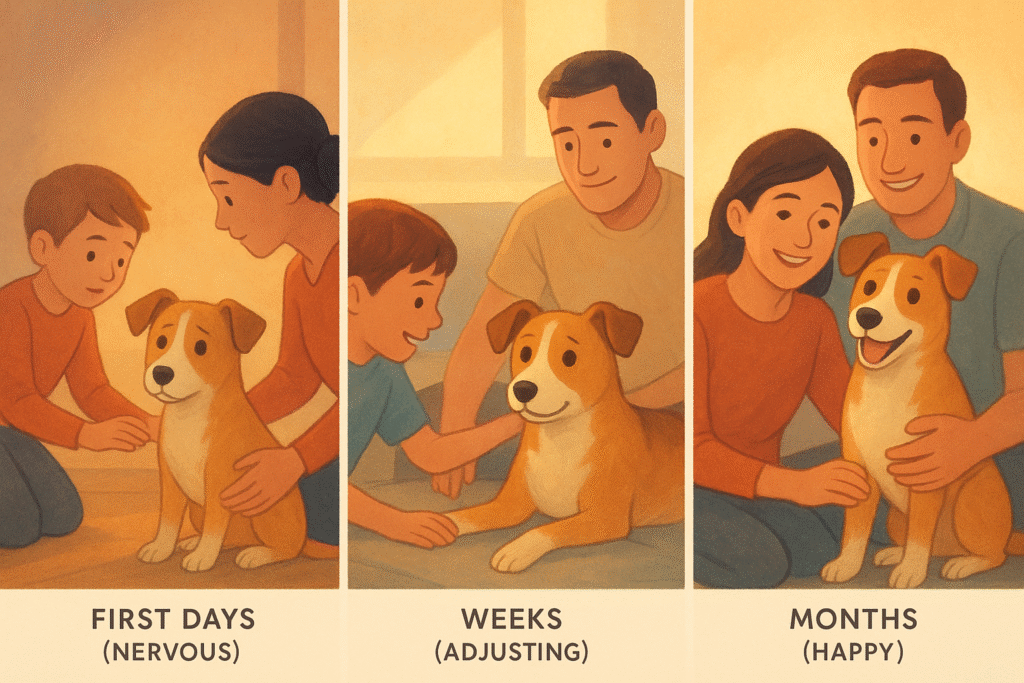
Most rescue dogs go through a predictable emotional transition known as the 3-3-3 Rule:
| Stage | What’s happening | What your dog needs |
|---|---|---|
| First 3 Days | Fear, stress, shut-down, testing boundaries | Quiet, routine, patience |
| First 3 Weeks | Learning the routine, building trust | Consistency, gentle training |
| First 3 Months | Permanent bonding, full personality shows | Stability, long-term structure |
Let’s break down each stage — with emotional insight, mistakes to avoid, and how to build trust.
Stage 1 — The First 3 Days (Decompression)
Your new rescue dog is overwhelmed. Even if they seem calm, their body is flooded with stress hormones. Everything is new: the smells, the walls, the people, the sounds.
What Most Rescue Dogs Feel During the First 72 Hours
- Confused about where they are
- Unsure if they’re safe
- Scared of new people or noises
- Too stressed to eat
- Either extremely quiet or overly clingy
Their behavior is not their “real personality” yet — just a survival response.
How to Support Your Dog in the First 3 Days
✔ 1. Create a Safe, Quiet “Decompression Space”
A small corner with:
- A soft bed
- Water
- A blanket
- A toy
- No loud noise
This lets them retreat without pressure.
✔ 2. Limit visitors and excitement
No parties. No guests.
Your dog doesn’t need attention — they need security.
✔ 3. Keep everything low-pressure
Don’t force cuddles, playtime, or introductions.
Let your dog come to you when they’re ready.
✔ 4. Start a gentle, predictable routine
Same potty times, same meal times, same walking schedule.
Routine = safety.
✔ 5. Expect accidents & confusion
They’re not “misbehaving” — they’re adapting.
Stage 2 — The First 3 Weeks (Trust Begins)
This is when your rescue dog slowly realizes:
“Maybe… this is my home.”
They begin testing boundaries, exploring, and showing more personality.
Common Behaviors in Week 1–3
- Barking or guarding resources
- Minor separation anxiety
- Shyness turning into confidence
- Trying to figure out your rules
- Testing what’s allowed
This is normal. Your dog isn’t “acting out” — they’re learning how your home works.
If you’re preparing your home for a new dog, read:
👉 How to Prepare for Dog Adoption
How to Build Trust During the First 3 Weeks
✔ 1. Establish a Simple Daily Routine
A stable routine reduces anxiety dramatically.
Sample rescue dog routine:
- 7:00 – Morning potty
- 7:15 – Breakfast
- 10:00 – Short walk
- 1:00 – Quiet rest time
- 5:00 – Evening walk & light training
- 7:00 – Dinner
- 9:00 – Calm bonding time
Predictability builds confidence.
✔ 2. Use gentle training (positive reinforcement only)
Rescue dogs respond best to:
- Treats
- Praise
- Gentle encouragement
- Short sessions (5–10 minutes)
Never use punishment — it destroys trust.
✔ 3. Socialize slowly
Introduce:
- New sounds
- New rooms
- New people
But always at their pace.
✔ 4. Start bonding activities
- Hand-feeding
- Sniff walks
- Gentle brushing
- Quiet time together
These build deep emotional safety.
✔ 5. Expect some regression
It’s normal if they:
- Have a potty accident
- Cry when left alone
- Show fear
- Act clingy
Be patient — trust takes time.
Stage 3 — The First 3 Months (Real Bonding)
This is when the magic happens.
Your dog begins to feel like part of the family — not a visitor.
What to Expect After 90 Days
- True personality emerges
- Deep attachment forms
- Fewer accidents
- More confidence
- Relaxed body language
- Better training response
You’ll begin to truly understand who they are — goofy, calm, energetic, shy, silly, cuddly, or a mix of all.
How to Help Your Dog Thrive Long-Term
✔ 1. Continue stable routines
Dogs feel safest when life is predictable.
✔ 2. Begin more advanced training
- Leash walking
- Stay / Come
- Calm greetings
- Crate confidence
Training strengthens trust.
✔ 3. Provide enrichment
Rescue dogs often lack stimulation from shelter life.
Offer:
- Puzzle toys
- Sniff games
- Long walks
- Chews
✔ 4. Watch for lingering trauma signs
If your dog shows:
- Extreme fear
- Severe separation anxiety
- Resource guarding
- Shutdown behavior
Then consider working with a positive reinforcement trainer.
✔ 5. Build emotional security
Love isn’t enough — consistency is what truly heals rescue dogs.
Common Mistakes New Adopters Should Avoid
❌ Expecting instant trust
❌ Punishing accidents
❌ Overwhelming the dog with visitors
❌ Forcing interaction
❌ Changing routines constantly
❌ Comparing them to other dogs
The key to success is:
Time + Patience + Structure = a confident rescue dog.
When to Seek Professional Help
Consider a behaviorist if your dog shows:
- Severe reactivity
- Panic attacks
- Extreme fear of humans
- Unable to sleep due to anxiety
- Persistent aggression
Early intervention prevents long-term struggles.
Need inspiration? Here are some beautiful rescue stories:
👉 10 Heartwarming Dog Rescue Stories That Will Make You Smile
Frequently Asked Questions
How long does it take for a rescue dog to adjust to a new home?
Most rescue dogs adjust within 3 days, begin trusting after 3 weeks, and fully settle in around 3 months.
How can I help a fearful rescue dog feel safe?
Give them space, keep a routine, avoid overwhelming situations, and use gentle positive reinforcement.
Should I crate-train a rescue dog?
Crate training is helpful if done positively — never force the dog into the crate.
What should I do if my rescue dog won’t eat?
Low appetite is normal during decompression. Offer quiet space, soft food, and monitor within 24–48 hours.

SaveADoggo Team is a group of animal lovers passionate about rescue dogs, adoption education, and emotional healing for both dogs and humans. Our content is created with research, real-life experience, and compassion to support responsible adoption and stronger human–dog bonds.
All articles are carefully reviewed for clarity, accuracy, and responsible dog care guidance, and updated regularly to ensure trustworthy rescue-focused information.
Our mission is simple: help rescue dogs feel safe, loved, and understood—one home at a time.