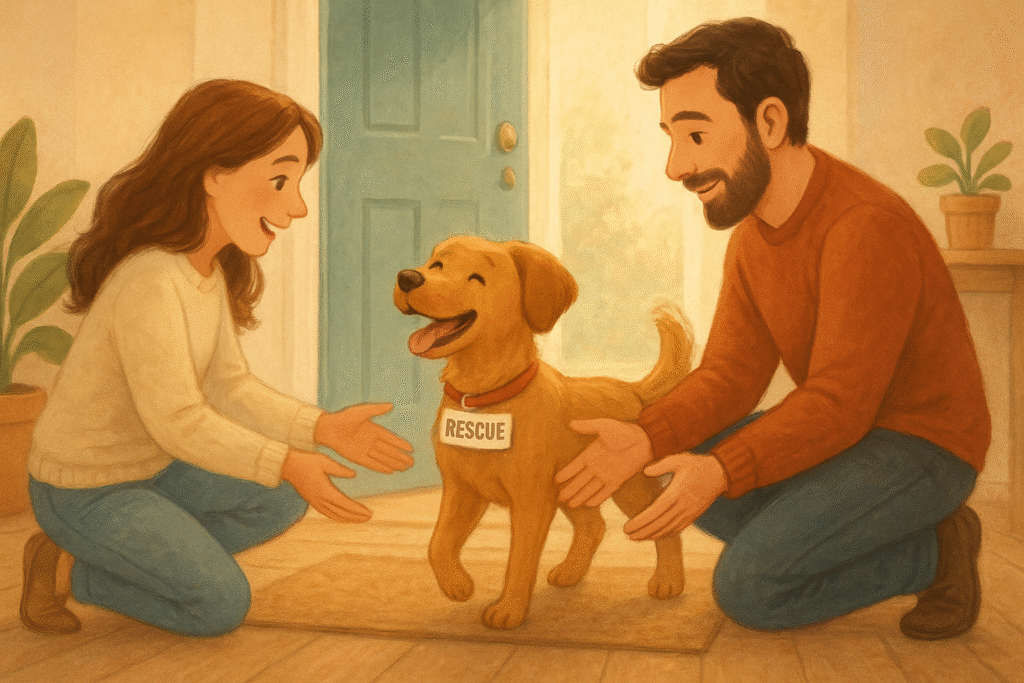

If you are new to adoption, the phrase “shelter dog and rescue dog” can feel oddly confusing. People often use the words interchangeably, and sometimes they are talking about the same dog. A dog may start in a city shelter, move into a foster-based rescue, and eventually be adopted as someone’s beloved family dog.
The good news: you do not have to master the whole rescue world before you adopt. You only need to understand what each adoption path usually means, what questions to ask, and how to choose a dog whose needs fit your real life.
Quick Answer
A shelter dog usually comes through a physical animal shelter or municipal facility, while a rescue dog is often placed through a nonprofit rescue group, sometimes from a foster home. The biggest differences are usually the adoption process, how much home-life history is known, and what support is available after adoption.
What “Shelter Dog” Usually Means
A shelter dog is typically a dog cared for by an animal shelter, humane society, SPCA, or municipal animal services agency. Some shelters have kennels where adopters can visit dogs in person. Others also use foster homes, especially for puppies, senior dogs, medical cases, or dogs who find the shelter environment stressful.
Shelter dogs may arrive as strays, owner surrenders, transfers from other shelters, or animals involved in difficult family circumstances. That means their history can vary widely. Some come with notes from a previous home. Others arrive with very little background.
For first-time adopters, shelters can be a welcoming place to start because you may be able to meet several dogs in one visit. Staff and volunteers often notice kennel behavior, leash manners, sociability, energy level, and how a dog responds to different handlers.
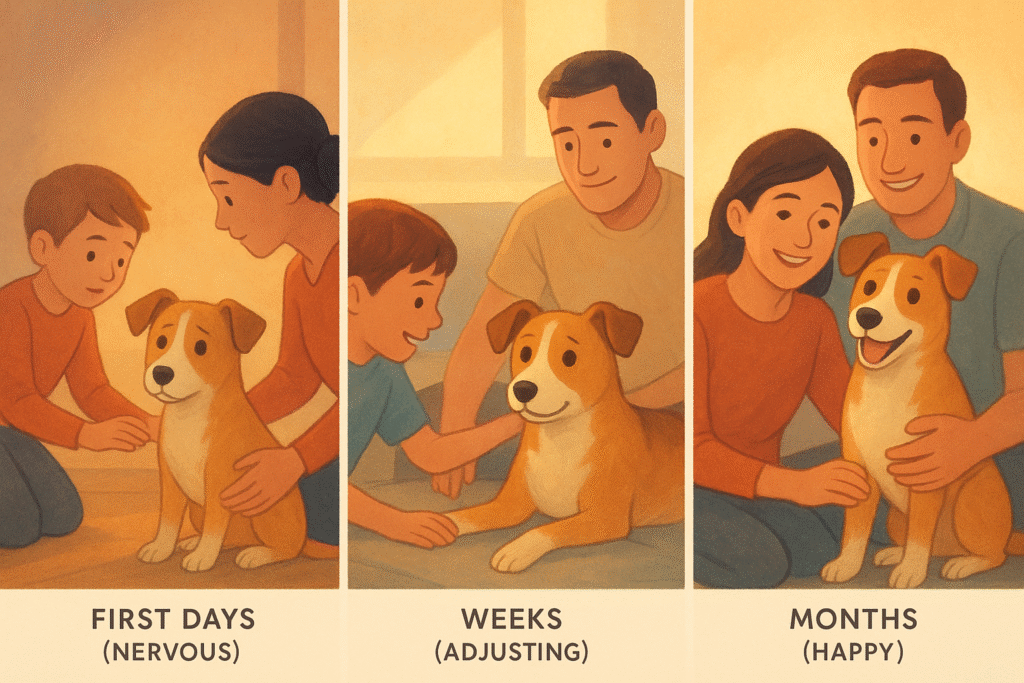
Still, the shelter environment is not a living room. A dog who barks in a kennel may be quiet at home. A dog who seems shut down may begin to relax after a few days. That is why it helps to read Save A Doggo’s 3-3-3 Rule for Rescue Dogs before you bring anyone home.
What “Rescue Dog” Usually Means
A rescue dog is usually a dog placed through a private nonprofit rescue group. Some rescues are breed-specific, some focus on seniors or special-needs dogs, and many help mixed-breed dogs from overcrowded shelters, owner surrenders, or community rescue situations.
Many rescue dogs live in foster homes while waiting for adoption. This can be especially helpful for first-time adopters because a foster family may be able to describe daily life details, such as:
- Whether the dog is comfortable in a crate
- How the dog behaves when left alone
- How much exercise the dog seems to need
- Whether the dog has lived with cats, dogs, or children
- How the dog handles visitors, stairs, car rides, and neighborhood walks
- What routines help the dog settle
That kind of information is valuable, but it is not a guarantee. A dog can behave differently in a new home, with new people, a new schedule, and new stress. Think of foster notes as a helpful preview, not a promise.
Key Differences Between Shelter Dogs and Rescue Dogs
Adoption Process
Shelter adoptions are often more direct. You may visit during open hours, meet dogs, talk with an adoption counselor, complete an application, and sometimes adopt the same day. Some shelters require landlord approval, family introductions, or dog-to-dog meetings before finalizing an adoption.
Rescue adoptions may take longer. A rescue may ask for an application, references, a phone interview, a home check, or a meet-and-greet with the foster family. This does not automatically mean the rescue is “stricter” or the shelter is “easier.” It usually reflects how each organization is structured.
For a first-time adopter, neither process is better by default. A faster process can be convenient, but a slower process may give you more time to think carefully.
Records and Background
Shelters often provide intake notes, basic medical records, vaccination records, spay/neuter information, and any behavior observations they have. If the dog was a stray, there may be limited history before arrival.
Rescues may provide records from the shelter, veterinary care arranged by the rescue, and foster observations. A rescue may know more about home behavior if the dog has been in foster care for several weeks.
Ask for records in writing whenever possible. You are not being difficult; you are preparing to care for the dog well.
Foster History
This is one of the biggest practical differences. A foster-based rescue can often describe how a dog behaves in a house. That can matter if you live in an apartment, work outside the home, have children, or already have pets.
Shelters can still have excellent insight, especially when staff and volunteers spend time with the dogs. Some shelters run playgroups, behavior evaluations, foster sleepovers, or field trips. Ask what kind of observations they have.
A simple but powerful question is: “What have you learned about this dog outside the kennel?”
Post-Adoption Support
Support varies by organization, not by label. Some shelters offer behavior hotlines, training discounts, adoption follow-ups, or return support. Some rescues stay closely connected to adopters for weeks or months. Others have limited capacity.
Before adopting, ask:
- Who should I contact if the dog is not eating, hiding, or barking a lot?
- Do you offer post-adoption training guidance?
- What is your return or rehoming policy?
- Can I speak with someone who knows this dog well?
- Do you recommend a vet visit within a certain timeframe?
A good organization wants the adoption to work for both the dog and the family.
Which Option Is Better for First-Time Adopters?
The best choice is not “shelter dog” or “rescue dog.” The best choice is the individual dog whose needs match your home, schedule, experience, and support system.
For many first-time adopters, an adult dog with a known temperament may be easier than a very young puppy or high-energy adolescent. A dog who has lived in foster care may offer more home-life information. A shelter dog may be a wonderful match if staff can guide you toward a calm, people-friendly dog with manageable needs.
Focus less on the label and more on fit:
- Energy level: Can you meet the dog’s daily exercise needs?
- Size and strength: Can you safely walk and handle the dog?
- Alone time: Does the dog seem able to cope with your work schedule?
- Household: Has the dog been observed around children, dogs, or cats?
- Training needs: Are you ready for house training, leash work, or confidence building?
- Stress level: Can you give the dog a quiet adjustment period?
A quick disclaimer: this article is educational and cannot diagnose medical or behavior concerns. If a dog has a bite history, severe fear, escalating aggression, ongoing pain, or sudden behavior changes, talk with a veterinarian and a certified trainer or veterinary behavior professional.
Questions to Ask Before Deciding
Bring these questions to either a shelter or a rescue. The answers matter more than the organization type.
About the Dog’s History
- How did this dog come into your care?
- Do you know if the dog lived in a home before?
- Has the dog been returned from adoption before? If so, why?
- Are there any known medical needs or medications?
About Behavior
- What does the dog do when stressed?
- How does the dog respond to handling, leashing, and new people?
- Has the dog met other dogs here?
- Has the dog been around cats or children?
- Does the dog guard food, toys, beds, or people?
About Daily Life
- Is the dog house trained?
- Is the dog crate trained?
- How does the dog handle being alone?
- How much exercise seems appropriate?
- What routine helps this dog settle?
About Support
- What happens if the adoption is not a good fit?
- Do you offer training resources?
- Can you recommend a local vet or certified trainer?
- What should I do during the first week home?
After adoption, start gently. Keep the dog’s world small, predictable, and calm. Save big outings, crowded patios, and introductions to everyone you know for later. For step-by-step support, read Save A Doggo’s guide to Training an Adopted Dog.
FAQ
Is a rescue dog the same as a shelter dog?
Sometimes, yes. A rescue dog may come from a shelter before being transferred to a rescue group. In everyday conversation, “rescue dog” can also mean any adopted dog. The more useful question is where the dog is living now and what the organization knows about them.
Are shelter dogs harder to train?
No, not automatically. Training depends on the individual dog, previous experiences, age, temperament, health, and your consistency. Some shelter dogs settle quickly. Some foster-based rescue dogs need time. Start with kindness, structure, and simple routines.
Do rescue dogs always have trauma?
No. Many adopted dogs have experienced change, stress, or loss, but it is not fair to assume every rescue dog is traumatized. Treat the dog in front of you with patience and curiosity. Watch their body language and let trust build gradually.
Is a foster-based rescue better for first-time adopters?
It can be helpful, especially if you need detailed home-life information. A foster may know how the dog behaves overnight, with visitors, or during alone time. But many shelters also provide excellent adoption counseling. Choose the dog and organization that give you clear, honest information.
Should I adopt from a shelter or a rescue if I have kids?
Either can work, but ask careful questions. Look for a dog with known, comfortable behavior around children and realistic energy needs. Plan slow introductions and always supervise. If there are any concerns about fear, guarding, or rough handling, consult a certified trainer.
What should I do first after bringing the dog home?
Keep things calm. Set up food, water, a bed, a quiet rest area, and a simple potty routine. Avoid overwhelming the dog with visitors or outings. Give them time to decompress, then build training gradually with short, positive sessions.
Final Thought
Whether you adopt a shelter dog or a rescue dog, you are not choosing a label. You are choosing a relationship. The right match is the dog you can support with patience, realistic expectations, and steady care.
Read the adoption checklist next in Save A Doggo’s Adoption Tips library, then keep the 3-3-3 rule nearby for your first few weeks together.
Sources and further reading

The Save A Doggo Editorial Team creates practical, welfare-first resources for rescue-dog adopters, foster families, and shelter supporters. We prioritize primary and authoritative sources, distinguish observation from diagnosis, correct material errors transparently, and explain when veterinary or qualified behavior support is needed. We do not claim veterinary credentials or professional review unless a named, verifiable reviewer has approved the final article.