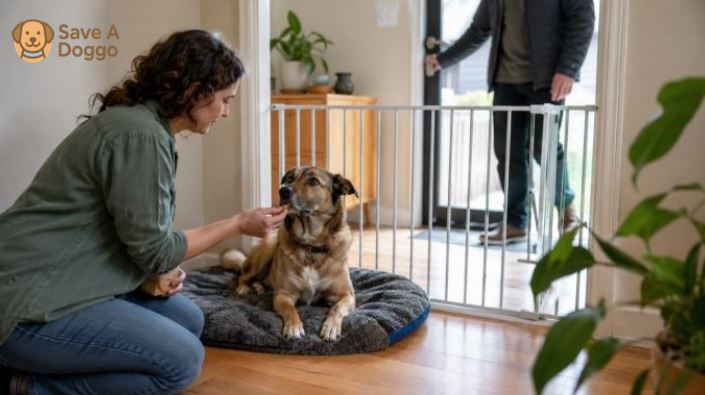
If your rescue dog barks at visitors, it can feel embarrassing, stressful, and a little heartbreaking. The goal is not to “make them be friendly.” The first goal is safer arrivals: more distance, fewer surprises, clear visitor instructions, and a predictable routine your dog can rehearse before real guests arrive.
Quick Answer: If your rescue dog barks at visitors, put safety before greetings. Use a closed door, baby gate, crate, or separate room before opening the entrance; send your dog to a familiar station; ask visitors to ignore the dog; and reward quiet looking, sniffing, or settling at a comfortable distance. If barking includes lunging, snapping, or a bite history, stop greetings and get professional help.
Why Doorways Amplify Arousal When a Rescue Dog Barks at Visitors
Doorways are intense for dogs. A knock, doorbell, footsteps, voices, and a person suddenly entering the home can all happen within seconds. For a newly adopted rescue dog, that can feel like too much information in too small a space.
Barking at visitors is not automatically “protectiveness” or stubbornness. It may be fear, excitement, frustration, territorial arousal, sound sensitivity, or a learned pattern: bark hard, person pauses or leaves, barking feels effective. Cornell’s canine health guidance notes that anxious behavior can include excessive barking and that consistency and predictability can help dogs cope with unsettling situations.
Some dogs bark because they want contact but cannot handle the pressure of a greeting. Others bark because the entryway removes their escape options. The MSD Veterinary Manual notes that aggression around the home can be shaped by fear, learning, and tight spaces where a dog cannot easily avoid the visitor. That is why doorway work begins with management, not manners.
Safety Setup Before the Door Opens
Before practicing any training, decide where your dog will be when the door opens. If you are improvising while a guest is standing outside, your dog is already rehearsing the old routine.
- Use two layers for higher-risk dogs: for example, a closed room plus a baby gate, or a leash attached to a harness behind a gate. Do not use the leash to drag, correct, or hold the dog close to visitors.
- Place the station away from the door: the mat, bed, crate, or safe room should be far enough back that your dog can eat, sniff, look away, or settle.
- Remove window rehearsal: if your dog charges the front window before guests arrive, close blinds or use a back room with white noise.
- Prepare rewards before the knock: use tiny treats, a stuffed food toy, or a chew your dog already tolerates well.
- Tell visitors the plan before they arrive: text them the script so they do not reach, stare, bend over, or say, “Dogs love me.”
For more detail on safe handling at the door, set up the environment so your dog does not need to make a last-second decision near a guest’s hands, face, or legs.
Doorway Decision Rules
| What you see | What it may mean | What to do next |
|---|---|---|
| Barks, then takes food and looks back at you | Aroused but still able to learn | Increase distance slightly, reward looking and reorienting, keep the guest ignoring the dog |
| Barks continuously and cannot eat | Too close, too loud, or too much pressure | Move the dog to a quieter room and end greetings for that visit |
| Lunges, snaps, growls stiffly, or blocks the entry | Safety risk; dog needs more protection and distance | Use two barriers and consult a qualified professional before visitor practice |
| Hides, trembles, tucks tail, or freezes | Fear or shutdown, not calmness | Give a safe room and no visitor interaction; reward voluntary recovery later |
Teach a Predictable Station
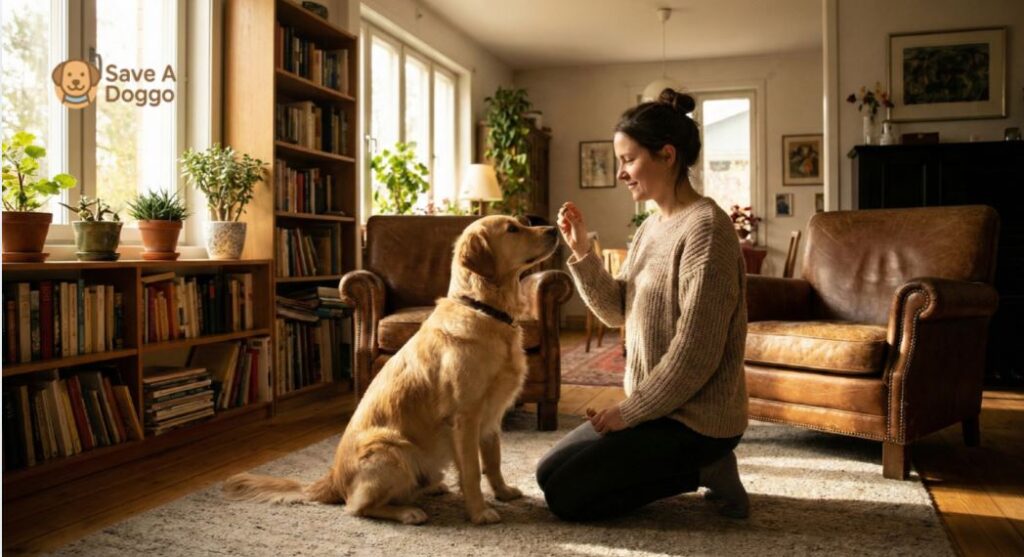
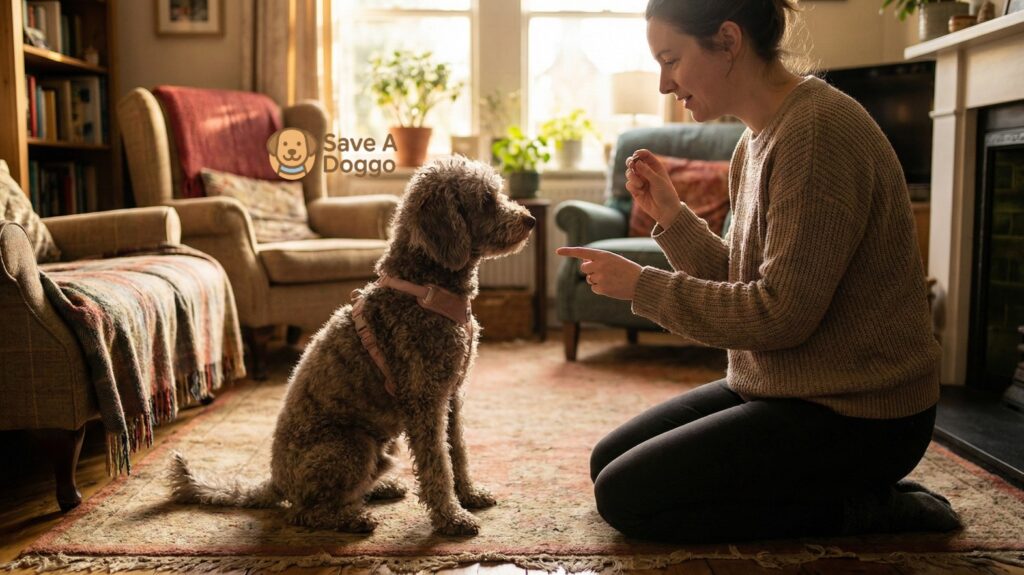
A station is a place your dog can go when something happens at the door: a mat, dog bed, crate, gated hallway, or quiet room. It should not feel like banishment. It should feel familiar, paid well, and predictable.
- Place the mat or bed away from the entrance.
- Drop a treat on the station when your dog looks at it, steps on it, or chooses to lie down.
- Add a simple cue such as “place,” “mat,” or “room.”
- Practice when no guests are present until your dog can go there easily.
- Add tiny doorway sounds: touch the doorknob, open the door one inch, close it, then reward.
- Practice fake arrivals with a household member before inviting real visitors into the plan.
Keep sessions short. If your dog leaves the station, guide them back with food placement or reset the environment. Do not scold. AVSAB’s current humane training guidance recommends reward-based training for behavior modification and advises against aversive tools or punishment.
Visitor Script
Most visitor problems start because humans try to be polite in human ways: eye contact, leaning forward, talking sweetly, reaching out a hand. Many worried dogs experience those gestures as pressure.
One-minute visitor briefing: “Please come in calmly and ignore the dog at first. No eye contact, no reaching, no talking to them, and no bending over them. If I hand you treats, toss them away from your body, not from your hand. We are helping the dog feel safe, not asking them to say hello.”
Post this script near the door. It helps guests follow the plan without taking your dog’s behavior personally.
The First Five Minutes After Entry
The first five minutes matter more than the greeting itself. Your dog does not need to meet the visitor right away—or at all. A successful visit may simply mean your dog stayed behind a gate, barked less intensely, recovered faster, and never had to interact.
- Minute 0-1: Dog is already behind the barrier or on the station before the door opens.
- Minute 1-2: Visitor enters without looking at or speaking to the dog.
- Minute 2-3: You reward any small recovery sign: sniffing, looking away, taking food, sitting, lying down, or turning back to you.
- Minute 3-5: Visitor sits sideways or moves farther away. Your dog stays at a distance where they can think.
If your dog escalates, do not “wait it out.” Add distance, close a door, or move your dog to a safe room. The RSPCA recommends that dogs have access to a safe hiding place when they feel afraid, and this applies strongly during visitor arrivals.
Reward Calm Observation
For many dogs, the first skill is not silence. It is noticing a visitor and then recovering. Reward that recovery.
Useful moments to mark and reward include:
- looking at the visitor and then looking back at you
- hearing the doorbell and staying on the station
- sniffing the floor instead of staring
- softening the body after a bark
- choosing distance instead of rushing forward
- settling behind a gate while the visitor ignores them
If your dog is already over threshold—barking hard, lunging, refusing food, or unable to turn away—do not keep feeding in place and hope it works. Increase distance first. Food works best when your dog is still able to notice, think, and recover.
If you are still learning your dog’s signals, review how to read your rescue dog’s body language so you can spot stiffness, lip licking, whale eye, tucked posture, hard staring, and other early stress signs before barking explodes.
Common Mistakes
- Letting guests “make friends” with treats from their hands: this can lure a worried dog closer than they are ready for, then the dog panics when the food is gone.
- Correcting the bark: yelling, leash pops, spray bottles, or bark collars may suppress noise while increasing fear or conflict.
- Opening the door with the dog loose: this creates escape risk and gives the dog too much responsibility.
- Allowing repeated window charging: barking at people through glass can make the doorway routine harder.
- Ignoring growls: growling is information. Punishing it may remove a warning without changing the dog’s fear.
- Training only during real visits: practice the station and door sounds when no guest is present, so the dog can learn calmly.
A positive reinforcement training plan works best when the environment is arranged so the dog can succeed before you ask for harder behavior.
Delivery Workers and Contractors
Delivery workers, repair technicians, cleaners, movers, and contractors are not training helpers. They have a job to do, they may carry tools, and they may need to move unpredictably. Treat these visits as management events, not socialization sessions.
- Put your dog in a safe room before opening the door.
- Use white noise, a fan, or calm background sound if hallway noise triggers barking.
- Place a note outside: “Please do not knock. Text or leave package by door.”
- For longer work visits, plan potty breaks when workers are outside or in another closed area.
- Keep gates, doors, and yard access secured so a startled dog cannot bolt.
- Do not ask contractors to feed, greet, or “help train” your dog.
If a visitor must enter repeatedly, such as during repairs, set up your dog’s room with water, bedding, enrichment, and a visual barrier. Calm separation is kinder than repeated surprise exposure.
When to Consult a Professional
Get help sooner if barking includes lunging, snapping, biting, hard staring, blocking the doorway, redirected biting toward family members, or panic that does not settle after the visitor leaves. Also seek help if children, older adults, or medically vulnerable people visit your home often.
Start with your veterinarian if the behavior is new, worsening, or paired with signs of pain, illness, confusion, or sudden irritability. Pain and medical discomfort can lower a dog’s tolerance. For serious fear or aggression, ask about referral to a board-certified veterinary behaviorist, certified applied animal behaviorist, or qualified force-free trainer experienced with visitor-directed behavior.
A basket muzzle may be useful in some safety plans, but it should be introduced gradually with rewards and professional guidance. A muzzle is not a substitute for barriers, distance, and visitor rules.
Printable Doorway Checklist
- Choose the dog’s station: ______________________________
- Choose the first barrier: ______________________________
- Choose the second barrier if needed: ____________________
- Write the trigger distance where barking begins: __________
- Prepare rewards before guests arrive.
- Text the visitor script before the visit.
- Move dog to station before opening the door.
- Ask visitor to ignore the dog completely.
- Reward looking, reorienting, sniffing, settling, or staying behind the barrier.
- End greetings if the dog cannot eat, cannot disengage, lunges, snaps, or hides.
- After the visit, record what happened and adjust distance next time.
Doorway Progress Log
| Date | Visitor type | Dog’s starting distance | Body language | Could take food? | Recovery time | Next adjustment |
|---|---|---|---|---|---|---|
| ________ | Friend / delivery / contractor | ________ | Loose / stiff / hiding / lunging | Yes / No | ________ | More distance / same setup / professional help |
| ________ | Friend / delivery / contractor | ________ | Loose / stiff / hiding / lunging | Yes / No | ________ | More distance / same setup / professional help |
FAQs
Should I let visitors give my barking dog treats?
Usually not from the hand at first. Hand-feeding can lure a nervous dog too close. If your dog can stay relaxed, the visitor may toss treats away from their body only if you direct them to do so.
Is my rescue dog being protective?
Maybe, but many doorway reactions are fear, arousal, frustration, or learned behavior. Focus less on the label and more on what helps your dog recover safely: distance, barriers, predictability, and no forced greetings.
Should I use a bark collar for visitors?
No. Bark collars do not teach your dog what to do instead and can add fear or discomfort to an already stressful visitor situation. Use management and reward-based training instead.
When can my dog greet guests?
Only when your dog can stay loose, take food, disengage, and choose to approach without pressure. Some dogs do best with no greetings for a while, and some may always need managed distance with certain visitors.
What if my dog barks from the crate or safe room?
That means the setup still feels too intense. Add distance, reduce sound, use visual barriers, offer a safe chew if appropriate, and practice easier door sounds when no visitor is present.
Brief Safety Note
This article is general education, not a diagnosis or a personalized aggression plan. If your dog has lunged, snapped, bitten, cornered visitors, or redirected onto a family member, use secure barriers immediately and work with your veterinarian and a qualified behavior professional before attempting visitor greetings.
Sources & Further Reading
- AVSAB: Position Statements and Humane Dog Training
- RSPCA: Understanding Dog Behaviour
- Cornell Riney Canine Health Center: Anxious Behavior in Dogs
- VCA Animal Hospitals: Fears and Phobias in Dogs—Animals and People
- MSD Veterinary Manual: Behavior Problems of Dogs
Post the visitor script near the door and rehearse it without guests.
The Save A Doggo Editorial Team creates practical, welfare-first resources for rescue-dog adopters, foster families, and shelter supporters. We prioritize primary and authoritative sources, distinguish observation from diagnosis, correct material errors transparently, and explain when veterinary or qualified behavior support is needed. We do not claim veterinary credentials or professional review unless a named, verifiable reviewer has approved the final article.