
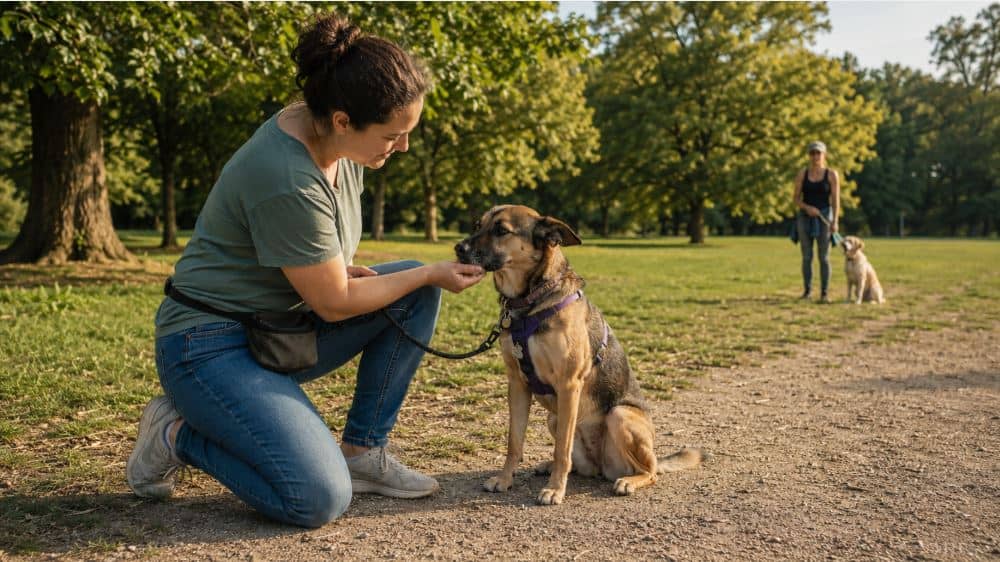
Leash reactivity in rescue dogs can make walks feel stressful, embarrassing, and even unsafe.
Your dog may bark, lunge, growl, pull, spin, whine, or fixate when they see another dog, person, bike, car, or unfamiliar object. Many owners feel confused because their rescue dog may be sweet at home but suddenly intense outside.
Leash reactivity does not always mean a dog is aggressive. Often, it means the dog is overwhelmed, afraid, frustrated, overstimulated, or unsure what to do while restrained by a leash.
The good news: you do not need to “correct” your dog into silence. A gentle plan based on distance, management, rewards, and calm repetition can help your rescue dog feel safer and make better choices over time.
Quick Answer
Leash reactivity in rescue dogs often happens when a dog feels afraid, frustrated, or overstimulated while restrained on leash. A gentle beginner plan starts by creating distance from triggers, rewarding calm looking or disengaging, avoiding forced greetings, and managing walks to prevent repeated explosive reactions. If walks feel unsafe, work with a certified force-free trainer or veterinary behavior professional.
What Leash Reactivity Looks Like
Leash reactivity can look different from dog to dog.
Some dogs explode loudly. Others become stiff and silent before reacting. Some want distance. Others desperately want to reach the other dog or person.
Common signs include:
- Barking
- Lunging
- Growling
- Pulling hard
- Spinning
- Whining
- Staring intensely
- Freezing
- Hackles raised
- Jumping upward
- Snapping at the leash
- Redirecting toward the handler
- Refusing treats
- Ignoring known cues
- Unable to turn away from the trigger
The trigger may be:
- Other dogs
- Strangers
- Children
- Runners
- Bikes
- Scooters
- Cars
- Loud trucks
- People with hats, canes, or bags
- Wildlife
- Doorways or narrow paths
For rescue dogs, leash reactivity may be connected to past experiences, lack of socialization, shelter stress, fear, pain, or repeated exposure to situations they could not handle.
If your dog shows stress signals before reacting, read: 15 Signs Your Dog Is Stressed.
Fear, Frustration, and Overstimulation
Leash reactivity usually has a reason.
Understanding the reason helps you choose the right training plan.
Fear-Based Reactivity
A fearful dog may bark or lunge because they want the trigger to move away.
The leash prevents escape. When a dog feels trapped, they may switch from “flight” to “fight” behaviors.
Fear-based reactivity may include:
- Tucked tail
- Pinned ears
- Crouching
- Whale eye
- Trembling
- Backing away
- Barking when the trigger gets closer
- Trying to flee after reacting
This dog needs distance, not pressure.
Frustration-Based Reactivity
Some dogs react because they want to approach but cannot.
They may love other dogs or people, but the leash creates frustration. Over time, that frustration can turn into barking, pulling, and lunging.
Frustration-based reactivity may include:
- High-pitched barking
- Pulling forward
- Bouncy movement
- Whining
- Tail high or fast-moving
- Difficulty disengaging
- Excitement that becomes chaotic
This dog still needs distance and impulse-control training. Letting them drag you to every dog will not teach calm behavior.
Overstimulation
Some rescue dogs simply become overwhelmed by too much happening at once.
A busy sidewalk, loud traffic, children running, and another dog approaching can overload their nervous system.
Overstimulation may include:
- Scanning constantly
- Panting
- Pulling in many directions
- Snatching treats
- Sudden barking
- Inability to settle after the walk
This dog needs easier environments and shorter outings.
Management Before Training
Before training can work, your dog needs fewer opportunities to practice explosive reactions.
Every time a dog rehearses barking and lunging, that pattern can become stronger. Management helps prevent that rehearsal while you build new skills.
Good management includes:
- Walking during quieter times
- Choosing wider routes
- Avoiding narrow sidewalks
- Crossing the street early
- Turning around before your dog explodes
- Using parked cars, bushes, or distance as visual barriers
- Avoiding dog parks
- Avoiding leash greetings
- Keeping walks shorter if needed
- Using high-value treats
- Practicing in low-trigger areas first
Helpful gear may include:
- Well-fitted harness
- Flat collar with ID
- Standard 6-foot leash
- Treat pouch
- Backup clip for flight-risk dogs
- Muzzle training if there is bite risk
Avoid retractable leashes for reactive dogs. They make distance harder to control and can increase risk in sudden situations.
Management is not failure. It is part of training.
You are not avoiding the problem forever. You are protecting your dog from situations they are not ready to handle yet.
For foundation skills, read: Training an Adopted Dog.
Distance and Reward Plan
The most important part of leash reactivity training is distance.
Your dog needs to be far enough from the trigger that they can still think, eat, and respond.
This is often called staying under threshold.
If your dog is barking, lunging, refusing food, or unable to turn away, you are probably too close.
Step 1: Find the Safe Distance
Choose a quiet area where triggers appear at a distance.
This may be across a park, across a wide street, or at the far edge of a parking lot.
Watch your dog.
You want them to notice the trigger without exploding.
Signs the distance is workable:
- Dog can take treats
- Dog can look away
- Dog’s body is not stiff
- Dog can respond to their name
- Dog can move with you
- Dog can sniff or breathe normally
If your dog reacts, move farther away next time.
Step 2: Reward Calm Looking
When your dog sees the trigger, calmly mark the moment with a word like “yes” and give a treat.
The goal is not to distract your dog before they notice. The goal is to help them learn:
“I see the trigger, and good things happen.”
At first, reward frequently.
Trigger appears. Dog looks. You mark and treat.
Repeat.
Step 3: Reward Disengaging
Over time, your dog may glance at the trigger and then look back at you.
Reward that generously.
Disengaging is a big skill. It means your dog is choosing not to stare, fixate, or escalate.
You can also reward:
- Looking at you
- Turning their head away
- Sniffing the ground
- Moving with you
- Relaxing their body
- Checking in voluntarily
Step 4: Move Away Calmly
Do not stay until your dog explodes.
After a few successful reps, move away, take a break, or continue your walk in another direction.
Short, successful sessions are better than long, difficult ones.
Step 5: Slowly Decrease Distance
Only reduce distance when your dog is consistently calm at the current distance.
Move closer gradually over days or weeks, not seconds.
If your dog reacts again, that does not mean training failed. It means the situation was too hard. Increase distance and make the next repetition easier.
What to Avoid
Leash reactivity can get worse when owners use force, punishment, or too much pressure.
Avoid:
- Yanking the leash
- Prong collar corrections
- Shock collars
- Alpha rolls
- Yelling
- Forcing greetings
- Walking directly toward triggers
- Letting dogs meet nose-to-nose on tight leashes
- Dog parks as “socialization”
- Punishing growling or barking
- Waiting too long before creating distance
- Practicing in places that are too busy
Punishment may stop behavior temporarily, but it can also increase fear, pain, and negative associations with the trigger.
If your dog sees another dog and then feels a leash pop, shock, or scolding, they may learn that other dogs predict bad things. That can make reactivity worse.
Use distance and rewards instead.
Emergency Skills for Difficult Moments
Even with good planning, surprises happen.
Teach simple emergency skills at home first, then practice in quiet places.
Useful skills include:
- “Let’s go” for turning away
- Hand target
- Find it treat scatter
- U-turn
- This way
- Behind me
- Treat magnet near your leg
If a trigger appears suddenly, do not worry about perfect obedience. Create distance safely.
A treat scatter on the ground can help some dogs lower their head, sniff, and disengage. But if your dog is too stressed to eat, move away first.
When to Hire a Certified Trainer
Get professional help early if walks feel unsafe.
You should contact a certified force-free trainer, certified behavior consultant, or veterinary behavior professional if your dog:
- Has bitten a person or dog
- Redirects onto the leash or handler
- Lunges hard enough to pull you over
- Cannot recover after seeing triggers
- Reacts at very long distances
- Reacts to many different triggers
- Shows escalating growling, snapping, or biting
- Has sudden behavior changes
- Seems painful, stiff, or medically unwell
- Lives in a busy area where avoidance is difficult
A veterinarian can help rule out pain or medical issues. Pain can lower a dog’s tolerance and make reactions worse.
Look for professionals who use reward-based methods and do not rely on fear, intimidation, shock, or harsh leash corrections.
FAQ
Is leash reactivity the same as aggression?
Not always. A leash-reactive dog may bark, lunge, or growl because of fear, frustration, or overstimulation. Some reactive dogs are not aggressive off leash, but reactivity can still be serious and should be handled carefully.
Can rescue dogs overcome leash reactivity?
Many rescue dogs improve with distance, management, positive reinforcement, and time. Some dogs may always need extra space, but they can still learn calmer walking patterns and better coping skills.
Should I let my reactive dog meet other dogs?
Usually not on leash, especially during training. Tight leash greetings can increase tension and reduce your dog’s ability to move away. Focus on calm observation from a distance before considering any controlled introductions.
What should I do when my dog reacts?
Create distance calmly. Do not yell, yank, or punish. Move away, use a U-turn, or place a visual barrier between your dog and the trigger. After your dog calms down, make the next training setup easier.
Why does my dog take treats at home but not on walks?
Your dog may be over threshold outside. Stress can reduce appetite and thinking ability. Use better treats, increase distance, and practice in easier environments.
Are prong collars or shock collars good for leash reactivity?
They are not recommended for a gentle beginner plan. Pain or fear-based tools can increase stress and negative associations. A reward-based plan using distance and calm reinforcement is safer for most rescue dogs.
How long does leash reactivity training take?
It depends on your dog, environment, history, and consistency. Some dogs improve in weeks. Others need months. Progress is usually not linear, so expect setbacks and adjust the plan.
When is reactivity dangerous?
Reactivity becomes more dangerous if your dog redirects onto you, has bitten, cannot be physically managed, or reacts unpredictably at close range. Get professional help early in those cases.
Final Thought
Leash reactivity in rescue dogs can feel overwhelming, but your dog is not trying to embarrass you.
They are communicating that the world feels too close, too exciting, too scary, or too much.
Start with distance. Reward calm choices. Avoid forced greetings. Choose quieter routes. Keep sessions short and safe.
And if walks feel unsafe, do not wait.
Safety note: Get professional help early if walks feel unsafe.
Sources & Further Reading
- AVSAB Humane Dog Training Position Statement
- ASPCA: Aggression in Dogs
- CCPDT Certified Dog Trainer and Behavior Consultant Directory
The Save A Doggo Editorial Team creates practical, welfare-first resources for rescue-dog adopters, foster families, and shelter supporters. We prioritize primary and authoritative sources, distinguish observation from diagnosis, correct material errors transparently, and explain when veterinary or qualified behavior support is needed. We do not claim veterinary credentials or professional review unless a named, verifiable reviewer has approved the final article.