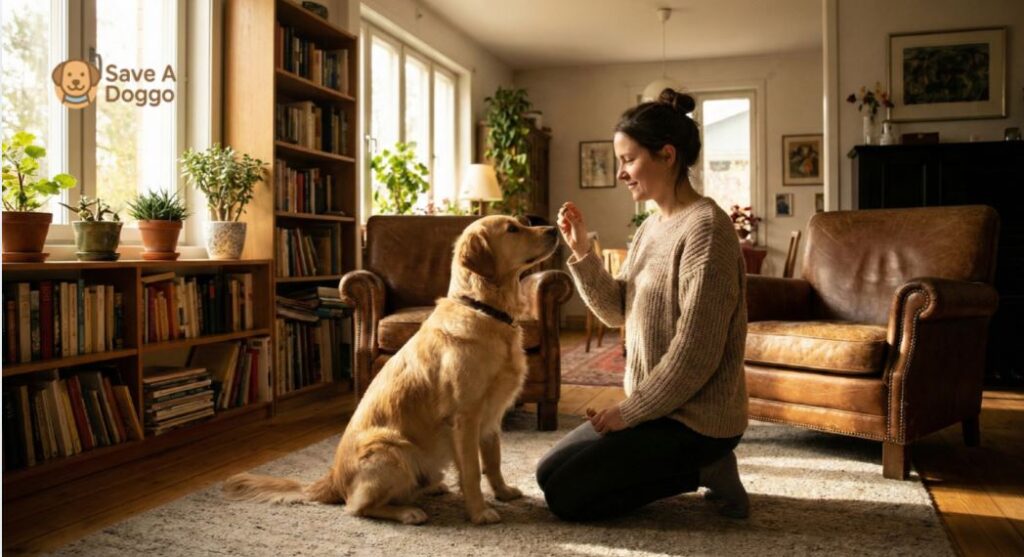
How to Train a Dog at Home Step by Step (Beginner Friendly Guide)
Training Starts With Trust, Not Commands
Training a dog at home can feel overwhelming—especially if you’re a first-time dog owner or have recently adopted a rescue dog. Many people worry they’ll say the wrong thing, confuse their dog, or fail without professional help.
But here’s the truth most new owners don’t hear often enough:
you can successfully train a dog at home, even as a complete beginner.
In fact, home training is often where dogs learn best. A familiar environment helps dogs feel safer, more relaxed, and more open to learning—especially rescue dogs who may still be emotionally adjusting to their new life.
This guide will walk you through how to train a dog at home step by step, using gentle, proven methods that focus on communication, patience, and trust. No harsh corrections. No expensive tools. Just clear guidance designed for beginners—and for dogs who deserve a calm, supportive start.
Can You Really Train a Dog at Home?
Yes—most dogs can be trained effectively at home, regardless of age or background. In many cases, home training is actually more successful than starting in busy group classes.
Benefits of Training Your Dog at Home
Stronger bonding
Training creates daily moments of communication. Each small success helps your dog learn that listening to you leads to safety and positive outcomes.
Lower stress levels
Home training removes loud noises, unfamiliar dogs, and distractions—especially helpful for sensitive or rescue dogs.
Cost-effective and flexible
You can train on your schedule, without paying for private sessions or commuting to classes.
When Home Training Works Best (and When It Doesn’t)
Home training works especially well for:
- Puppies learning basic manners
- Adult dogs without prior structure
- Rescue dogs with mild anxiety or fear
However, dogs showing severe aggression or panic may benefit from professional support alongside home training.
What You Need Before You Start Training
You don’t need a lot of equipment to begin at-home dog training. Simplicity works best.
Essential Dog Training Tools at Home
- Soft, small treats (easy to chew quickly)
- A standard leash
- Clicker (optional) for clear communication
These tools help reinforce good behavior without overwhelming your dog.
Choosing the Right Training Environment
Start in a calm space:
- Minimal distractions
- No TV or loud music
- Comfortable footing
As your dog improves, you can slowly introduce more distractions.
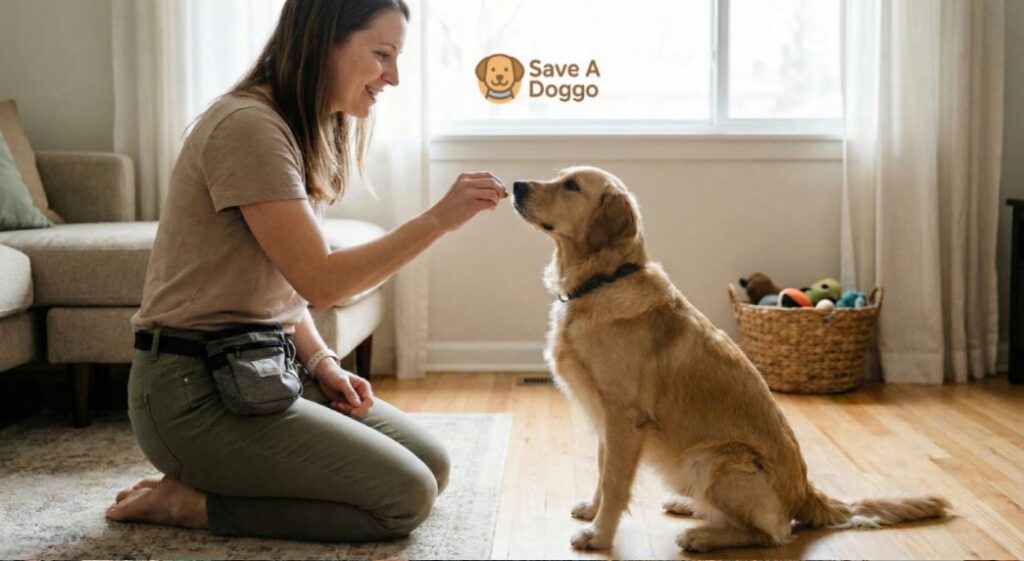
Step-by-Step Guide to Training a Dog at Home
This is the core of beginner dog training. Go slowly, stay consistent, and keep sessions positive.
Step 1 – Build Trust and Focus
Before teaching commands, teach attention.
- Say your dog’s name and reward eye contact
- Keep sessions short (5–10 minutes)
- End every session on a success
Trust comes before obedience—especially for rescue dogs.
Step 2 – Teach Basic Commands
Start with essential commands that support daily life.
Sit
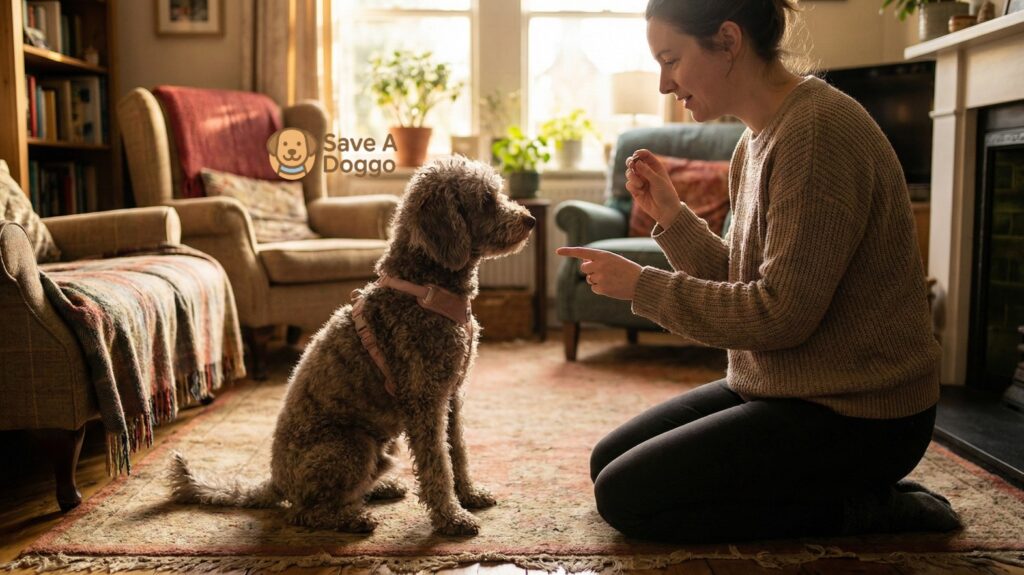
Move a treat slowly over your dog’s nose. Reward as soon as they sit.
Stay
Ask your dog to sit, take one step back, and reward calm waiting.
Come
Use a cheerful voice and reward immediately when your dog returns.
Down
Guide the treat to the floor and reward once your dog lies down.
Avoid forcing positions—gentle guidance works better.
Step 3 – Use Positive Reinforcement Correctly
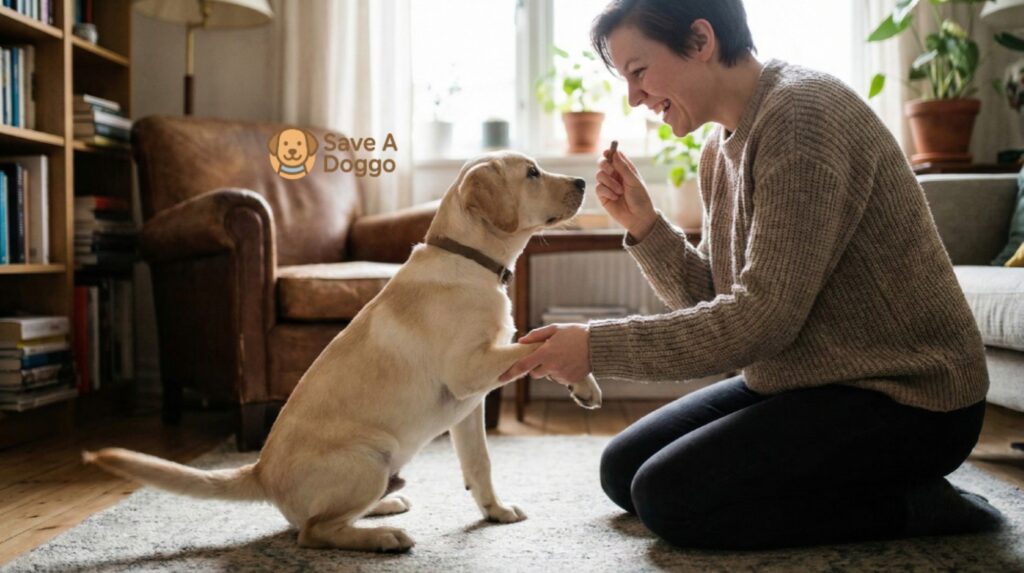
Positive reinforcement means rewarding the behavior you want repeated.
Timing is everything
Reward immediately—within seconds of the behavior.
Reward frequency
Reward every success at first, then gradually reduce treats.
Common mistakes
- Delayed rewards
- Repeating commands too often
- Training when your dog is overtired
Step 4 – Create a Daily Training Routine
Consistency matters more than duration.
- 10–15 minutes per session
- 2–3 short sessions per day
- Same words, same expectations
Short, regular sessions prevent frustration and burnout.
How Long Does It Take to Train a Dog at Home?
Training timelines vary depending on the dog and their past experiences.
Puppies vs Adult Dogs
- Puppies learn quickly but have short attention spans
- Adult dogs may learn slower but retain lessons better
Factors That Affect Training Speed
- Past trauma or neglect
- Breed tendencies
- Consistency of training
- Emotional safety
Rescue dogs may take longer—but progress is absolutely possible.
Training timelines vary depending on a dog’s past experiences, emotional state, and environment.
For rescue dogs, learning may take a little longer—not because they are less intelligent, but because they are still adjusting emotionally to their new home.
Many adopters notice that once a rescue dog feels safe and secure, progress often accelerates. If you’re curious about this adjustment phase, this guide explains it in detail:
👉 What Happens to Dogs Who Are Never Adopted
Common Dog Training Mistakes Beginners Make
Inconsistency
Changing rules confuses dogs. Everyone in the household should use the same commands.
Punishment-Based Training
Yelling or physical correction increases fear and slows learning.
Training Too Long
Overtraining leads to frustration. Stop while your dog is still engaged.
Training Rescue Dogs at Home — Special Tips
Rescue dogs often bring emotional histories that affect learning.
Understanding Rescue Dog Behavior
Fear, hesitation, or shutdown behavior is not disobedience—it’s communication.
Rescue dogs often display behaviors such as freezing, avoiding eye contact, excessive barking, or hesitation during training.
These responses are not signs of stubbornness—they are communication signals shaped by past experiences. Understanding what your dog is trying to tell you can dramatically improve training success.
If you’re seeing behaviors that feel confusing or worrying, this article breaks them down clearly:
👉 common rescue dog behavior problems and what they really mean
Training an Anxious or Fearful Dog
- Move slowly
- Avoid loud corrections
- Reward calm behavior
When to Seek Professional Help
If fear or aggression doesn’t improve after several months, consult a certified behaviorist.
At-Home Dog Training Schedule (Beginner Plan)
Sample 7-Day Training Schedule
- Day 1–2: Name recognition + Sit
- Day 3–4: Stay + Come
- Day 5–6: Down + leash basics
- Day 7: Review and reinforce
Adjusting the Plan for Your Dog
Progress is not linear. Slow down if your dog feels overwhelmed.
FAQs About Training a Dog at Home
Can I train my dog without treats?
Yes, but treats help beginners. Praise and play can replace treats over time.
Is it too late to train an adult dog?
Never. Dogs can learn at any age.
How many minutes should I train my dog each day?
20–30 minutes total, split into short sessions.
What if my dog doesn’t listen?
Reduce distractions, increase rewards, and return to basics.
Training Is a Relationship, Not a Test
Training a dog at home isn’t about perfection—it’s about communication, patience, and consistency. Whether you’re raising a puppy or helping a rescue dog adjust, home training builds trust that lasts a lifetime.
Take it one step at a time. Celebrate progress. And remember: every calm moment you create is part of your dog’s growth and healing.
Many rescue dogs begin their training journey after surviving difficult pasts. Seeing how patience and structure can transform their lives is incredibly powerful.
If you enjoy real-life stories that show what’s possible after adoption, you may like reading this:
👉 a puppy rescue story after abuse

SaveADoggo Team is a group of animal lovers passionate about rescue dogs, adoption education, and emotional healing for both dogs and humans. Our content is created with research, real-life experience, and compassion to support responsible adoption and stronger human–dog bonds.
All articles are carefully reviewed for clarity, accuracy, and responsible dog care guidance, and updated regularly to ensure trustworthy rescue-focused information.
Our mission is simple: help rescue dogs feel safe, loved, and understood—one home at a time.