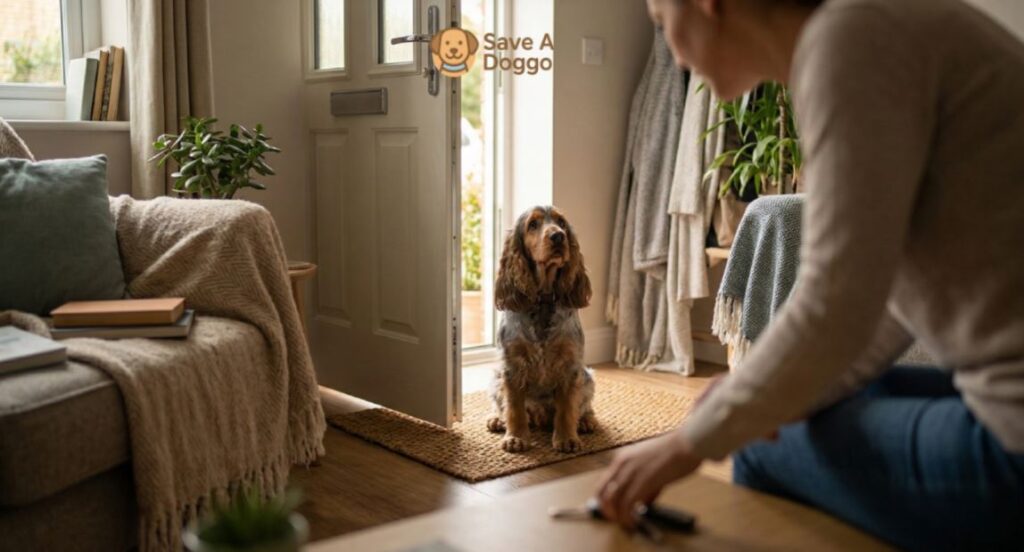
How to Help a Rescue Dog With Separation Anxiety (Complete Step-by-Step Guide)
Many rescue dog owners experience the same confusing moment.
Everything seems peaceful while you’re home, but the moment you leave, your dog becomes anxious.
You may notice behaviors like:
- barking or whining
- scratching doors
- pacing around the house
- destructive chewing
- accidents indoors
These behaviors are often signs of separation anxiety.
For rescue dogs, this reaction is very common. Many adopted dogs have experienced abandonment, unstable homes, or stressful shelter environments.
The good news is that separation anxiety can improve with the right approach.
This guide will walk you through how to help a rescue dog with separation anxiety step by step, so your dog can feel safe and confident even when you’re away.
What Is Separation Anxiety in Rescue Dogs?
Separation anxiety occurs when a dog becomes distressed after being separated from their owner.
Instead of relaxing while alone, the dog experiences panic or fear.
For rescue dogs, separation anxiety can be linked to past experiences such as:
- abandonment
- multiple rehoming situations
- long shelter stays
- lack of stable routines
These experiences make some dogs more sensitive to changes and departures.
To understand why these reactions occur, it’s helpful to learn about the deeper rescue dog anxiety triggers most owners don’t realize, which can reveal subtle stress signals your dog may be responding to.
Why Rescue Dogs Are Prone to Separation Anxiety
Rescue dogs often come from unpredictable environments.
Even after adoption, they may still worry that their new home is temporary.
This emotional uncertainty can cause dogs to feel panic when their owner leaves.
Several factors can increase the risk of separation anxiety:
Previous abandonment
Dogs that have been surrendered or abandoned may fear being left again.
Shelter stress
Living in shelters exposes dogs to constant noise and stress.
Our article about how shelter life affects rescue dogs explains how this environment can shape long-term behavior patterns.
Sudden lifestyle change
Moving from a shelter to a quiet home can feel overwhelming for some dogs.
Strong attachment after adoption
Rescue dogs sometimes bond intensely with their new owner and fear losing that connection.
Signs Your Rescue Dog Has Separation Anxiety
Some behaviors occur only when the dog is alone or about to be left alone.
Common signs include:
- barking or howling after the owner leaves
- chewing furniture or doors
- scratching at windows or exits
- pacing or restlessness
- house accidents despite being house trained
Some dogs show anxiety even before you leave.
For example, they may react when you pick up your keys or put on shoes.
These reactions are often linked to departure cues, which are explained in our guide to rescue dog anxiety triggers.
Step-by-Step: How to Help a Rescue Dog With Separation Anxiety
Helping a dog overcome separation anxiety requires patience and consistency.
Below is a step-by-step approach recommended by trainers and behavior specialists.
Step 1: Establish a Predictable Routine
Dogs feel safer when their environment becomes predictable.
Try to keep daily routines consistent:
- feeding times
- walks
- bedtime
- playtime
Routine reduces uncertainty and helps anxious dogs relax.
Step 2: Create a Safe Resting Space
Provide a calm, comfortable area where your dog can relax.
This space might include:
- a dog bed
- a crate
- a quiet corner of the house
Some dogs feel safer in a smaller, enclosed space that mimics a den.
Step 3: Practice Short Departures
Instead of leaving your dog alone for long periods right away, start with very short absences.
For example:
- leave the room for 30 seconds
- gradually increase to 1 minute
- then 5 minutes
- then longer intervals
This gradual approach helps your dog learn that you always return.
Step 4: Reduce Departure Drama
Many owners unintentionally increase anxiety by making departures emotional.
Instead, keep departures calm and routine.
Avoid:
- long goodbye rituals
- excessive reassurance
- dramatic greetings when returning
A neutral approach teaches your dog that departures are normal.
Step 5: Use Enrichment Activities
Mental stimulation can distract anxious dogs.
Try giving your dog activities before leaving, such as:
- puzzle toys
- chew toys
- treat-dispensing toys
These activities help shift focus away from the owner’s departure.
Step 6: Desensitize Departure Cues
Dogs often associate certain actions with the owner leaving.
These cues might include:
- grabbing keys
- putting on shoes
- picking up a bag
Practice performing these actions without actually leaving.
For example:
Pick up your keys, then sit down again.
Over time, the cues lose their anxiety-triggering meaning.
Step 7: Encourage Independent Behavior
Rescue dogs sometimes become overly dependent on their owners.
Encourage your dog to spend short periods resting away from you.
You can reward calm independent behavior with praise or treats.
Step 8: Exercise Before Leaving
Physical activity helps reduce stress.
A walk or play session before you leave can help your dog feel more relaxed and ready to rest.
Step 9: Be Patient With Progress
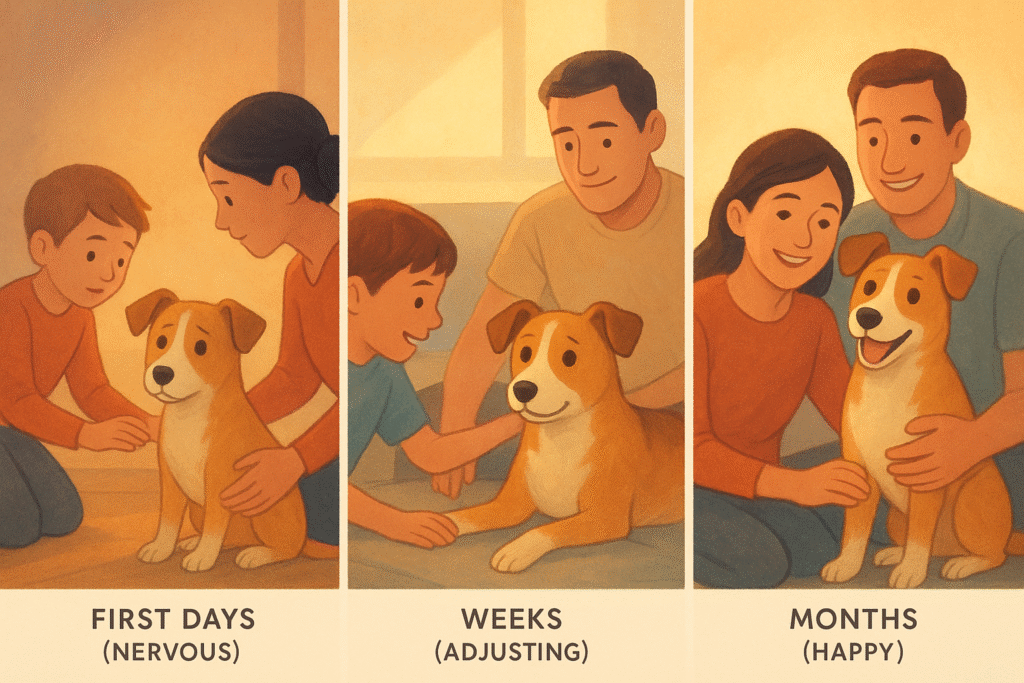
Overcoming separation anxiety takes time.
Some dogs improve within a few weeks, while others may need several months.
Small improvements should be celebrated.
For example:
- shorter barking episodes
- calmer body language
- relaxed resting while you’re gone
These milestones often indicate emotional recovery.
You may also notice some of the positive behaviors described in signs your rescue dog is finally relaxing, which are strong indicators of progress.
Mistakes That Can Make Separation Anxiety Worse
Even well-meaning owners sometimes make mistakes that increase anxiety.
Common mistakes include:
Leaving the dog alone too long too soon
Gradual independence training works better than sudden long absences.
Punishing anxiety behavior
Punishment increases fear and can worsen the problem.
Introducing too many changes
Rescue dogs adjust best when their environment stays consistent.
When to Seek Professional Help
Some cases of separation anxiety are more severe.
Consider consulting a professional dog trainer or behaviorist if your dog:
- injures themselves while trying to escape
- destroys doors or windows
- shows extreme panic responses
- does not improve after consistent training
Professional guidance can help tailor solutions to your dog’s specific needs.
Recovery Takes Time — But It Happens
Many rescue dogs eventually overcome separation anxiety.
With patience, consistency, and supportive training, most dogs learn that their new home is safe.
Over time, the same dog that once panicked when you left may begin to relax calmly until you return.
And for many rescue owners, that moment — when their dog finally rests peacefully while they’re away — is a powerful sign that trust has been fully rebuilt.
FAQ
How long does separation anxiety last in rescue dogs?
Mild cases may improve within a few weeks, while moderate cases may take several months depending on the dog’s history and environment.
Should I ignore my dog when leaving the house?
It’s best to keep departures calm and neutral rather than emotional. Dramatic goodbyes can increase anxiety.
Can rescue dogs completely recover from separation anxiety?
Yes. Many rescue dogs learn to feel safe being alone once they experience consistent routines and positive training.
What is the best training method for separation anxiety?
Gradual desensitization—starting with very short departures and slowly increasing time alone—is one of the most effective approaches.

SaveADoggo Team is a group of animal lovers passionate about rescue dogs, adoption education, and emotional healing for both dogs and humans. Our content is created with research, real-life experience, and compassion to support responsible adoption and stronger human–dog bonds.
All articles are carefully reviewed for clarity, accuracy, and responsible dog care guidance, and updated regularly to ensure trustworthy rescue-focused information.
Our mission is simple: help rescue dogs feel safe, loved, and understood—one home at a time.