COMPLETE GUIDE TO RESCUE DOG ANXIETY
(Causes, Symptoms, and Proven Solutions)
Rescue Dog Anxiety: The Complete Guide for Compassionate Owners
Bringing home a rescue dog is one of the most beautiful decisions you can make.
But many adopters are surprised by something no one talks about enough:
Anxiety.
Your new dog may hide. Pace. Refuse food. Bark excessively. Avoid eye contact. Or worse — shut down emotionally.
I’ve worked closely with rescue dogs for years, and I can tell you this with certainty:
Rescue dog anxiety is not bad behavior.
It’s fear.
It’s confusion.
It’s survival instinct.
This guide will walk you through:
- The real causes of rescue dog anxiety
- The most common emotional and behavioral symptoms
- Immediate calming techniques
- Long-term recovery strategies
- When to seek professional help
If you’ve ever wondered, “Did I make a mistake adopting this dog?” — take a breath.
You didn’t.
Let’s understand what’s really happening.
What Is Rescue Dog Anxiety?
Rescue dog anxiety refers to stress-related emotional and behavioral responses in adopted dogs adjusting to new environments.
Unlike puppies raised in stable homes, many rescue dogs have experienced:
- Abandonment
- Neglect
- Trauma
- Shelter overstimulation
- Multiple rehomings
Their nervous system is often on high alert.
This is especially common during the adjustment period for rescue dogs, which many adopters underestimate.
Why Rescue Dogs Experience Anxiety
1. Loss of Familiar Environment
Even if their previous home wasn’t ideal, it was familiar.
Now everything is different:
- Smells
- Sounds
- People
- Routines
That alone can trigger stress.
2. Shelter Overstimulation
Shelters are loud and chaotic.
Dogs often live in fight-or-flight mode for weeks or months.
You can learn more about what dogs experience in shelters in our behind-the-scenes look at shelter life.
3. Past Trauma
Some rescue dogs have experienced abuse or neglect.
Triggers may include:
- Raised voices
- Fast movements
- Being touched unexpectedly
Trust rebuilding takes time — something we explore deeply in our guide to building trust through structured training.
4. Lack of Clear Structure
Dogs feel safer when they understand expectations.
Without routine, anxiety increases.
Signs of Rescue Dog Anxiety
Anxiety doesn’t always look dramatic.
Sometimes it’s subtle.
If you want a detailed breakdown of early stress signals, we covered 15 clear warning signs in a dedicated guide.
Common symptoms include:
- Excessive panting
- Trembling
- Avoiding eye contact
- Hiding
- Sudden aggression
- Destructive chewing
- Loss of appetite
- Hyper-attachment
- Refusing to sleep
If your dog won’t sleep during the first few days, that’s extremely common.
Types of Anxiety in Rescue Dogs
1. Generalized Anxiety
Constant nervousness without a specific trigger.
2. Separation Anxiety
Panic when left alone.
Signs include:
- Barking excessively
- Scratching doors
- Attempting escape
3. Fear-Based Anxiety
Triggered by specific stimuli:
- Men
- Loud noises
- Other dogs
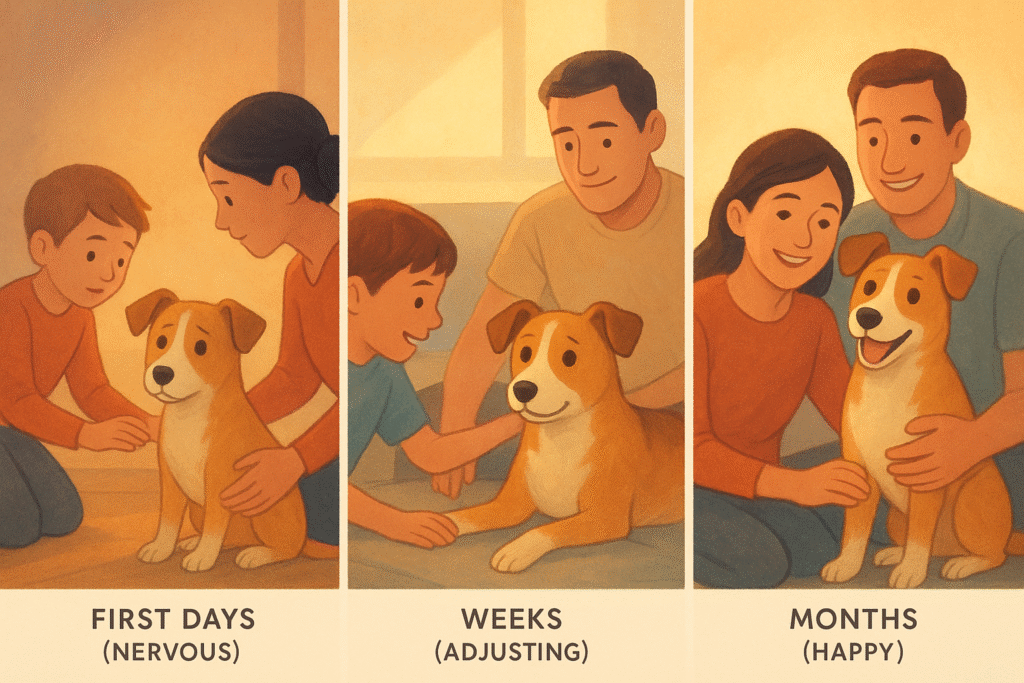
The 3 Phases of Emotional Adjustment
Understanding the timeline changes everything.
Phase 1: Shock (Days 1–7)
- Quiet
- Withdrawn
- Overwhelmed
Phase 2: Testing (Weeks 2–4)
- Boundary pushing
- Emotional swings
Phase 3: Trust (Month 2–3)
- Personality emerges
- Confidence builds
For a structured roadmap, I recommend following a compassionate first-month care plan.
How to Calm an Anxious Rescue Dog (Immediate Solutions)
1. Reduce Stimulation
Lower noise. Limit visitors.
2. Speak Softly
Your tone regulates their nervous system.
3. Avoid Over-Training Early
Training too soon can overwhelm.
Instead, focus on positive reinforcement foundations.
4. Create a Safe Space
Quiet corner
Covered crate (if trained)
Soft bedding
5. Maintain Predictable Routine
Same feeding time
Same walk schedule
Routine builds security.
Long-Term Solutions for Rescue Dog Anxiety
Build Trust Slowly
Never force affection.
Let them approach you.
If your dog is still struggling emotionally weeks after adoption, you may recognize some of the anxiety patterns we described in this detailed breakdown.
Mental Enrichment
- Snuffle mats
- Puzzle toys
- Gentle scent games
Mental stimulation reduces cortisol.
Physical Exercise (But Not Overstimulation)
Balanced movement reduces stress hormones.
Professional Help
Consult:
- Veterinarian
- Certified dog trainer
- Veterinary behaviorist
Common Mistakes Owners Make
❌ Punishing anxiety
❌ Forcing socialization
❌ Expecting immediate bonding
❌ Comparing to other dogs
Every rescue dog heals at their own pace.
When to Seek Veterinary Help
See a vet if:
- Anxiety lasts longer than 4–6 weeks
- Appetite loss continues
- Aggression escalates
- Self-harm behaviors appear
Medical issues can mimic anxiety.
Emotional Truth Most People Don’t Talk About
Sometimes rescue dog anxiety makes adopters feel:
- Frustrated
- Overwhelmed
- Guilty
I’ve felt that too.
But here’s what I’ve learned:
Healing isn’t linear.
Some days feel like setbacks.
But consistency changes everything.
I’ve watched fearful dogs become affectionate shadows.
It takes patience — not perfection.
Frequently Asked Questions
How long does rescue dog anxiety last?
Most follow the 3-3-3 adjustment timeline, but some need several months depending on past trauma.
Is rescue dog anxiety permanent?
In most cases, no. With structure, patience, and trust-building, anxiety significantly improves.
Should I use anxiety vests?
They can help some dogs. We reviewed one popular option in our ThunderShirt breakdown.
Can training worsen anxiety?
Yes — if rushed or punitive. Always use calm, reward-based methods.
SaveADoggo Team is a group of animal lovers passionate about rescue dogs, adoption education, and emotional healing for both dogs and humans. Our content is created with research, real-life experience, and compassion to support responsible adoption and stronger human–dog bonds.
All articles are carefully reviewed for clarity, accuracy, and responsible dog care guidance, and updated regularly to ensure trustworthy rescue-focused information.
Our mission is simple: help rescue dogs feel safe, loved, and understood—one home at a time.