Understanding rescue dog body language is one of the most important skills a new adopter can learn.
Rescue dogs do not always communicate in obvious ways. Some bark. Some hide. Some freeze quietly. Some wag their tail even when they are unsure. If you only look at one signal, it is easy to misunderstand what your dog is feeling.
The key is to look at the whole dog: eyes, ears, mouth, tail, posture, movement, and context.
A rescue dog’s body language can tell you when they feel scared, stressed, curious, relaxed, or ready to trust a little more.
Quick Answer
Rescue dog body language should be read as a full picture, not one isolated signal. Fear often shows through a tucked tail, lowered body, pinned ears, hiding, freezing, or wide eyes. Stress may appear as lip licking, yawning, panting, pacing, shaking off, whale eye, or avoiding contact. Relaxed body language usually includes soft eyes, loose muscles, normal breathing, gentle curiosity, and the ability to rest.
If your dog shows tense, fearful, or avoidant signals, give space and reduce pressure.
Fear Signals
Fear can be loud or very quiet.
Some rescue dogs bark or growl when they are afraid. Others shrink, freeze, or try to disappear. Quiet fear is easy to miss because the dog may not be “acting out.”
Common fear signals include:
- Tail tucked low or held tightly under the body
- Ears pinned back or flattened
- Body lowered close to the ground
- Crouching or leaning away
- Hiding behind furniture or people
- Freezing in place
- Wide eyes or showing the whites of the eyes
- Trembling
- Refusing treats
- Avoiding eye contact
- Moving slowly or stiffly
- Growling when approached
A fearful dog is not being stubborn. They are trying to feel safe.
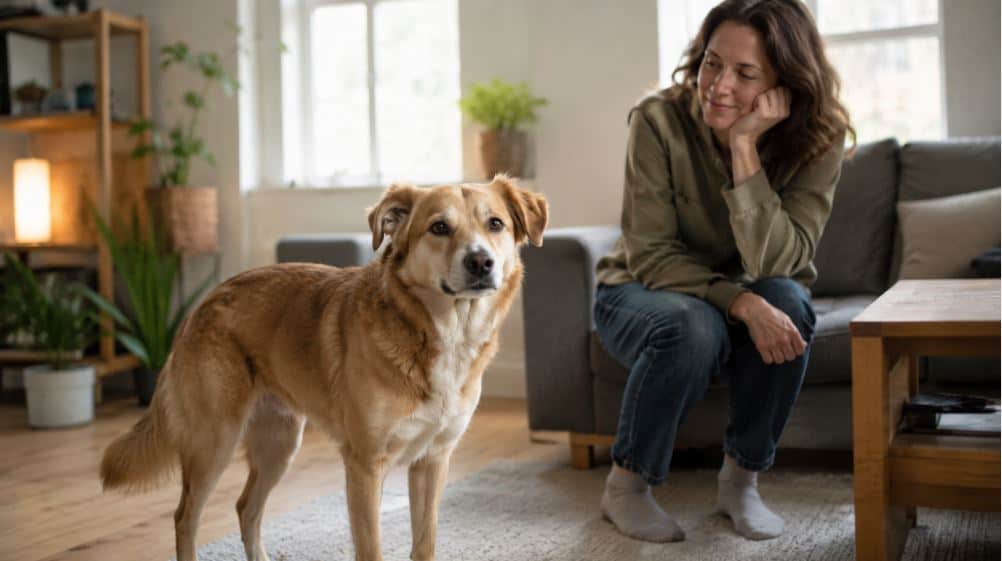
If your rescue dog shows fear signals, do not force interaction. Avoid reaching over their head, pulling them from hiding, or asking visitors to “make friends” too quickly. Instead, create distance, soften your voice, and let your dog choose whether to approach.
Fear signals can become stronger if they are ignored. A dog who first freezes or turns away may growl, snap, or bite if people keep pushing.
Stress Signals
Stress signals are often more subtle than fear signals.
A rescue dog may show stress during greetings, training, grooming, car rides, walks, vet visits, or busy household moments. These signals do not always mean something terrible is happening. They mean your dog is working hard to cope.
Common stress signals include:
- Lip licking when no food is present
- Yawning when not tired
- Panting when it is not hot
- Pacing
- Whining
- Shaking off as if wet
- Turning the head away
- Looking away repeatedly
- Sniffing the ground suddenly
- Scratching when not itchy
- Lifting one paw
- Tense mouth or closed mouth
- Stiff body
- Dilated pupils
- Refusing food
- Trying to leave the situation
These are sometimes called calming or appeasement signals. Dogs may use them when they feel uncertain, conflicted, or overwhelmed.
The best response is usually to lower the pressure.
Pause training. Step back. Give your dog a break. Move away from the trigger. Let them sniff. Let them rest. A dog who feels heard is more likely to trust you over time.
For more stress-related signs, read: 15 Signs Your Dog Is Stressed.
Relaxed Body Language
Relaxed rescue dog body language usually looks soft and loose.
A relaxed dog may not be wildly excited. In fact, calm relaxation is often quieter than people expect.
Relaxed signs include:
- Soft eyes
- Loose body muscles
- Normal breathing
- Mouth gently open or neutral
- Ears in a natural position
- Tail neutral or softly moving
- Resting on one hip
- Choosing to lie down near you
- Stretching comfortably
- Taking treats gently
- Sniffing without panic
- Sleeping more deeply
- Recovering quickly after small noises
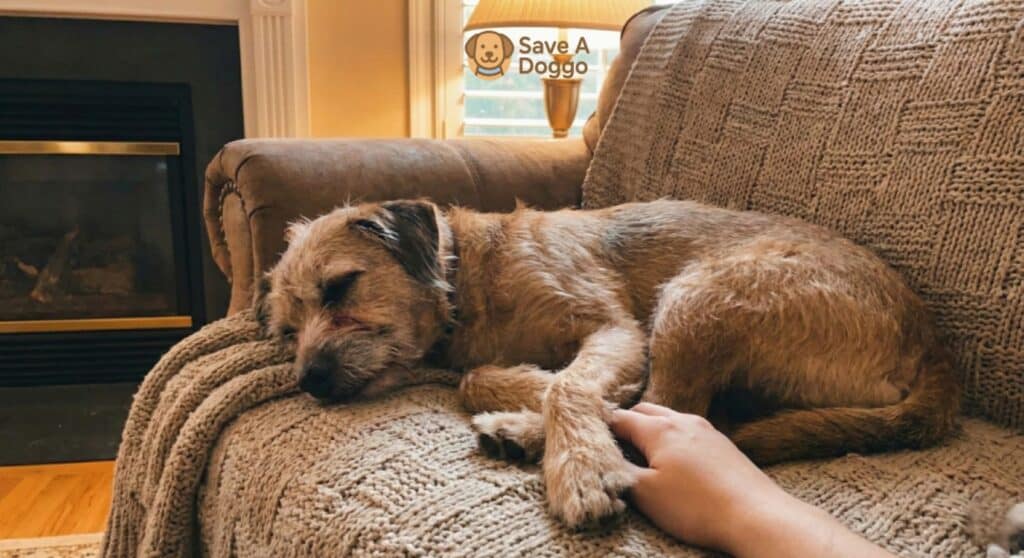
A relaxed dog can notice the world without immediately panicking. They may hear a sound, look toward it, and then settle again. That recovery is a very good sign.
Relaxed does not always mean cuddly. Some rescue dogs feel safe near people before they enjoy touch. A dog resting across the room may be showing more trust than a dog who is constantly following you because they are anxious.
For signs of emotional recovery, read: 10 Signs Your Rescue Dog Is Finally Relaxing.
Curiosity and Confidence Signs
Curiosity is one of the sweetest signs in a rescue dog.
It means your dog is starting to explore instead of only survive.
Curiosity and confidence may look like:
- Sniffing new objects
- Looking around with a loose body
- Taking a few steps toward you, then pausing
- Checking out a new room
- Choosing to follow you calmly
- Taking treats in a new place
- Offering eye contact briefly
- Responding to their name
- Playing with a toy
- Doing a play bow
- Exploring on walks without pulling in panic
- Returning to you after investigating something
Confidence does not mean your dog is never afraid. It means they can recover, make choices, and try again.
If your dog shows curiosity, support it gently. Do not rush in with excitement. Let them investigate at their own pace. Reward brave choices with treats, praise, space, or calm attention.
Common Signals Owners Misread
Many rescue dog signals are misunderstood.
A wagging tail always means happy
Not always. A loose, wiggly body with a soft tail wag often suggests friendliness or comfort. But a stiff, high, fast, or tight wag can mean arousal, tension, or uncertainty.
Look at the whole body, not just the tail.
A dog showing their belly always wants a belly rub
Sometimes, yes. But some dogs roll over as an appeasement gesture because they feel nervous.
If the body is loose and the dog nudges you for more, they may enjoy touch. If the body is stiff, tail tucked, mouth tight, or eyes wide, give space.
Yawning means the dog is sleepy
Yawning can mean tiredness, but it can also be a stress signal. If your dog yawns during training, greetings, handling, or a new situation, they may be uncomfortable.
A quiet dog is fine
Not always. Some stressed dogs become very still. Freezing is important body language. If your dog suddenly stops moving, closes their mouth, or stiffens, pause and give space.
Growling is bad behavior
Growling is communication. It means your dog is uncomfortable and needs distance. Do not punish growling. Punishing the warning can make future behavior less predictable.
Taking treats means the dog is comfortable
Not always. Some dogs will take food while still feeling stressed. Watch how they take the treat. A relaxed dog usually takes food gently and can still think. A stressed dog may snatch, drop food, or refuse food entirely.
Body Language Checklist
Use this checklist when you are unsure what your rescue dog is feeling.
Green Zone: Relaxed or Comfortable
- Soft eyes
- Loose muscles
- Normal breathing
- Neutral tail
- Resting calmly
- Gentle sniffing
- Taking treats normally
- Able to respond to simple cues
- Choosing to stay nearby
What to do: Continue calmly. Reward relaxed behavior. Keep the environment predictable.
Yellow Zone: Unsure or Mildly Stressed
- Lip licking
- Yawning
- Turning away
- Paw lift
- Mild panting
- Looking around often
- Sniffing suddenly
- Slower movement
- Hesitating before approaching
What to do: Reduce pressure. Pause training. Give your dog time and choice.
Orange Zone: Fearful or Overwhelmed
- Tucked tail
- Pinned ears
- Trembling
- Hiding
- Freezing
- Whale eye
- Refusing food
- Trying to escape
- Growling
What to do: Stop what you are doing. Create distance. Move your dog to a quieter space if safe.
Red Zone: Safety Concern
- Snapping
- Lunging
- Repeated growling with stiff posture
- Baring teeth with tension
- Biting
- Guarding that escalates
- Panic behavior
- Self-injury
What to do: Do not punish. Do not force contact. Contact a veterinarian, certified behavior consultant, or qualified force-free trainer.
FAQ
What is the most important rescue dog body language to watch?
Watch for stiffness, freezing, tucked tail, pinned ears, whale eye, lip licking, yawning, and avoidance. These signals often appear before more obvious fear behaviors. If you notice them early, you can reduce pressure before your dog feels overwhelmed.
Does a wagging tail mean my rescue dog is happy?
Not always. Tail wagging can mean excitement, stress, uncertainty, friendliness, or arousal. A happy wag usually comes with a loose body, soft eyes, and relaxed movement. A stiff body with a tight wag may signal tension.
Why does my rescue dog freeze?
Freezing often means your dog is uncomfortable, uncertain, or afraid. It is a serious signal. Stop reaching, stop moving closer, and give your dog space. Freezing can happen before growling or snapping if the dog feels trapped.
Why does my rescue dog lick their lips so much?
Lip licking can happen around food, but it can also be a stress or appeasement signal. If your dog licks their lips during handling, training, greetings, or new situations, they may need a break.
How can I tell if my rescue dog is starting to trust me?
Trust may show through soft eyes, deeper sleep, choosing to be near you, taking treats gently, following routines, approaching without pressure, and recovering faster after stress. Trust often appears in small, quiet moments.
Should I correct my dog for growling?
No. Growling is a warning signal. If you punish it, your dog may stop warning and move more quickly to snapping or biting. Instead, create distance and figure out what made your dog uncomfortable.
When should I get professional help?
Get help if your dog bites, snaps, lunges, guards resources intensely, panics often, cannot relax, or shows sudden behavior changes. A veterinarian can rule out pain or illness, and a qualified behavior professional can help create a safe plan.
Final Thought
Rescue dog body language is a conversation.
Your dog is always giving information through their posture, eyes, ears, tail, mouth, and movement. When you notice those signals early, you can respond with patience instead of pressure.
That is how trust grows.
Bookmark this body language checklist.
Sources & Further Reading
The Save A Doggo Editorial Team creates practical, welfare-first resources for rescue-dog adopters, foster families, and shelter supporters. We prioritize primary and authoritative sources, distinguish observation from diagnosis, correct material errors transparently, and explain when veterinary or qualified behavior support is needed. We do not claim veterinary credentials or professional review unless a named, verifiable reviewer has approved the final article.