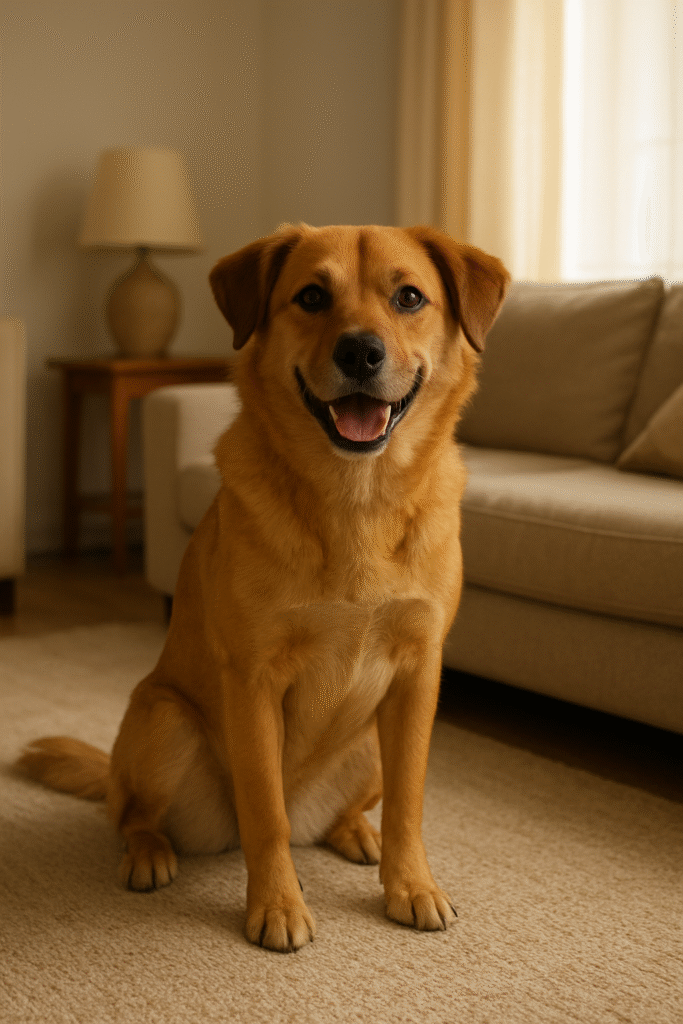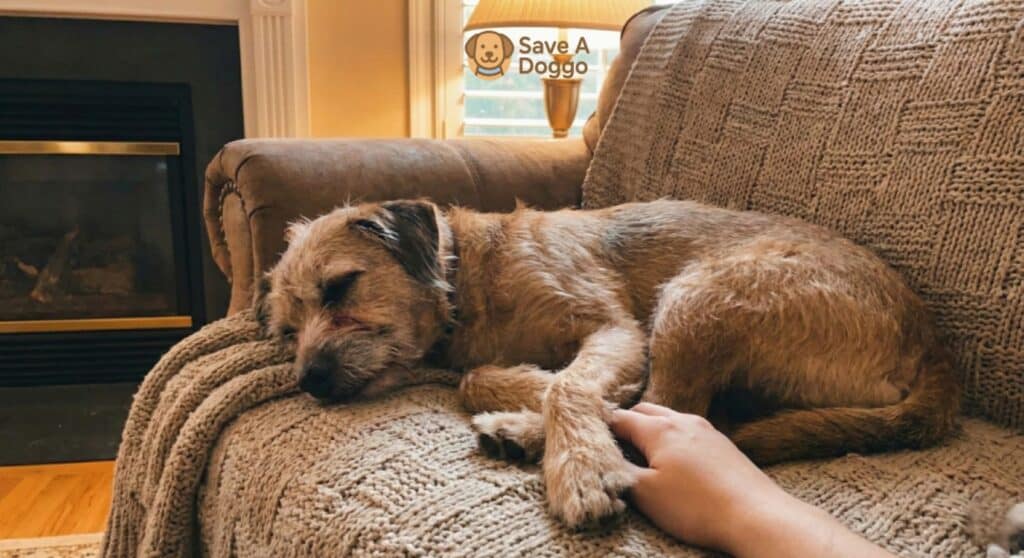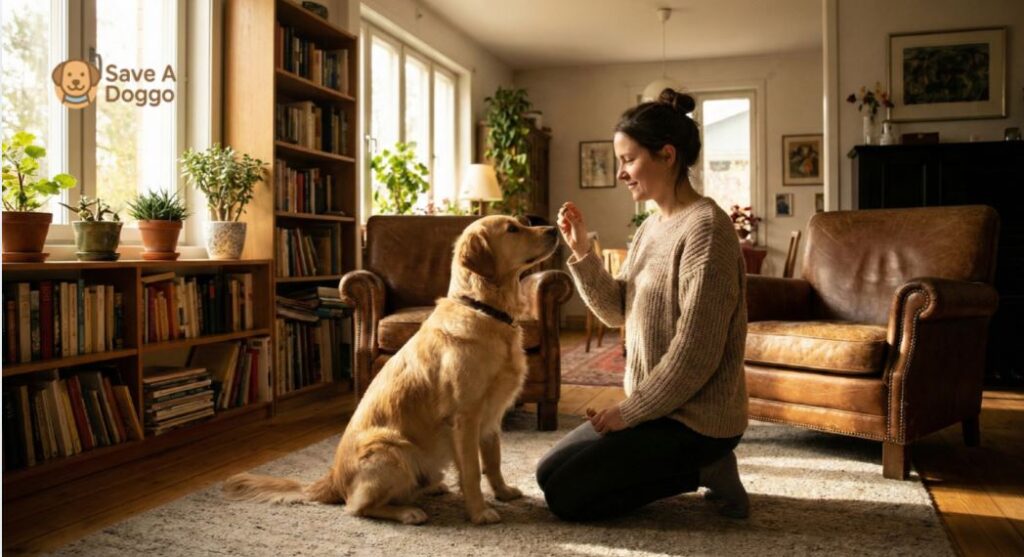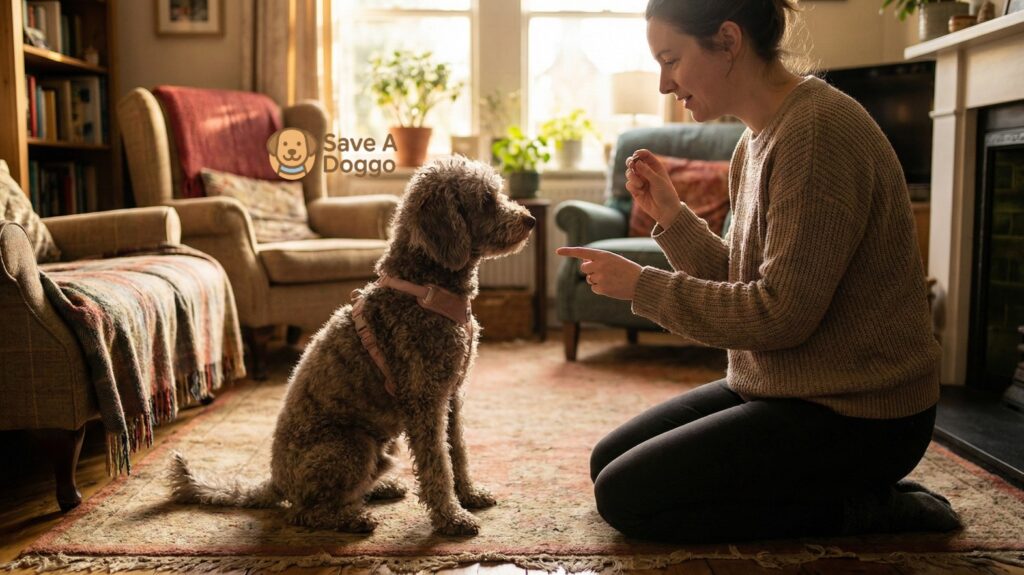
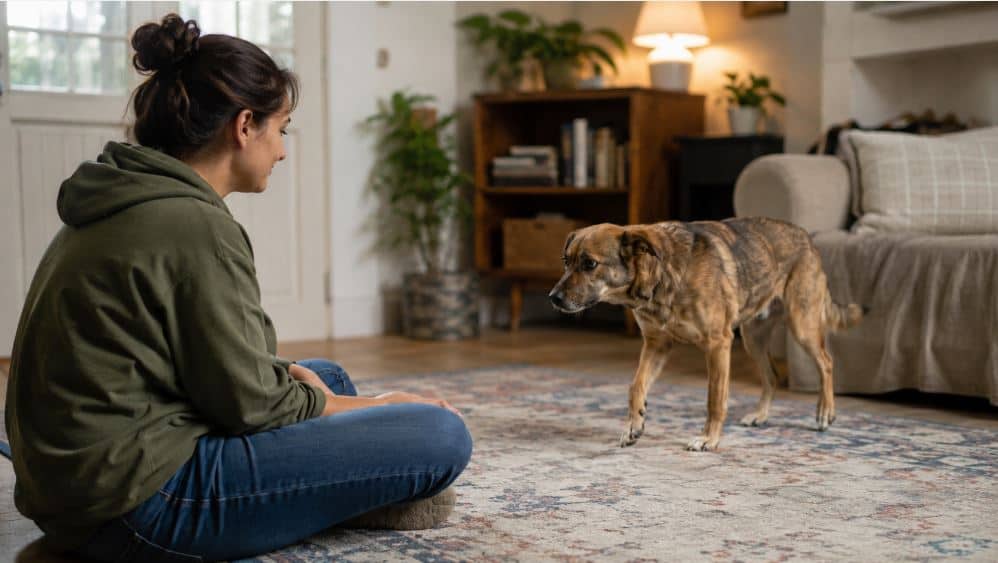
Bringing home a rescue dog is emotional, hopeful, and sometimes a little confusing. You may want to show them love right away, but your new dog may not be ready for cuddles, eye contact, visitors, or even relaxed walks.
That does not mean you are doing anything wrong.
Learning how to build trust with a rescue dog starts with one simple idea: trust cannot be forced. It grows when your dog repeatedly learns that life with you is safe, predictable, and kind.
Some rescue dogs warm up in days. Others need weeks or months. The goal is not to rush them into acting “normal.” The goal is to help them feel safe enough to choose connection at their own pace.
Quick Answer
To build trust with a rescue dog, create a predictable daily routine, give them choices, avoid forced handling, use reward-based training, and celebrate small signs of progress. Sit near them without pressure, let them approach first, reward calm behavior, and avoid punishment, yelling, or overwhelming introductions.
Trust builds through repeated safe experiences, not big dramatic moments.
What Trust Looks Like in Rescue Dogs
Trust does not always look like instant affection.
A rescue dog may trust you long before they become cuddly. Some dogs show trust quietly, through small behaviors that are easy to miss.
Signs your rescue dog may be starting to trust you include:
- Choosing to rest in the same room as you
- Eating comfortably while you are nearby
- Taking treats gently
- Looking at you with soft eyes
- Approaching and then walking away without panic
- Sleeping more deeply
- Sniffing your hand or clothing
- Following your routine
- Checking in with you during walks
- Recovering faster after a noise or surprise
A dog who does not climb into your lap yet may still be making real progress.
For more emotional recovery signs, you can also read: 10 Signs Your Rescue Dog Is Finally Relaxing.
Routine, Choice, and Quiet Presence
Rescue dogs often feel safer when daily life becomes predictable.
A simple routine helps your dog understand what happens next. This reduces uncertainty, which can reduce stress.
Start with consistency around:
- Feeding times
- Potty breaks
- Walks
- Rest periods
- Bedtime
- Quiet time
- Short training moments
Try not to introduce too many new experiences at once. In the first few weeks, your dog does not need a busy social calendar. They need safety, structure, and time to observe.
Quiet presence is powerful.
Sit on the floor nearby without staring at them. Read, work on your laptop, or watch TV calmly. Let your dog decide whether to move closer. If they approach, stay relaxed. Do not immediately reach for them.
For many nervous rescue dogs, the safest human is the one who does not demand anything.
You can also give your dog choices throughout the day:
- Let them choose whether to rest on a bed or in a crate
- Let them approach guests only if they want to
- Let them walk away after sniffing your hand
- Let them pause during walks
- Let them decide when they are ready for touch
Choice builds confidence. Confidence builds trust.
Consent-Based Handling
Many rescue dogs have unknown histories. Some may have been grabbed, restrained, punished, or handled roughly. Even if they were not mistreated, they may simply be overwhelmed by a new home.
Consent-based handling means paying attention to whether your dog is comfortable with touch.
A simple method is the “three-second rule.”
Pet your dog gently for about three seconds, then stop. Watch what they do next.
If they lean in, nudge your hand, stay close, or look relaxed, they may be asking for more.
If they turn away, lick their lips, freeze, yawn, lower their head, move away, or avoid eye contact, stop touching them.
Respecting “no” teaches your dog that they are safe with you.
Good places to start touching, if your dog is comfortable, may include:
- Chest
- Shoulder
- Side of the neck
- Under the chin
Avoid starting with:
- Reaching over the head
- Hugging
- Grabbing the collar
- Holding the face
- Pulling them out of hiding
- Forcing them onto furniture or into your lap
If your dog growls, freezes, snaps, or shows strong fear around handling, stop and give space. Growling is communication, not disobedience. If safety is a concern, contact a qualified force-free trainer, certified behavior consultant, or veterinarian.
Treats, Play, and Training
Food can help build trust, but it should not be used to trap a fearful dog.
For example, do not lure your dog close with a treat and then grab them. That teaches them that approaching you is risky.
Instead, toss treats gently near them or slightly behind them so they can move away while eating. This gives them choice and reduces pressure.
Reward small brave choices:
- Looking at you calmly
- Taking one step closer
- Settling on their bed
- Following you into the room
- Relaxing after a sound
- Responding to their name
Keep training short and positive. A few minutes at a time is enough.
Good early exercises include:
- Name recognition
- Hand targeting, if your dog is comfortable
- “Find it” treat games
- Relaxing on a mat
- Simple recall indoors
- Gentle leash walking practice
Use rewards your dog truly likes. This may be soft treats, kibble, praise, toys, sniffing, or space.
Reward-based training is especially important for rescue dogs because it teaches cooperation without fear. Avoid yelling, leash jerks, shock collars, prong collars, alpha rolls, or punishment-based corrections. These methods can damage trust and increase fear.
For more foundation training help, read: Training an Adopted Dog: Step-by-Step Guide to Build Trust & Good Behavior.
Trust Milestones
Trust does not grow in a straight line. Your rescue dog may make progress for several days and then suddenly seem nervous again. That is normal.
Instead of expecting one big breakthrough, track small milestones.
Early trust milestones may include:
- Eating meals normally
- Sleeping in longer stretches
- Exploring one new room
- Taking treats from your hand
- Resting near you
- Walking with a looser body
- Coming when called indoors
- Choosing to approach you
- Letting you clip a leash without backing away
- Recovering faster from stress
Later milestones may include:
- Asking for affection
- Playing with toys near you
- Relaxing during grooming
- Greeting familiar people calmly
- Settling after visitors leave
- Looking to you for reassurance
- Enjoying short training sessions
- Showing playful body language
Every dog moves at their own pace. A shy dog may never become a social butterfly, and that is okay. Trust does not mean your dog becomes someone else. It means they feel safe being themselves around you.
Common Mistakes That Slow Trust
Some loving owners accidentally rush the process.
Try to avoid:
- Inviting too many visitors too soon
- Forcing your dog to greet people
- Hugging before they are ready
- Punishing fear behaviors
- Taking food or toys away repeatedly “to test them”
- Staring directly at a nervous dog
- Pulling them out from under furniture
- Expecting immediate obedience
- Changing routines constantly
Your rescue dog is not being stubborn when they hesitate. They may be trying to understand whether the world is safe now.
When to Get Professional Help
Some trust issues need professional support.
Contact a veterinarian, certified behavior consultant, or force-free trainer if your dog shows:
- Biting or repeated snapping
- Severe panic
- Destructive anxiety
- Self-injury
- Resource guarding that escalates
- Extreme fear of touch
- Sudden behavior changes
- Signs of pain or illness
- Inability to relax or sleep
Medical problems can affect behavior. Pain, digestive issues, neurological problems, or untreated anxiety can make trust-building harder. When in doubt, start with a veterinary check.
FAQ
How long does it take to build trust with a rescue dog?
Some rescue dogs begin trusting within days. Others need several weeks or months. Dogs with trauma, poor socialization, or repeated rehoming may need longer. Progress depends on the dog’s history, temperament, health, environment, and consistency.
Should I pet my rescue dog if they seem scared?
Not right away. Let your dog approach first. If they choose contact, pet gently for a few seconds, then pause. If they move closer, you can continue. If they turn away, freeze, lick their lips, or step back, stop and give them space.
Is it bad if my rescue dog hides from me?
Hiding is common during the adjustment period. Do not drag your dog out. Make the area safe, offer food and water nearby, keep the home calm, and allow them to come out when ready. If hiding continues with refusal to eat, severe fear, or health concerns, contact a veterinarian or behavior professional.
Can treats help a rescue dog trust me?
Yes, treats can help when used respectfully. Toss treats gently instead of using them to lure and grab your dog. Reward calm choices, curiosity, and relaxed behavior. The goal is to help your dog associate you with safety, not pressure.
What if my rescue dog growls at me?
Stop what you are doing and give space. A growl is communication. It means your dog is uncomfortable and needs distance. Do not punish growling, because that can teach a dog to skip the warning next time. If growling happens often, seek professional help.
Can a rescue dog fully trust again?
Yes. Many rescue dogs become deeply bonded, affectionate, and confident with patient care. Trust may look different for each dog, but with routine, choice, gentle handling, and reward-based training, most dogs can learn that their new home is safe.
Final Thought
The best way to build trust with a rescue dog is to stop trying to rush the relationship.
Be predictable. Be gentle. Be patient. Let your dog say yes when they are ready.
Small moments matter: one relaxed nap, one soft glance, one brave step closer, one calm walk around the block.
Practical next step: Track small trust milestones each week.
Sources & Further Reading
The Save A Doggo Editorial Team creates practical, welfare-first resources for rescue-dog adopters, foster families, and shelter supporters. We prioritize primary and authoritative sources, distinguish observation from diagnosis, correct material errors transparently, and explain when veterinary or qualified behavior support is needed. We do not claim veterinary credentials or professional review unless a named, verifiable reviewer has approved the final article.