
Rescue Dog Anxiety Triggers Most Owners Don’t Realize
When people adopt a rescue dog, they often expect love and companionship right away.
But many new owners are surprised when their dog shows signs of anxiety.
Your rescue dog might:
- pace around the house
- hide under furniture
- bark or whine unexpectedly
- panic when you leave the room
These behaviors can feel confusing or even frustrating.
But in most cases, anxiety isn’t random.
It usually comes from specific triggers—many of which owners don’t recognize at first.
Understanding these hidden triggers is one of the most important steps in helping your dog feel safe.
If you’re new to rescue dog behavior, it’s helpful to first understand the broader emotional patterns explained in the complete guide to rescue dog anxiety, which covers how trauma, adjustment, and environment all influence a dog’s mental state.
Why Rescue Dogs Are More Sensitive to Triggers
Rescue dogs often come from unstable backgrounds.
Some may have experienced:
- abandonment
- shelter overcrowding
- sudden environmental changes
- inconsistent routines
Because of these experiences, rescue dogs often become more sensitive to environmental cues.
Small changes that seem harmless to humans can feel threatening to a dog still learning to trust their new world.
9 Rescue Dog Anxiety Triggers Most Owners Miss
Recognizing these triggers can help you prevent unnecessary stress for your dog.
1. Sudden Environmental Changes
Rescue dogs rely heavily on routine.
Unexpected changes can cause stress, including:
- moving furniture
- loud cleaning equipment
- new smells in the home
- visitors arriving suddenly
Even small changes can make a dog feel like their environment is unstable again.
2. Past Trauma Associations
Some rescue dogs associate certain objects or actions with past negative experiences.
Triggers may include:
- raised voices
- certain hand movements
- specific types of clothing
- objects like sticks or brooms
The dog may react defensively even when no harm is intended.
3. Departure Cues
Dogs quickly learn to recognize signals that you’re about to leave.
Common triggers include:
- picking up car keys
- putting on shoes
- grabbing a bag
- turning off lights
These cues can trigger anxiety long before the owner actually leaves.
Many dogs begin reacting during this stage, which is why understanding anxiety after adoption is so important for preventing long-term separation issues.
4. Unpredictable Daily Routines
Dogs thrive on consistency.
Irregular schedules for:
- feeding
- walking
- bedtime
- playtime
can increase stress levels, especially in newly adopted dogs.
Predictable routines help dogs feel safe.
5. Loud or Sudden Noises
Rescue dogs may be particularly sensitive to noise.
Common triggers include:
- vacuum cleaners
- door slams
- fireworks
- loud traffic
Noise sensitivity is especially common in dogs that spent long periods in noisy shelters.
The long-term impact of this environment is discussed in our article on how shelter life affects rescue dog behavior, which explains how crowded kennels can shape stress responses.
6. Being Left Alone Too Quickly
Many owners underestimate how overwhelming alone time can feel for a rescue dog.
If the dog has just arrived home, sudden separation may trigger panic.
Gradual independence training works much better than immediate long absences.
7. Too Many New Experiences at Once
Many adopters want their dog to enjoy life immediately.
But introducing too many experiences quickly can overwhelm them.
Examples include:
- dog parks
- crowded public places
- meeting many new people
- meeting unfamiliar dogs
Rescue dogs usually adjust better when new experiences are introduced slowly.
8. Lack of a Safe Resting Area
Dogs need a quiet space where they can relax without interruption.
Without a dedicated resting area, some dogs remain in a constant state of alertness.
A calm resting space can significantly reduce anxiety.
9. Owner Emotional Stress
Dogs are extremely perceptive.
They can sense human emotions through tone, posture, and energy.
If an owner feels stressed or impatient, the dog may interpret that as a warning signal.
A calm environment often leads to a calmer dog.
How to Reduce Anxiety Triggers in Your Home
The goal is not to eliminate every trigger.
Instead, focus on creating a predictable and safe environment.
Helpful steps include:
Maintain consistent routines
Regular schedules help dogs feel secure.
Introduce new experiences gradually
Let your dog adapt step by step rather than all at once.
Watch body language carefully
Early stress signals often appear before full anxiety behaviors develop.
Provide safe resting areas
A quiet bed or crate allows your dog to decompress.
Understanding Your Dog’s Emotional World
Many rescue dog owners assume anxiety means something is wrong with the dog.
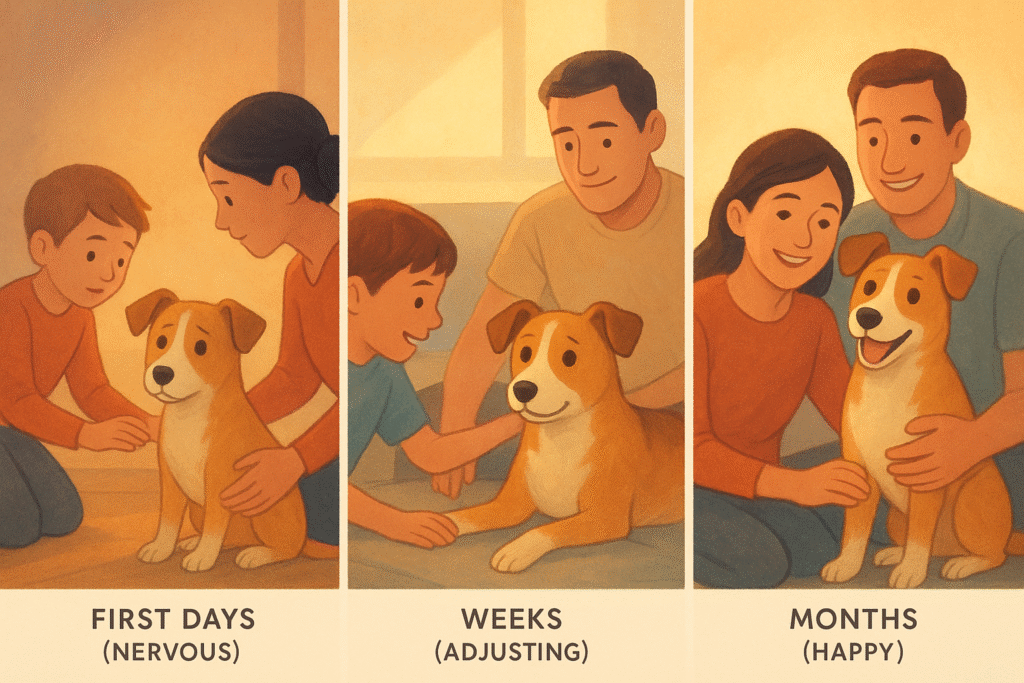
In reality, anxiety is often a temporary adjustment response.
Your dog is simply learning that their new environment is safe.
Over time, consistent care, patience, and routine can help most dogs relax and trust again.
If you’d like to understand the full recovery journey—from early anxiety to long-term emotional stability—the complete guide to rescue dog anxiety explains the causes, symptoms, and solutions used by trainers and rescue organizations.
FAQ
What triggers anxiety in rescue dogs?
Common triggers include sudden environmental changes, loud noises, unfamiliar people, inconsistent routines, and departure cues that signal the owner is leaving.
Why does my rescue dog get anxious randomly?
Anxiety often appears random but is usually caused by subtle triggers such as sounds, movements, or environmental changes that the dog associates with past stress.
Can rescue dog anxiety improve over time?
Yes. With consistent routines, patience, and gradual exposure to new experiences, most rescue dogs become more confident and relaxed over time.
Are rescue dogs more prone to anxiety?
Many rescue dogs are more sensitive to stress because of past instability, but with proper support they often develop strong emotional bonds with their new owners.
Turn Observations Into a Useful Trigger Log
Record what happened immediately before the response, the distance from the trigger, the dog’s body language, whether food was accepted, how long recovery took, and what helped. Video can be useful when it is safe and does not prolong distress. A pattern over several events is more informative than assigning a diagnosis after one difficult moment.
Reduce exposure while you gather information. Add distance, use visual barriers, choose quieter routes, and keep routines predictable. Do not deliberately provoke a reaction to “test” the dog. Reward-based, gradual work should stay below the level at which the dog panics or can no longer respond.
Sudden fear, new irritability, sensitivity to touch, sleep change, house-soiling, or aggression deserves a veterinary examination because pain and medical conditions can affect behavior. Seek professional help early for bite risk, self-injury, panic, or triggers that cannot be managed safely.
Sources and further reading
- Merck Veterinary Manual: Diagnosing Behavior Problems in Dogs
- AVSAB: Behavior and humane training resources
- ASPCA: Behavioral Help for Your Pet

The Save A Doggo Editorial Team creates practical, welfare-first resources for rescue-dog adopters, foster families, and shelter supporters. We prioritize primary and authoritative sources, distinguish observation from diagnosis, correct material errors transparently, and explain when veterinary or qualified behavior support is needed. We do not claim veterinary credentials or professional review unless a named, verifiable reviewer has approved the final article.