Rescue Dog Separation Anxiety: Signs, Causes & Step-by-Step Training Plan
Bringing home a rescue dog is life-changing — for both of you.
But many adopters quickly face a heartbreaking challenge:
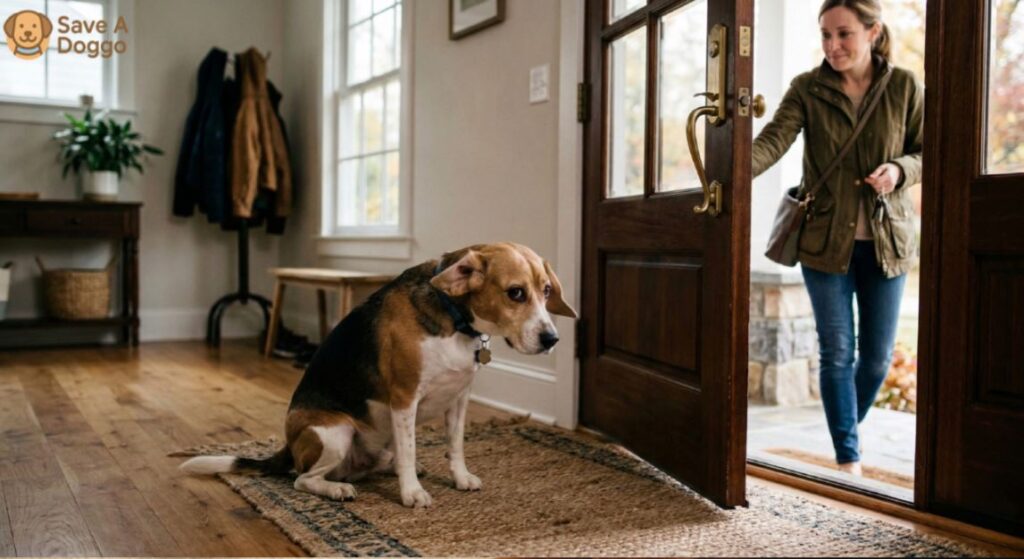
The moment you leave the house, your dog panics.
If your rescue dog barks nonstop, scratches doors, destroys furniture, or cries the second you grab your keys, you may be dealing with separation anxiety.
The good news?
It’s fixable.
This guide will show you:
- Clear signs of separation anxiety
- Why rescue dogs are more vulnerable
- Hidden triggers most owners miss
- A structured step-by-step training plan
- When to seek professional help
If you want a deeper understanding of emotional adjustment patterns, read our complete guide to rescue dog anxiety for the full recovery roadmap.
What Is Separation Anxiety in Rescue Dogs?
Separation anxiety is not misbehavior.
It is fear.
Specifically, it’s a panic disorder that happens when your dog feels unsafe without you.
For rescue dogs, this fear is often intensified by:
- Previous abandonment
- Multiple rehoming experiences
- Shelter confinement stress
- Lack of stable attachment figures
- Sudden environmental changes
When you adopt them, you become their security anchor. Losing sight of you can feel like losing everything again.
Signs Your Rescue Dog Has Separation Anxiety
Not all barking equals separation anxiety.
True separation anxiety typically includes intense, repetitive panic behaviors within minutes of departure.
1. Destruction Near Doors or Windows
- Scratching frames
- Chewing door edges
- Destroying blinds
2. Excessive Vocalization
- Continuous barking
- Howling for long periods
- Neighbors reporting nonstop noise
3. House Soiling
Even previously house-trained dogs may urinate or defecate when left alone.
4. Escape Attempts
Some dogs injure themselves trying to get out.
5. Pre-Departure Panic
Watch for anxiety when you:
- Pick up keys
- Put on shoes
- Grab your bag
- Turn off lights
Dogs anticipate patterns quickly.
If panic begins before you leave, anxiety is already conditioned.
For a broader look at early stress symptoms, see our guide to rescue dog anxiety.
Why Rescue Dogs Are More Prone to Separation Anxiety
Rescue dogs often experience attachment trauma.
Imagine:
- Being abandoned
- Living in a loud, unpredictable shelter
- Never knowing who feeds you next
When stability finally appears, fear of losing it becomes intense.
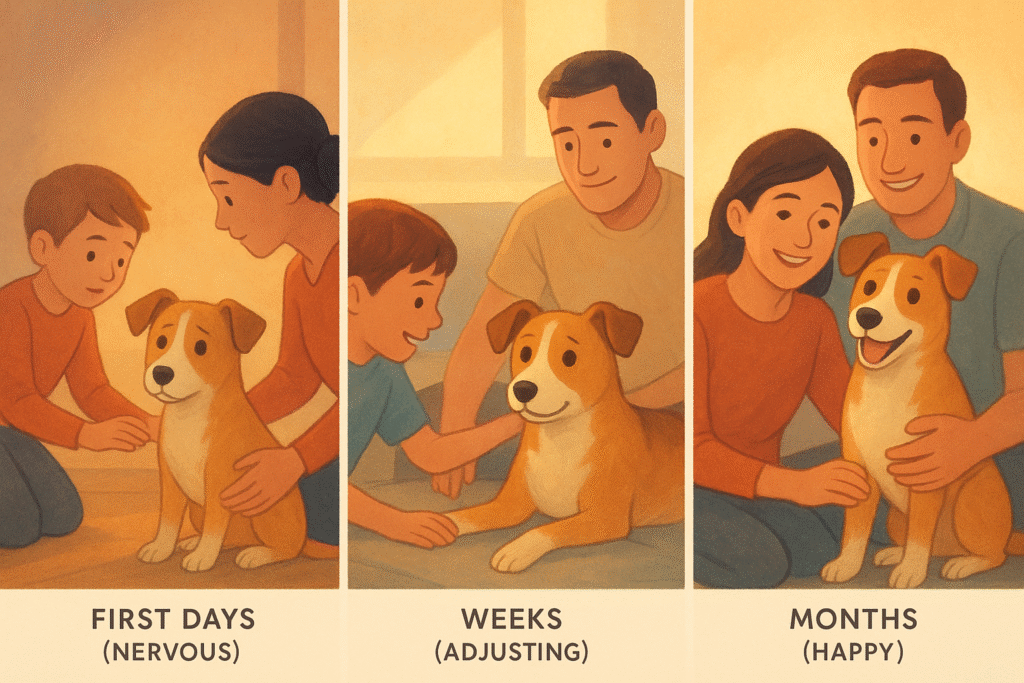
This is part of broader emotional adjustment challenges seen in adopted dogs — especially within the first 3 months.
Hidden Triggers Most Owners Don’t Realize
Anxiety often starts with subtle signals.
Common hidden triggers:
- Work clothes
- Morning routines
- Laptop closing
- Putting on perfume
- Specific shoes
- Turning off the TV
Your dog links these cues with long absences.
Breaking this association is key to recovery.
Step-by-Step Training Plan to Reduce Separation Anxiety
There is no overnight fix.
But there is a proven process.
Step 1: Make Departures Boring
Avoid:
- Emotional goodbyes
- Repeated reassurance
- Dramatic exits
Leave calmly and quietly.
Your goal: departure feels neutral.
Step 2: Desensitize Departure Cues
Practice without actually leaving:
- Pick up keys → sit down
- Put on shoes → watch TV
- Open door → close it
Repeat daily.
Eventually, these cues stop predicting absence.
Step 3: Build Independence at Home
Teach your dog to relax without constant proximity.
Methods:
- Reward calm behavior on a mat
- Use baby gates briefly
- Encourage solo rest time
This builds emotional resilience.
Step 4: Gradual Alone Training (Core Method)
Start small.
- Leave for 10 seconds
- Return calmly
- Repeat until zero stress
- Increase to 30 seconds
- Then 1 minute
- Then 3 minutes
- Then 5 minutes
Only increase duration if your dog stays calm.
If panic appears, reduce time.
Progress may take weeks — consistency matters more than speed.
Step 5: Provide Mental Stimulation Before Leaving
A tired brain handles stress better.
Before leaving:
- 15-minute sniff walk
- Puzzle feeder
- Frozen Kong
- Short obedience session
Mental enrichment reduces anxiety intensity significantly.
Step 6: Crate Use — Proceed Carefully
Crates help only if your dog already feels safe inside.
If your dog panics in a crate, forcing confinement worsens anxiety.
Crates must be positive spaces, not containment tools.
How Long Does Recovery Take?
Mild cases:
2–6 weeks
Moderate cases:
2–3 months
Severe trauma cases:
3–6+ months
Improvement depends on:
- Trauma history
- Owner consistency
- Daily routine stability
- Training structure
Most rescue dogs improve dramatically once they trust that you always return.
When to Seek Professional Help
Consult a certified trainer or veterinary behaviorist if:
- Your dog injures themselves
- Panic is extreme
- No improvement after 4–6 weeks
- Self-harm behaviors occur
In severe cases, short-term medication combined with training can accelerate learning.
Medication is not failure.
It can create the mental calm needed for training to work.
FAQ Section
Is separation anxiety common in rescue dogs?
Yes. It’s especially common during the first 1–3 months after adoption.
Will my rescue dog outgrow separation anxiety?
Rarely without structured training.
Should I get another dog to fix it?
Usually no. Separation anxiety is attachment-based, not loneliness-based.
Is crate training required?
No. It depends on whether your dog feels safe inside a crate.

The Save A Doggo Editorial Team creates practical, welfare-first resources for rescue-dog adopters, foster families, and shelter supporters. We prioritize primary and authoritative sources, distinguish observation from diagnosis, correct material errors transparently, and explain when veterinary or qualified behavior support is needed. We do not claim veterinary credentials or professional review unless a named, verifiable reviewer has approved the final article.