Training an Adopted Dog: A Complete Guide to Building Trust and Good Behavior
Bringing home a rescue is exciting — but training an adopted dog requires patience, structure, and empathy. Unlike puppies raised from 8 weeks old, adopted dogs may come with unknown histories, inconsistent training, or emotional baggage.
The good news? With the right approach, most rescue dogs thrive beautifully.
This guide will walk you step-by-step through how to help your newly adopted dog adjust, learn, and build lasting trust in their new home.
1. Start With Decompression (The First 3–14 Days)
Before formal training begins, your dog needs time to settle.
Many newly adopted dogs experience:
- Stress
- Overstimulation
- Fear of new environments
- Shutdown behavior (very quiet, withdrawn)
- Hyperactivity due to anxiety
What to Do First
- Keep the environment calm and predictable
- Limit visitors
- Create a safe space (crate or quiet corner)
- Establish a consistent feeding and walking schedule
Avoid overwhelming them with commands immediately. Focus on safety and stability first.
👉 If you’ve just adopted, you may also find helpful insights in our guide on how to prepare your home for a rescue dog
2. Build Trust Before Demanding Obedience
Training an adopted dog isn’t about control — it’s about relationship.
Your dog needs to feel:
- Safe
- Understood
- Rewarded for good choices
Use calm tones. Avoid yelling or punishment-based corrections. Dogs with uncertain pasts are especially sensitive to harsh responses.
If you’re unsure where to start, reviewing some positive, reward-based training techniques can provide a solid foundation.
3. Establish Clear Routines Immediately
Dogs thrive on predictability.
Create structure around:
- Wake-up time
- Potty breaks
- Meals
- Walks
- Training sessions
- Bedtime
Consistency reduces anxiety and accelerates learning.
Even older rescue dogs adapt quickly when daily life becomes predictable.
4. Focus on the Basics First
When training an adopted dog, start with foundational behaviors:
House Training (Even for Adult Dogs)
Never assume they are fully house-trained.
- Take them out every 2–3 hours initially
- Reward immediately after successful potty outside
- Supervise indoors
- Use crate training if appropriate
Accidents are information, not defiance.
Name Recognition
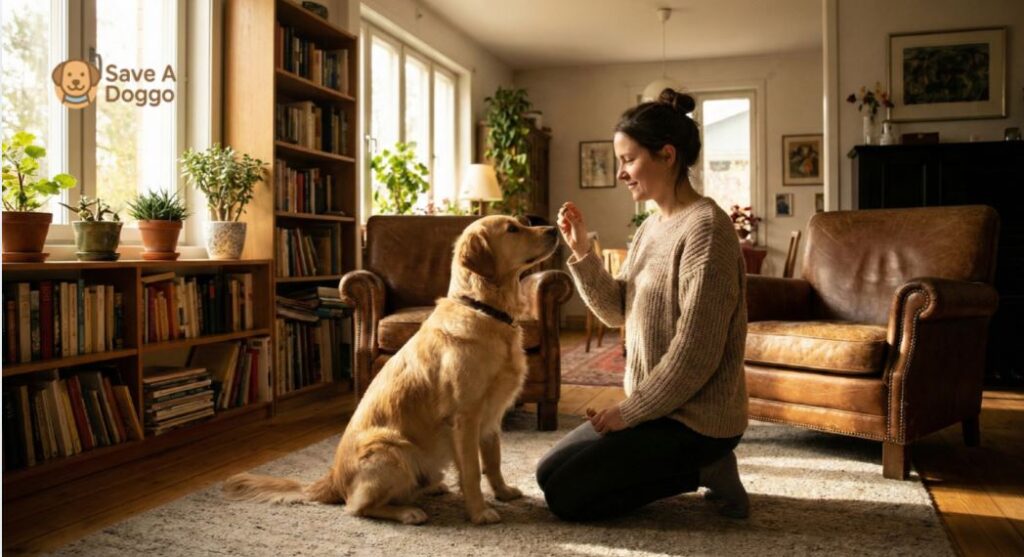
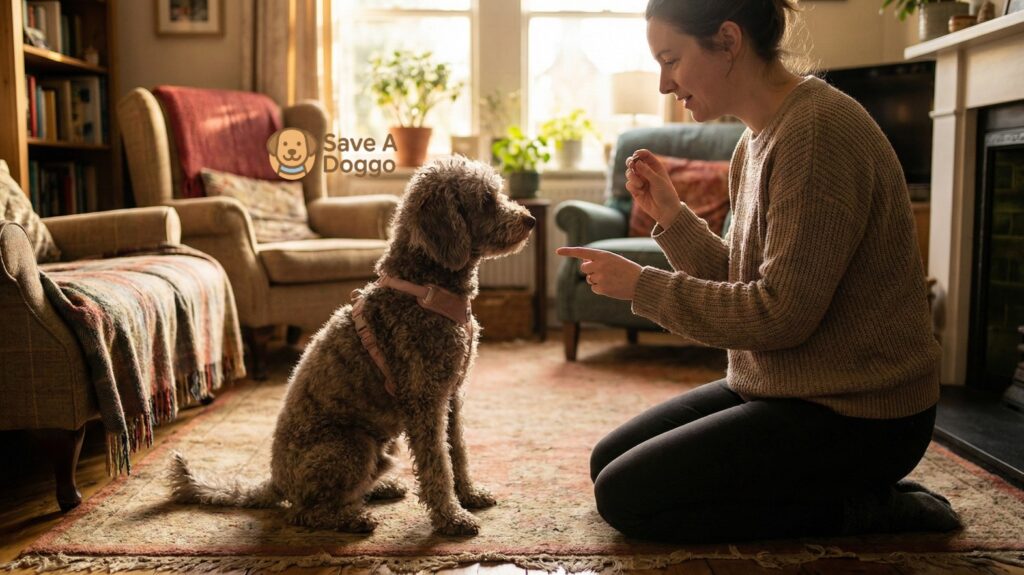
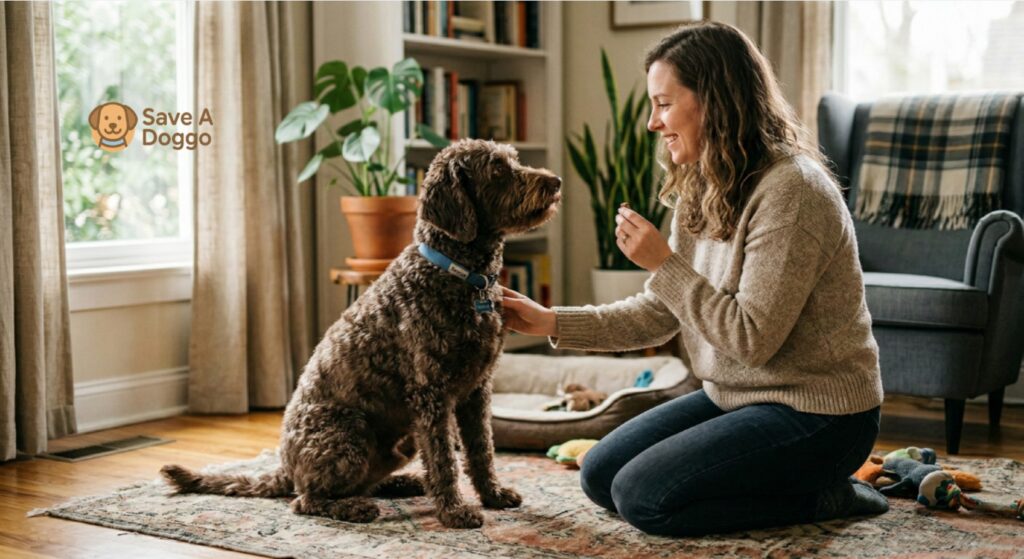
Say their name → reward eye contact.
Repeat dozens of times daily in short, positive bursts.
This builds engagement — the core of all training.
Essential Commands
Start with:
- Sit
- Stay
- Come
- Leave it
- Loose-leash walking
Keep sessions short (5–10 minutes).
5. Address Behavioral Challenges Gently
Some adopted dogs may show:
- Fear of men, children, or loud noises
- Resource guarding
- Separation anxiety
- Leash reactivity
Do not rush exposure.
Instead:
- Desensitize gradually
- Pair scary stimuli with rewards
- Increase distance when needed
If serious behavioral issues arise, consult a certified trainer who uses science-based methods.
6. Socialization: Slow and Intentional
Rescue dogs often missed critical socialization windows.
Introduce new experiences gradually:
- New people
- Different surfaces
- Car rides
- Other dogs (carefully supervised)
Quality matters more than quantity.
One calm, positive interaction is more valuable than five stressful ones.
7. Be Patient With Setbacks
Progress is rarely linear.
Your dog may:
- Behave well for two weeks, then regress
- Develop new behaviors once they feel safe
- Test boundaries as confidence increases
This is normal.
Training an adopted dog is a marathon — not a sprint.
8. Use Mental Stimulation to Prevent Problems
Many behavior issues stem from boredom.
Add:
- Food puzzles
- Snuffle mats
- Scent games
- Short training refreshers
Mental exercise is often more tiring than physical exercise.
9. Celebrate Small Wins
Did your dog:
- Make eye contact on a walk?
- Sit without being asked twice?
- Settle calmly on their bed?
Celebrate it.
Reinforcing micro-successes builds confidence and trust.
10. When to Seek Professional Help
Consider professional support if:
- Aggression appears
- Anxiety becomes destructive
- You feel overwhelmed
Early intervention prevents long-term problems.
Compassion Creates Results
Training an adopted dog is about giving them a second chance — not demanding perfection.
With:
- Structure
- Patience
- Positive reinforcement
- Consistency
You’ll build a confident, well-adjusted companion who trusts you completely.
Frequently Asked Questions About Training an Adopted Dog
1. How long does it take for an adopted dog to adjust to a new home?
Most rescue dogs follow the 3-3-3 rule:
- 3 days to decompress
- 3 weeks to learn your routine
- 3 months to fully feel at home
However, adjustment time varies depending on past experiences, age, and temperament. Consistency and patience significantly speed up the process.
2. Is it harder to train an adopted dog than a puppy?
Not necessarily.
Adult dogs often:
- Have longer attention spans
- Learn commands quickly
- Settle into routines faster
What can make it challenging is emotional baggage, not intelligence. With trust-based training, adopted dogs can progress just as well — sometimes even faster — than puppies.
3. Should I rename my adopted dog?
Yes, you can — especially if:
- The dog shows no response to the current name
- The previous name is associated with stress
- You want a fresh start
Choose a short, two-syllable name and build positive association through rewards and eye contact.
4. How often should I train my newly adopted dog?
Short, frequent sessions work best.
- 5–10 minutes
- 2–3 times per day
- End on a success
Avoid marathon sessions. Mental fatigue can increase stress in newly adopted dogs.
5. What is the best training method for rescue dogs?
Reward-based training (positive reinforcement) is the most effective and safest method.
This approach:
- Builds trust
- Reduces fear
- Encourages voluntary cooperation
- Strengthens your bond
Avoid punishment-based techniques, especially with dogs that may have experienced trauma.
6. My adopted dog ignores commands outside. What should I do?
This is common due to distractions and overstimulation.
To improve response:
- Practice indoors first
- Gradually increase distractions
- Use higher-value rewards outside
- Shorten training distance
Outdoor reliability takes time — focus on incremental progress.
7. How do I prevent separation anxiety in a newly adopted dog?
Start independence training early:
- Practice short departures
- Avoid dramatic greetings
- Reward calm behavior
- Provide enrichment toys when leaving
Gradual exposure to alone time helps prevent attachment-based stress.
8. When should I hire a professional trainer?
Seek help if your adopted dog shows:
- Aggression toward people or animals
- Severe anxiety or panic behaviors
- Resource guarding that escalates
- Persistent destructive behavior
Early intervention prevents long-term behavioral patterns.
9. Can older adopted dogs still learn new tricks?
Absolutely.
Dogs continue learning throughout their lives. Training stimulates their brain, boosts confidence, and strengthens your relationship — regardless of age.
10. What is the biggest mistake new adopters make?
Expecting immediate perfection.
Training an adopted dog requires:
- Emotional adjustment time
- Clear boundaries
- Repetition
- Compassion
Progress builds through consistency, not pressure.

The Save A Doggo Editorial Team creates practical, welfare-first resources for rescue-dog adopters, foster families, and shelter supporters. We prioritize primary and authoritative sources, distinguish observation from diagnosis, correct material errors transparently, and explain when veterinary or qualified behavior support is needed. We do not claim veterinary credentials or professional review unless a named, verifiable reviewer has approved the final article.