
How to Help a Rescue Dog Settle In at Night (First 7 Days Guide)
Bringing a rescue dog home is an act of love—but when night falls, that love is often tested.
Many new adopters are surprised by how difficult nighttime can be during the first week. Your dog may pace, whine, bark, refuse to sleep, or cling to you in ways that feel overwhelming. You might lie awake wondering if you’re doing something wrong—or worse, if your dog regrets coming home.
Here’s the truth: nighttime is the hardest part of the transition for most rescue dogs.
At night, distractions fade. Fear gets louder. Memories resurface. And for a dog who may have slept in a shelter, on the street, or in an unsafe home, darkness can feel deeply unfamiliar.
This guide is here to help.
In this step-by-step, first-7-days guide, you’ll learn how to help your rescue dog feel safe, calm, and gradually secure at night—without forcing independence, rushing progress, or using harsh methods. Everything here is based on real rescue experiences, behavior principles, and compassion-first care.
If your rescue dog is struggling to settle in at night, you are not failing. You are exactly where you’re supposed to be.
Why Nighttime Is So Hard for Rescue Dogs
For humans, nighttime means rest. For many rescue dogs, nighttime means uncertainty.
Common reasons rescue dogs struggle at night
- Sudden silence after a loud shelter environment
- Separation anxiety when you leave the room
- Fear of unfamiliar smells, shadows, or sounds
- Past trauma linked to being confined or abandoned at night
- Lack of a predictable routine
A rescue dog doesn’t yet know that your home is permanent. Especially in the first week, their nervous system is still on high alert.
This is why patience—not correction—is the most important tool you have.
Nighttime struggles are often part of a bigger adjustment process, especially during the first few days at home, which is why understanding how to help a rescue dog adjust to their new home can make the entire transition gentler for both you and your dog.
What “Settling In” Really Means (And What It Doesn’t)
Before we talk about solutions, let’s reset expectations.
Settling in does NOT mean:
- Sleeping through the night immediately
- Being calm, confident, and quiet
- Trusting you fully within days
Settling in DOES mean:
- Slowly learning that nighttime is safe
- Beginning to relax their body
- Choosing rest over vigilance, even briefly
Progress often looks messy before it looks peaceful.
This is where many adopters panic and assume something is “wrong.” In reality, what you’re seeing is normal adjustment behavior.
The First 7 Nights: What to Expect (Day-by-Day Overview)
Every dog is different, but many rescue dogs follow a similar emotional pattern during the first week.
Night 1–2: Survival Mode
- Restlessness
- Crying or pacing
- Following you constantly
- Difficulty settling
Your goal: Provide safety, not structure.
Night 3–4: Testing Boundaries
- Slightly more exploration
- Short moments of rest
- Possible regression (more vocalizing)
Your goal: Consistency and reassurance.
Night 5–7: Early Trust
- Longer sleep stretches
- Choosing a sleeping spot
- Less panic when you move
Your goal: Reinforce calm routines.
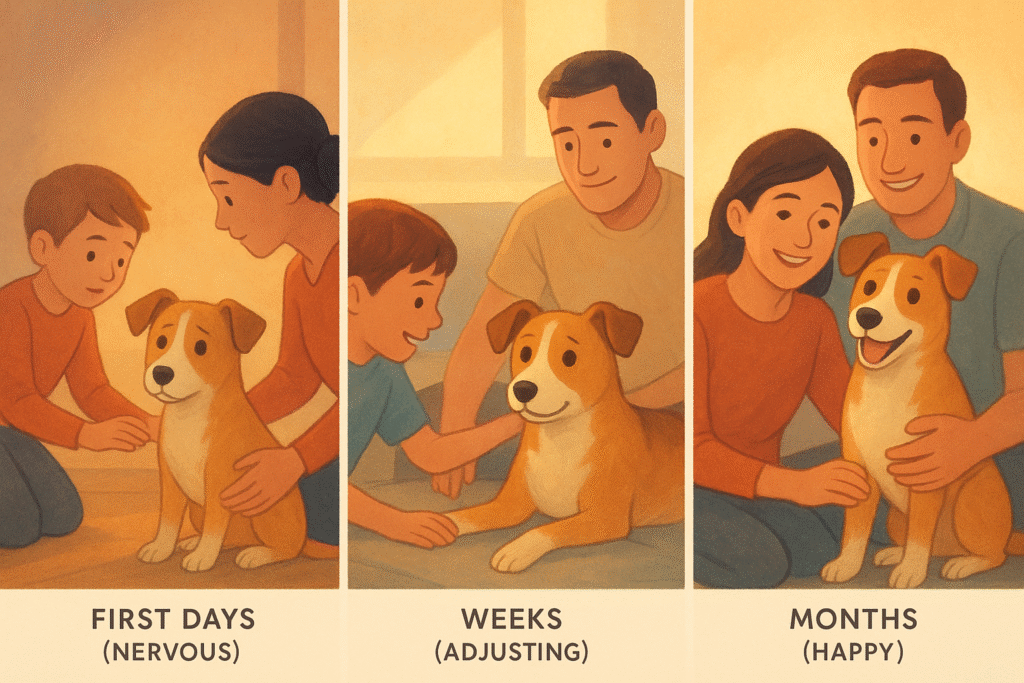
Many adopters find comfort in learning about the emotional timeline behind adoption, and the well-known 3-3-3 rule for rescue dogs helps explain why the first week can feel so intense before things begin to settle.
Preparing a Safe Sleeping Space (Before Night One)
A rescue dog’s sleeping area should communicate one message: nothing bad happens here.
Choose the right location
- Quiet, low-traffic area
- Close enough to hear you
- Not isolated or locked away
Many rescue dogs feel safest sleeping near their human, not alone in another room.
What to include
- Soft bedding (not too large)
- A blanket that smells like you
- Low lighting or a night lamp
- Optional crate with door open
Avoid overwhelming the space with toys or stimuli. Calm comes from simplicity.
Should Your Rescue Dog Sleep in Your Bedroom?
This is one of the most common questions—and one of the most emotional.
The compassionate answer:
Yes, if it helps them feel safe.
For many rescue dogs, sleeping near their adopter reduces anxiety and builds trust faster. This does not “spoil” them or create long-term dependency.
You can always transition later—but you can’t undo fear created too early.
Nighttime Routine: The Most Important Tool You Have
Dogs find safety in predictability.
A simple rescue-friendly nighttime routine
- Calm evening walk (no intense play)
- Bathroom break
- Quiet bonding time
- Lights dimmed at the same time nightly
- Gentle cue like “bedtime”
Consistency matters more than perfection.
Your dog doesn’t need rules yet. They need signals that say, “The day is ending, and you are safe.”
How to Handle Crying, Whining, or Barking at Night
This is where many adopters feel torn.
You want to help—but you don’t want to “reward” noise.
What NOT to do
- Yell or scold
- Ignore intense distress
- Use punishment or deterrents
What to do instead
- Stay calm and quiet
- Offer presence, not stimulation
- Speak softly without excitement
- Sit nearby if needed
If your rescue dog is panicking, they are not manipulating you. They are communicating fear.
Small changes—like your dog choosing to lie near you or relaxing after reassurance—are often early signs your rescue dog is starting to trust you, even if nighttime still feels challenging.
Nighttime Anxiety vs Normal Adjustment
Not all nighttime restlessness is anxiety—but some is.
Normal adjustment signs
- Mild pacing
- Short whining
- Settling after reassurance
When to pay closer attention
- Trembling
- Heavy panting
- Destructive behavior
- Inability to rest at all
If symptoms feel intense or worsen after the first week, gentle professional guidance may help—but never jump to conclusions during the first 7 days.
Should You Use Calming Products at Night?
Many adopters ask about calming aids. The answer depends on the dog.
Helpful, low-risk options
- Soft background noise
- Familiar scents
- Consistent routines
Some dogs respond well to calming tools, but they should support—not replace—trust and patience.
Some adopters explore calming tools as part of their nighttime routine, and understanding whether anxiety vests for dogs really work can help you decide if they’re a supportive option for your rescue dog.
Common Mistakes That Make Nights Harder
Even loving adopters make these mistakes—often unknowingly.
1. Expecting independence too soon
Your dog hasn’t learned safety yet.
2. Changing routines nightly
Consistency builds confidence.
3. Over-stimulating before bed
Calm evenings lead to calm nights.
4. Comparing your dog to others
Every rescue story is different.
When Sleep Starts to Improve (And What That Means)
Improvement often comes quietly.
- Your dog chooses a sleeping spot
- They lie down faster
- They sigh and relax
- They stay asleep when you move
These moments are signs of trust—not obedience.
Celebrate them.
Frequently Asked Questions (FAQs)
How long does it take for a rescue dog to sleep through the night?
Many dogs begin sleeping more soundly after 1–2 weeks, but full adjustment can take longer. Progress matters more than speed.
Should I let my rescue dog sleep with me?
If it helps them feel safe and works for you, it can be beneficial—especially early on.
What if my rescue dog cries every night?
Persistent distress deserves patience first. If it continues beyond the initial adjustment period, consider gentle professional guidance.
Is nighttime anxiety normal for rescue dogs?
Yes. Especially during the first week, nighttime can trigger fear due to past experiences.
You’re Doing Better Than You Think
If you’re exhausted, worried, and second-guessing yourself at night—you’re not alone.
Helping a rescue dog settle in at night isn’t about control. It’s about creating safety, one quiet moment at a time.
The nights will get easier. The trust will deepen. And one evening, you’ll notice your dog sleeping peacefully—and realize that healing has already begun.

The Save A Doggo Editorial Team creates practical, welfare-first resources for rescue-dog adopters, foster families, and shelter supporters. We prioritize primary and authoritative sources, distinguish observation from diagnosis, correct material errors transparently, and explain when veterinary or qualified behavior support is needed. We do not claim veterinary credentials or professional review unless a named, verifiable reviewer has approved the final article.