
15 Signs Your Dog Is Stressed (And How to Calm Them Immediately)
If you’ve ever looked at your dog and felt that something just isn’t right — you’re probably not imagining it.
Dogs don’t speak our language, but they communicate constantly through behavior, posture, and subtle emotional signals. The problem? Many loving owners miss the early warning signs.
As someone who has worked closely with rescue dogs — especially those adjusting to new homes — I’ve seen firsthand how silent stress can slowly turn into anxiety, behavioral problems, and even health issues.
In this guide, I’ll walk you through 15 clear signs your dog is stressed, explain what they really mean, and show you how to calm your dog immediately — in ways that are compassionate, science-backed, and practical.
Why Recognizing Stress Early Matters
Chronic stress in dogs can lead to:
- Increased aggression
- Destructive behavior
- Weakened immune system
- Sleep disturbances
- Digestive problems
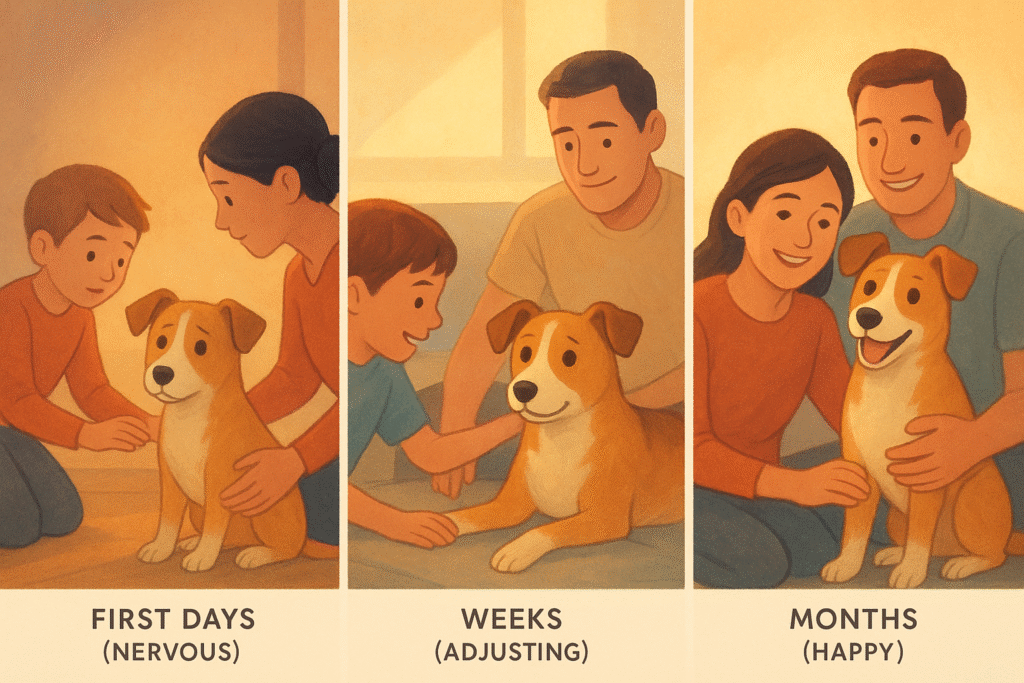
If you recently adopted, stress is especially common. You might want to review the gentle timeline explained in our guide to the adjustment period for rescue dogs.
Now let’s look at the warning signs.
15 Signs Your Dog Is Stressed
1. Excessive Panting (Without Heat or Exercise)
Panting is normal after play. But if your dog is panting indoors while resting, stress may be the cause.
How to help immediately:
- Move them to a quiet area
- Lower stimulation (TV, visitors, noise)
- Speak softly and avoid sudden movements
2. Yawning Frequently (When Not Tired)
Dogs yawn to release tension — not just fatigue. It’s a calming signal.
If your dog yawns repeatedly during training or when guests arrive, they may feel overwhelmed.
You may also notice this in dogs still adjusting to a new home, similar to behaviors discussed in our post about helping a rescue dog settle in.
3. Lip Licking or Nose Licking
Quick tongue flicks often indicate discomfort. It’s subtle but powerful.
I’ve personally seen this signal escalate into growling when ignored.
Solution:
Give your dog space immediately. Remove the trigger if possible.
4. Whale Eye (Showing the Whites of Their Eyes)
When dogs turn their head but keep their eyes fixed on something, revealing white crescents — that’s stress.
This often appears before snapping.
5. Sudden Shedding
Stress can trigger excess shedding due to adrenaline spikes.
It’s common during vet visits or loud storms.
If storms are a trigger, you might find our breakdown of anxiety vests helpful (see the ThunderShirt review on the site).
6. Trembling or Shaking
Not always cold-related. Emotional stress activates the nervous system.
Comfort tip:
Sit near them — don’t hover — and let them initiate contact.
7. Pacing Back and Forth
Repetitive movement is a clear anxiety behavior.
This is common in newly adopted dogs unsure of their environment.
You can learn more about early adjustment stress in our article about why rescue dogs struggle to sleep the first week.
8. Hiding
Under beds. Behind couches. In closets.
Hiding signals overwhelm.
Instead of forcing interaction, create a safe zone with soft bedding and low light.
9. Excessive Barking or Whining
Sudden vocal changes can indicate emotional overload.
If your dog recently joined your family, early anxiety symptoms are explained in our guide on signs of anxiety after adoption.
10. Avoiding Eye Contact
Dogs that suddenly avoid looking at you may feel insecure or fearful.
Rebuild trust slowly — similar to what we outline in our step-by-step trust-building training guide for adopted dogs.
11. Destructive Behavior
Chewing furniture. Scratching doors.
Often mistaken as “bad behavior,” but frequently rooted in stress.
Positive reinforcement techniques — not punishment — are key. Our practical dog training help guide explains this in depth.
12. Changes in Appetite
Skipping meals or overeating can signal emotional imbalance.
If appetite shifts persist beyond 48 hours, consult a vet to rule out medical issues.
13. Excessive Grooming or Licking
Compulsive licking can become self-soothing behavior.
Left unmanaged, it can lead to hot spots.
14. Freezing in Place
When dogs feel trapped or overwhelmed, they may suddenly become still.
This is often misinterpreted as calmness — it’s not.
15. Sudden Aggression
Growling, snapping, or nipping may be stress responses.
Never punish these signals. They’re communication.
Instead, identify triggers and reduce exposure.
If behavioral challenges continue, you may benefit from structured training methods covered in our complete behavior correction guide.
How to Calm a Stressed Dog Immediately
Here are proven calming techniques:
1. Lower Environmental Stimulation
Dim lights, reduce noise, limit visitors.
2. Use Slow, Gentle Movements
Fast movements increase tension.
3. Offer Predictability
Dogs thrive on routine.
4. Provide a Safe Space
Crate (if crate-trained), quiet corner, or covered bed.
5. Try Calming Tools
- Anxiety wraps
- White noise
- Snuffle mats
6. Practice Positive Reinforcement
Never yell or punish stress responses.
Long-Term Stress Prevention
Stress often connects to lack of clarity or insecurity.
Focus on:
- Consistent training
- Clear routines
- Daily mental stimulation
- Gentle exposure to triggers
If your dog is newly adopted, our compassionate first 30-day care guide offers a structured roadmap.
When to See a Veterinarian
Consult a professional if:
- Stress lasts longer than 2 weeks
- Appetite loss continues
- Aggression escalates
- Physical symptoms appear
Medical conditions can mimic anxiety.
My Personal Experience With Rescue Dog Stress
When I adopted my first rescue, she wouldn’t make eye contact for days. She paced at night and refused food.
It wasn’t stubbornness.
It was fear.
Once I reduced stimulation, stopped pushing training too quickly, and focused on emotional safety first — everything changed.
Stress in dogs is not misbehavior.
It’s communication.
And when we listen, they heal.
Frequently Asked Questions (FAQ)
How do I know if my dog is stressed or just bored?
Stress often includes body language signals like lip licking, whale eye, trembling, or avoidance. Boredom usually shows as restlessness without fear signals.
Can dog stress go away on its own?
Mild stress may resolve with time, but chronic stress requires intervention and environmental adjustment.
How long does stress last in rescue dogs?
Many follow the 3-3-3 adjustment timeline, but every dog is different.
Are anxiety vests effective?
They help some dogs by applying gentle pressure, but results vary.
SaveADoggo Team is a group of animal lovers passionate about rescue dogs, adoption education, and emotional healing for both dogs and humans. Our content is created with research, real-life experience, and compassion to support responsible adoption and stronger human–dog bonds.
All articles are carefully reviewed for clarity, accuracy, and responsible dog care guidance, and updated regularly to ensure trustworthy rescue-focused information.
Our mission is simple: help rescue dogs feel safe, loved, and understood—one home at a time.