Signs Your Rescue Dog Is Finally Relaxing (Emotional Recovery Milestones)
Adopting a rescue dog can feel like an emotional roller coaster.
At first, many dogs appear nervous, distant, or unsure about everything around them.
They may:
- avoid eye contact
- hide in quiet corners
- startle easily
- or follow you everywhere out of insecurity
But then something beautiful begins to happen.
Slowly, almost quietly, your dog starts to relax.
These small changes are actually major emotional recovery milestones.
Recognizing these signs helps you understand that your dog is finally beginning to trust their new life.
If you want to understand the deeper causes behind early anxiety in rescue dogs, start by reading the complete guide to rescue dog anxiety, which explains the emotional adjustment process many adopted dogs experience.
Why Relaxation Is a Huge Milestone for Rescue Dogs
For dogs that have experienced abandonment, shelter stress, or unstable homes, relaxation is not automatic.
Feeling safe requires repeated proof that:
- food arrives regularly
- people are kind
- the environment is predictable
- they will not be abandoned again
This emotional rebuilding process takes time.
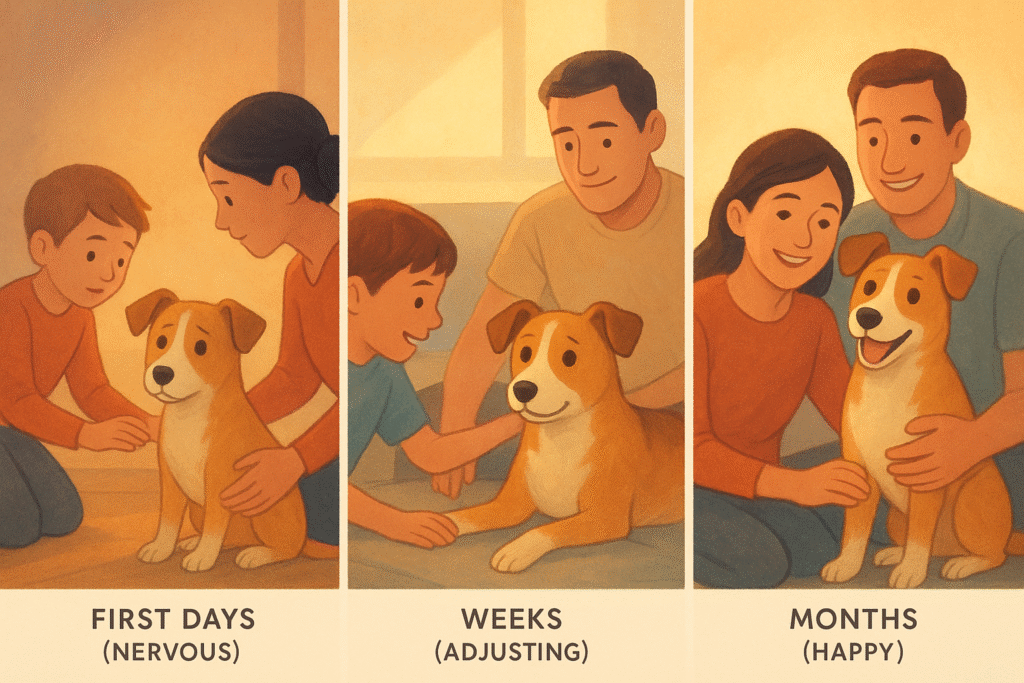
In fact, many dogs follow the well-known adjustment pattern explained in the 3-3-3 rule for rescue dogs, which describes how dogs gradually move from uncertainty to trust.
10 Signs Your Rescue Dog Is Finally Relaxing
These behaviors often appear gradually as your dog starts to feel safe.
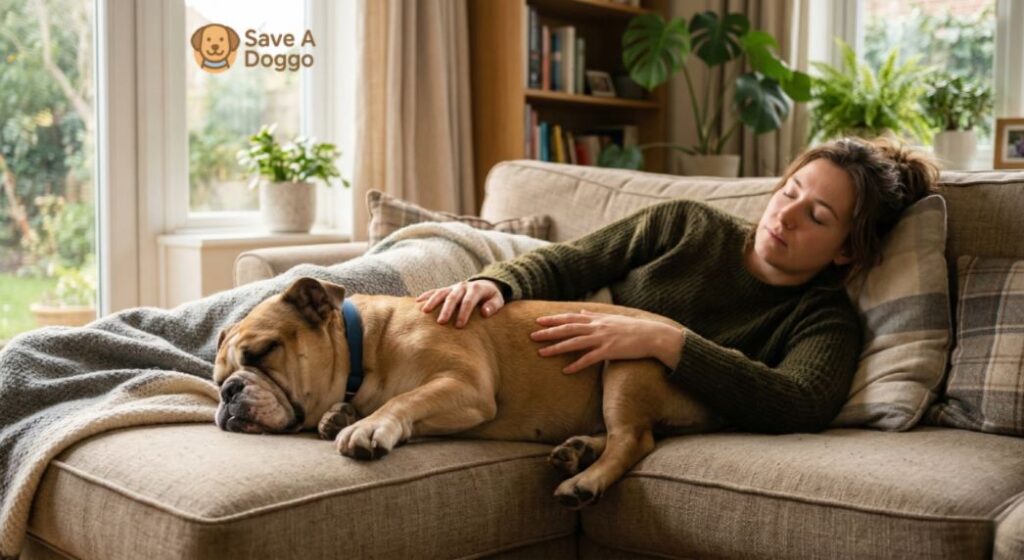
1. Your Dog Sleeps Deeply Around You
One of the clearest signs of emotional safety is deep sleep.
A stressed dog tends to stay alert and restless.
But when your rescue dog:
- stretches out fully
- sleeps on their side
- snores lightly
- naps near you
it means they finally trust their surroundings.
Sleep is one of the strongest indicators that anxiety levels are dropping.
2. They Start Exploring the House
At first, many rescue dogs stay in one small area.
When they begin exploring rooms, sniffing objects, and walking around confidently, it shows curiosity replacing fear.
Curiosity is a powerful sign of emotional recovery.
3. Tail Wagging Becomes More Natural
Early tail wags can be cautious or hesitant.
But relaxed dogs show looser body language:
- relaxed tail movement
- soft facial expression
- relaxed ears
This kind of body language indicates comfort.
Understanding these signals is important because subtle stress signs are often mistaken for happiness.
You can learn more about identifying those behaviors in signs of dog anxiety after adoption, which explains early stress signals many adopters overlook.
4. Your Dog Initiates Contact
At first, many rescue dogs wait for humans to approach them.
A relaxed dog may begin to:
- nudge your hand
- lean against your leg
- follow you calmly
- ask for affection
This means they are beginning to see you as a safe person.
5. They Begin Playing
Play behavior is a huge emotional breakthrough.
A dog that feels unsafe rarely plays.
Signs include:
- bringing toys
- playful bowing
- gentle zoomies
- playful barking
Play indicates emotional confidence.
6. Appetite Improves
Anxious dogs often eat poorly.
As stress decreases, appetite usually returns.
A healthy eating routine suggests your dog feels more secure in their environment.
7. Your Dog Shows Relaxed Body Language
Relaxed dogs display soft, loose posture.
Look for:
- relaxed muscles
- soft eyes
- comfortable stretching
- slow blinking
These signals indicate emotional calm.
8. They Stop Following You Everywhere
Some rescue dogs develop clingy behaviors early on.
They may panic if you leave the room.
But when they begin resting independently, it means they feel confident enough to relax without constant reassurance.
This is an important step toward preventing issues like separation anxiety.
9. Your Dog Starts Showing Their Personality
This is one of the most exciting moments for adopters.
You may suddenly notice:
- silly behavior
- playful quirks
- curiosity
- affection
This is often when people say:
“Now I finally see my dog’s real personality.”
10. They Greet You Calmly Instead of Nervously
Early greetings may be frantic or unsure.
But relaxed dogs greet owners with balanced excitement rather than panic.
This shows emotional stability and trust.
How Long Does Emotional Recovery Take?
Every rescue dog is different.
Some adjust in a few weeks.
Others need several months.
Factors that affect recovery include:
- past trauma
- shelter duration
- personality
- environment stability
Patience and consistency play the biggest roles.
How to Help Your Rescue Dog Continue Relaxing
Even after progress appears, your dog still benefits from supportive routines.
Focus on:
Consistent Daily Routine
Dogs feel safer when life becomes predictable.
Gentle Positive Training
Confidence-building exercises strengthen trust.
For practical guidance, our step-by-step guide to training an adopted dog to build trust and good behavior explains how to reinforce positive behavior without increasing stress.
Safe Resting Areas
Provide quiet spaces where your dog can relax undisturbed.
A Personal Reflection Many Rescue Owners Share
One moment many rescue owners remember forever is the first time their dog falls asleep beside them.
That quiet moment often signals something powerful:
Your dog finally believes they are home.
These milestones may seem small, but they represent the rebuilding of trust after uncertainty and fear.
And for many rescue dogs, that trust changes their life forever.
FAQ
How do I know if my rescue dog is starting to trust me?
Signs include relaxed sleeping, playful behavior, initiating contact, and exploring the house with curiosity.
How long does it take for a rescue dog to relax?
Some dogs relax within a few weeks, while others may take several months depending on their background and personality.
Why was my rescue dog calm at first but energetic later?
Many rescue dogs initially shut down emotionally. As they feel safer, their real personality and energy begin to appear.
Can rescue dog anxiety come back later?
Yes. Stressful events or changes can temporarily trigger anxiety again, but dogs usually recover faster once trust has been established.
SaveADoggo Team is a group of animal lovers passionate about rescue dogs, adoption education, and emotional healing for both dogs and humans. Our content is created with research, real-life experience, and compassion to support responsible adoption and stronger human–dog bonds.
All articles are carefully reviewed for clarity, accuracy, and responsible dog care guidance, and updated regularly to ensure trustworthy rescue-focused information.
Our mission is simple: help rescue dogs feel safe, loved, and understood—one home at a time.