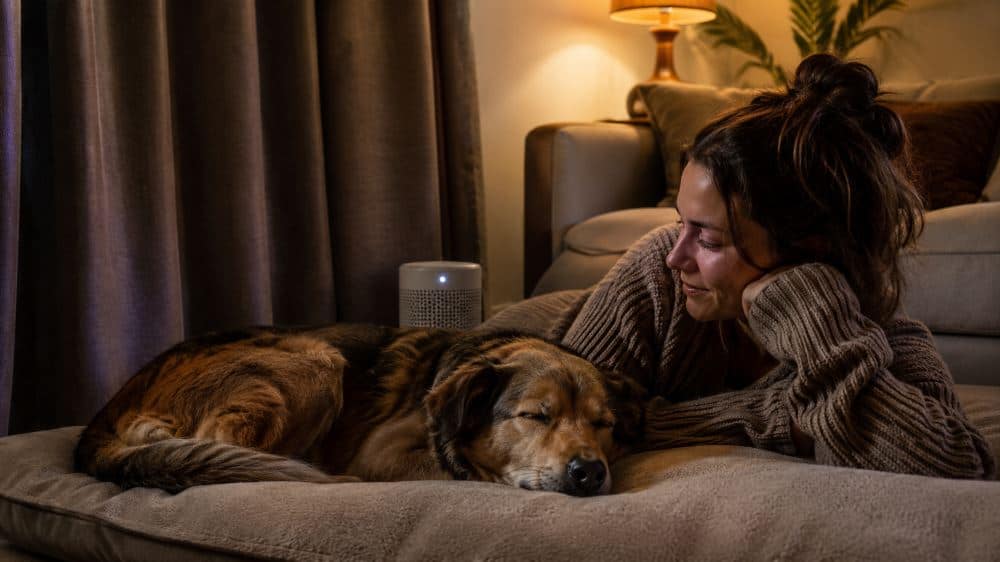
Fireworks can turn an ordinary evening into a frightening, disorienting event for a rescue dog. You do not need to make your dog “face” the noise. Your immediate job is simpler: reduce exposure, prevent escape, respect your dog’s need for space, and know when professional help is needed.
Quick Answer: If your rescue dog is afraid of fireworks, bring them indoors before the noise starts, use a familiar interior safe room, secure every exit, and take all toilet trips on leash. Follow only your veterinarian’s medication instructions. Stay calm, allow hiding, and seek urgent veterinary help for injury, collapse, breathing difficulty, or suspected toxin ingestion.
Why rescue dogs may react strongly
A rescue dog’s history may be incomplete, but fear does not prove that the dog was abused. Noise sensitivity can develop after a frightening experience, limited early exposure to loud sounds, an underlying health problem, or age-related changes. Fireworks are especially difficult because the booms are sudden, unpredictable, and may come from different directions.
Fear can look like trembling, panting, pacing, drooling, hiding, vocalizing, digging at doors, or trying to flee. Some dogs become unusually still instead. Learn your dog’s signs of anxiety and read your rescue dog’s body language rather than waiting for full panic. Cornell’s fireworks and thunderstorm guidance emphasizes advance planning because frightened dogs may make frantic escape attempts.
48 hours before: identification and vet plan
Start with the consequences you can prevent. Confirm that the phone numbers on your dog’s collar tag and microchip registry are current. Check the tag for wear, take a recent clear photo of your dog, and save the microchip number and registry contact information where you can find them quickly.
- Inspect gates, screens, doors, and loose fence boards.
- Tell household members that exterior doors must not be left open.
- Save your regular veterinarian’s number and the nearest emergency veterinary hospital.
- If your dog has previously panicked, escaped, injured themselves, or reacted aggressively during noise, call your veterinarian now.
Veterinary medication may be appropriate for some dogs, but 48 hours is not always enough time to establish a new plan. If medication has already been prescribed, confirm the exact timing and instructions. Cornell and the ASPCA recommend testing prescribed medication on a quiet day when possible so the response can be observed before the main event. Never change the dose, repeat a dose, share medication, or substitute a human product without veterinary direction.
| Personalize the plan | Write it here |
|---|---|
| Known noise triggers | ________________________________ |
| Exact safe room in this home | ________________________________ |
| Expected fireworks start time | ________________________________ |
| Veterinarian or emergency clinic | ________________________________ |
Build a familiar safe room
Choose a room your dog already knows, preferably an interior space with few or no windows and as far from the noise as practical. The quietest unfamiliar room is not necessarily the best choice for a nervous rescue dog. Let your dog explore the selected space before fireworks begin.
- Add familiar bedding, water, and an accessible hiding place.
- Close windows and curtains or blinds before dark.
- Use steady white noise, a fan, or calm music at a comfortable volume.
- Remove breakable objects, chemicals, cords, and anything the dog might knock over or swallow.
- Offer a familiar food toy or chew, but do not pressure the dog to use it.
Use a crate only if your dog already enters it willingly and rests there comfortably. Do not shut a panicking dog into an unfamiliar crate. Preparing a predictable retreat is one practical way to build trust without rushing.
Day-of exercise, toilet, food, and medication timing
Keep the day recognizable. Provide normal exercise or play earlier, before neighborhood activity and noise increase. The goal is a comfortable routine—not exhausting the dog. Adjust outdoor activity for heat, age, and health.
Complete the main toilet walk before fireworks are expected. Use secure, properly fitted walking gear and a handheld leash. Once fireworks may begin, keep the leash attached even in a fenced yard; a frightened dog may climb, dig, squeeze through a gap, or bolt through a gate.
Offer the dog’s usual meal on the usual schedule unless your veterinarian gave different instructions. Keep alcohol, grill scraps, toxic foods, fireworks, and party debris out of reach. Give prescribed medication exactly when and how your veterinarian directed; do not wait for severe panic unless that is specifically part of the veterinary plan.
During fireworks: what to do and avoid
Bring your dog into the prepared room before the first boom. Keep your own movements and voice unhurried. You may sit nearby, speak gently, or provide contact if your dog approaches for it. If the dog chooses distance or hiding, respect that choice.
| If your dog… | Do this | Avoid this |
|---|---|---|
| Hides | Leave access to the hiding place and reduce activity nearby. | Pulling the dog out or reaching into the hiding space. |
| Seeks contact | Offer calm touch or quiet company if it helps them settle. | Holding or restraining the dog against their will. |
| Accepts food | Offer small familiar treats, a lick mat, or a stuffed food toy. | Forcing food or introducing rich holiday treats. |
| Paces or pants | Lower stimulation, give space, and follow the veterinary plan. | Scolding, drilling cues, or deliberately exposing the dog to more noise. |
| Needs a toilet break | Wait for a lull if possible and take the shortest leashed trip. | Opening the door while the dog is loose or using the yard off leash. |
Reward-based handling is consistent with the American Veterinary Society of Animal Behavior’s humane training guidance. Do not punish barking, accidents, hiding, or growling. These behaviors tell you that the dog is struggling.
After the noise appears to stop
Do not assume the first quiet period means the night is over. Keep exterior-door precautions in place and continue leashed toilet trips. The next morning, inspect the yard for firework fragments before allowing access. Record when the fear began, what you observed, what helped, and how long recovery took; that log can help your veterinarian plan for the next event.
Escape and bite-risk prevention
Create two layers between your dog and the outdoors whenever possible: for example, a closed safe-room door plus a closed exterior door. Put leashes away from entrances so no one must open a door while searching for one. A visible note can prevent a well-meaning guest from releasing the dog.
Guest script: “Our dog is frightened by the fireworks. Please do not enter the safe room or open an exterior door without checking with us first. Let the dog approach you—no reaching, calling, or following.”
Fear can also reduce a dog’s tolerance for handling. Keep children, visitors, and other pets out of the retreat unless their presence is known to help. Do not corner the dog, grab the collar, block an escape path, or reach beneath furniture. If the dog stiffens, freezes, stares, growls, snaps, or lunges, increase distance and place a secure barrier between the dog and people. Never punish a growl.
If your dog has a bite history or shows escalating aggression, contact your veterinarian and seek qualified behavior support. A board-certified veterinary behaviorist can assess both medical and behavioral factors. Do not introduce an unfamiliar muzzle or other new restraint during active panic.
When fear needs veterinary help
| Level | What you observe | What to do |
|---|---|---|
| Plan veterinary help | Previous escape attempts, destructive panic, inability to settle, worsening fear, aggression, or newly developed noise fear—especially in an older dog. | Arrange a veterinary assessment and a plan for future noise events. |
| Call promptly | Broken nails or teeth, cuts from escape attempts, persistent distress after the event, or possible access to holiday food or debris. | Call your veterinarian or an urgent-care clinic for instructions. |
| Emergency now | Difficulty breathing, blue or very pale gums, collapse, unresponsiveness, seizure activity, severe bleeding, major trauma, or suspected ingestion of fireworks, medication, or another toxic substance. | Contact the nearest emergency veterinary hospital and leave promptly. Call ahead when possible. |
Stress panting can look dramatic, but strained or noisy breathing, pronounced abdominal effort, weakness, or collapse requires emergency assessment. Cornell lists breathing difficulty, collapse, major trauma, and unintended toxic ingestion among conditions needing emergency care. If you cannot tell whether your dog is experiencing panic or a medical emergency, call an emergency veterinary clinic.
Printable night-of checklist
- □ Collar tag and microchip contact details checked
- □ Recent photo and microchip number saved
- □ Gates, windows, screens, and exterior doors secured
- □ Familiar safe room prepared before the first boom
- □ Water, bedding, hiding place, and sound masking ready
- □ Exercise and main toilet walk completed early
- □ Secure walking gear and leash beside the safe-room door
- □ Prescribed medication given only as directed
- □ Children and guests know the door and handling rules
- □ Veterinarian and emergency clinic details saved
- □ All late toilet trips taken on leash
- □ Yard checked for firework debris the next morning
- □ Fear signs, timing, and recovery recorded for the veterinarian
Safety note: This article provides general education and cannot diagnose or treat an individual dog. Consult your veterinarian about severe fear, medication, new behavior changes, aggression, or any concern that your dog may be injured or medically unwell.
Sources & Further Reading
- Cornell University College of Veterinary Medicine: Fear of Fireworks and Thunderstorms
- ASPCA: Fourth of July Safety Tips
- American Veterinary Society of Animal Behavior: Position Statements
- Cornell University Hospital for Animals: Emergency and Critical Care
- American College of Veterinary Behaviorists: Information for Animal Owners
Save the checklist and update your dog’s ID and microchip details today.
The Save A Doggo Editorial Team creates practical, welfare-first resources for rescue-dog adopters, foster families, and shelter supporters. We prioritize primary and authoritative sources, distinguish observation from diagnosis, correct material errors transparently, and explain when veterinary or qualified behavior support is needed. We do not claim veterinary credentials or professional review unless a named, verifiable reviewer has approved the final article.