Positive Reinforcement Dog Training Tips (Complete 2026 Guide for Real Results at Home)
If you want a dog that listens because they trust you — not because they fear you — then positive reinforcement is the method that works.
Modern behavioral science consistently shows that reward-based training produces:
- Faster learning
- Stronger long-term retention
- Lower anxiety levels
- Fewer behavioral side effects
In this guide, you’ll learn the most effective positive reinforcement dog training tips to build obedience, confidence, and emotional stability — especially if you’re training at home.
What Is Positive Reinforcement Dog Training?
Positive reinforcement means:
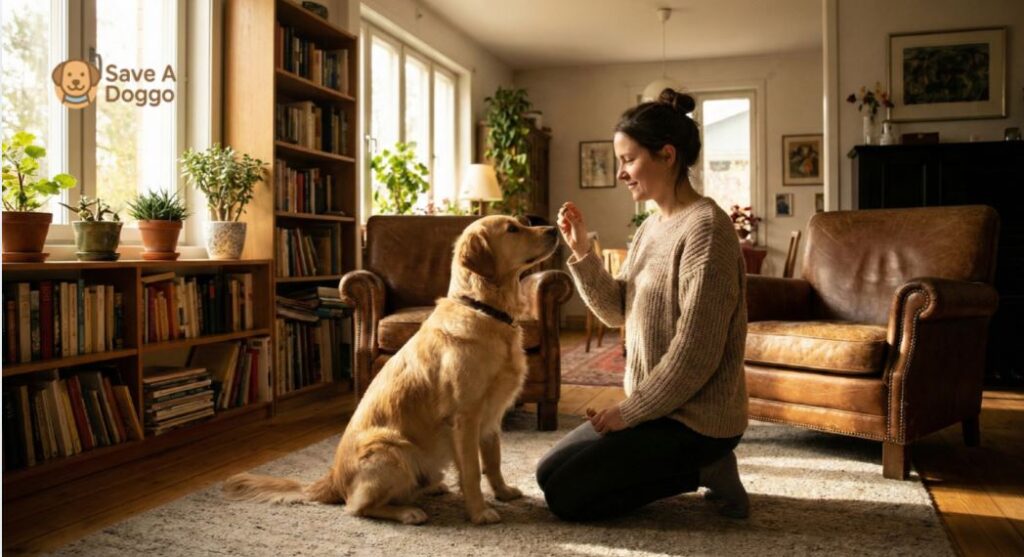
Reward behaviors you want to see repeated.
When a dog performs a desired behavior and receives something valuable (treat, praise, toy, access), the brain releases dopamine — strengthening that behavior pattern.
It is not permissive.
It is strategic learning science.
Why Positive Reinforcement Works Better Than Punishment
Punishment-based methods may suppress behavior temporarily, but they often increase:
- Fear
- Anxiety
- Defensive aggression
- Avoidance
Positive reinforcement builds:
- Trust
- Engagement
- Emotional safety
- Willing cooperation
Especially for rescue dogs or anxious dogs, reward-based methods are essential for long-term stability.
1️⃣ Start with Clear Markers (Timing Is Everything)
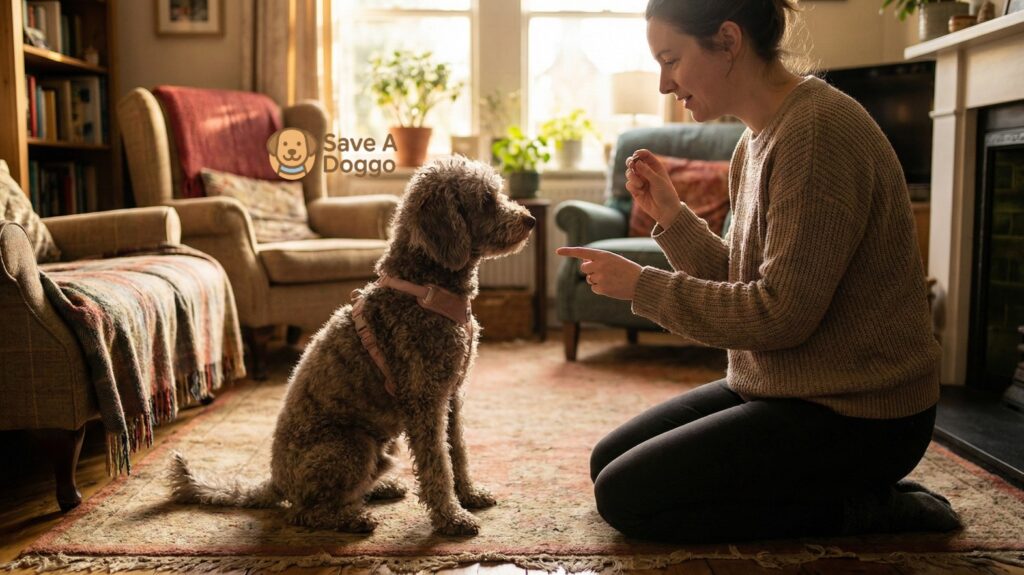
One of the most important positive reinforcement dog training tips is using a clear marker.
A marker tells the dog:
“That exact behavior earned the reward.”
Examples:
- “Yes!” (verbal marker)
- Clicker sound
Timing must be immediate — within 1 second of the behavior.
Delayed rewards confuse learning.
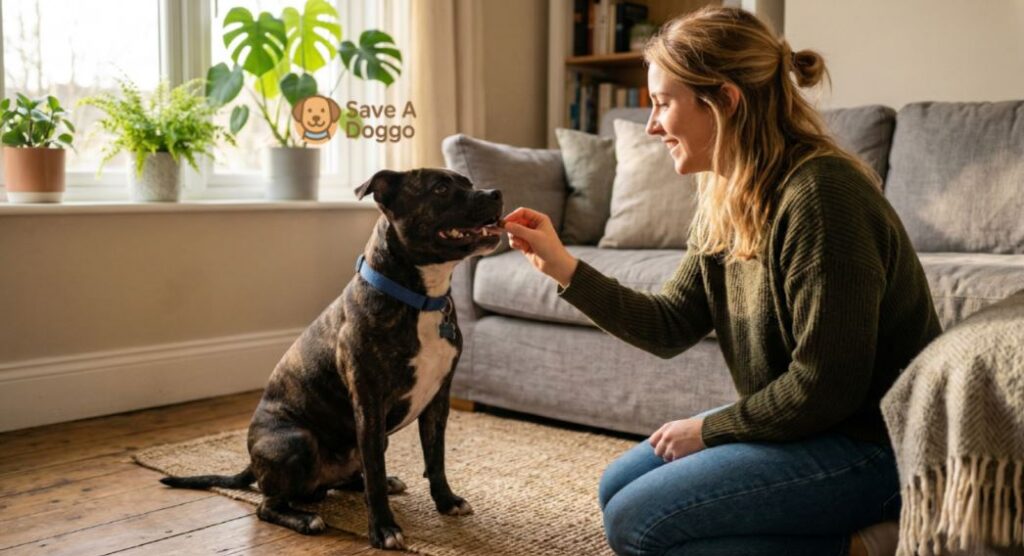
2️⃣ Use High-Value Rewards Strategically
Not all rewards are equal.
Types of reinforcement:
- Low value → kibble
- Medium value → soft treats
- High value → chicken, cheese, freeze-dried meat
Use higher value rewards for:
- New behaviors
- Distraction-heavy environments
- Fear-based challenges
Gradually phase to lower-value rewards once behavior stabilizes.
3️⃣ Keep Training Sessions Short and Focused
Dogs learn best in:
- 5–10 minute sessions
- 2–3 times daily
- Low distraction environment
End sessions while your dog is still engaged.
Overtraining leads to frustration and mental fatigue.
4️⃣ Reinforce Calm Behavior (Not Just Tricks)
Many owners only reward commands.
But one of the most overlooked positive reinforcement dog training tips is reinforcing calmness.
Reward when your dog:
- Lies quietly
- Ignores distractions
- Waits patiently
- Makes eye contact
Calm behavior becomes habitual when reinforced consistently.
5️⃣ Avoid Accidental Reinforcement
Dogs repeat what works.
Common mistakes:
- Petting when dog jumps
- Talking when dog barks
- Eye contact during demand behavior
If attention follows unwanted behavior, you are reinforcing it.
Ignore unwanted behavior (when safe), and reward the alternative.
6️⃣ Teach Replacement Behaviors
Instead of correcting unwanted actions, teach an alternative.
Examples:
Jumping → Teach “sit” for greeting
Barking → Teach “quiet” with reward
Pulling leash → Reward loose leash walking
Behavior modification works best when you give the dog a clear success option.
7️⃣ Gradual Distraction Training
Proofing behavior is critical.
Train in stages:
- Quiet room
- Mild distraction
- Moderate distraction
- Outdoor environment
Increase difficulty gradually.
Success builds confidence.
8️⃣ Use Consistent Cues
Dogs do not understand language variation.
Avoid:
- “Sit down please”
- “Sit now”
- “Go ahead and sit”
Choose one cue:
“Sit”
Consistency accelerates learning.
9️⃣ Incorporate Life Rewards
Positive reinforcement isn’t only food.
Life rewards include:
- Going outside
- Fetch
- Sniffing
- Social interaction
- Playtime
Example:
Ask for “sit” before opening the door.
Behavior earns access.
🔟 Stay Emotionally Neutral During Mistakes
If your dog makes an error:
- Stay calm
- Reset
- Try again
Emotional reactions disrupt learning clarity.
Training is feedback — not judgment.
Proper handling practices that reduce stress can dramatically improve your training results, especially for sensitive or rescue dogs.
Positive Reinforcement for Common Behavior Problems
Jumping
Reward four paws on floor.
Leash Pulling
Stop movement. Reward slack leash.
Separation Anxiety
Reinforce calm departures and short absences.
Resource Guarding
Use trade-based reinforcement instead of force removal.
Reward-based systems reduce stress-based escalation.
If your dog struggles with jumping or leash pulling, you may want to explore more advanced behavior correction strategies in our detailed guide on fixing common dog behavior issues.
How Long Does Positive Reinforcement Take to Work?
Many dogs show:
- Initial understanding within 1 week
- Reliable response in 3–4 weeks
- Habit-level stability within 2–3 months
Consistency determines speed.
Training is repetition, not intensity.
Mistakes to Avoid
❌ Inconsistent rewards
❌ Rewarding too late
❌ Overusing treats without structure
❌ Expecting instant perfection
❌ Mixing punishment with reinforcement
Mixed signals slow progress.
Is Positive Reinforcement Effective for Rescue Dogs?
Absolutely.
Rescue dogs often carry:
- Uncertainty
- Trauma
- Environmental stress
Reward-based training:
- Builds safety
- Reduces fear
- Encourages voluntary engagement
Trust cannot grow under intimidation.
If you’re working with a nervous adopted dog, a step-by-step anxiety training approach can make a significant difference in building trust.
Advanced Positive Reinforcement Tip: Variable Reward Schedule
Once behavior is reliable:
- Shift from constant rewards
- Move to unpredictable reinforcement
Example:
Reward every 2nd or 3rd correct response randomly.
This strengthens long-term habit retention.
Frequently Asked Questions
Does positive reinforcement spoil dogs?
No. Structure and clarity prevent entitlement. Rewards are earned, not given freely.
Can I train without treats?
Yes, but food accelerates early learning. Over time, praise and life rewards become sufficient.
What if my dog ignores treats?
Increase value, reduce distractions, or assess stress level.
The most powerful positive reinforcement dog training tips are simple:
- Reward what you want repeated
- Be consistent
- Keep sessions short
- Stay patient
Training should feel like teamwork — not control.
When a dog chooses to listen because they trust you, that obedience is stable, reliable, and lasting.
SaveADoggo Team is a group of animal lovers passionate about rescue dogs, adoption education, and emotional healing for both dogs and humans. Our content is created with research, real-life experience, and compassion to support responsible adoption and stronger human–dog bonds.
All articles are carefully reviewed for clarity, accuracy, and responsible dog care guidance, and updated regularly to ensure trustworthy rescue-focused information.
Our mission is simple: help rescue dogs feel safe, loved, and understood—one home at a time.