
From Shelter to Sofa: A Rescue Dog’s First 30 Days at Home
The day you bring a rescue dog home feels big.
Photos. Smiles. Maybe a celebratory post.
But what happens after that first night?
This is a real rescue dog first month story — not polished, not perfect. Just honest. A detailed adopted dog adjustment journey told through a 30-day rescue dog transformation timeline.
Because the first month is where everything quietly changes.
Week 1 (Days 1–7): Shock, Silence, and Survival Mode
Day 1 doesn’t feel magical.
It feels… uncertain.
He walked into the house slowly. Head low. Eyes scanning everything. Every sound made his ears twitch.
He didn’t explore with excitement.
He inspected with caution.
That first night, he didn’t sleep much. Pacing. Sitting. Watching doors. As if he expected someone to come take him back.
This is completely normal.
The first phase aligns with what experts describe in
The 3-3-3 Rule for Adopting a Rescue Dog: A Helpful Beginner Guide
The first 3 days are often pure overwhelm.
Their cortisol levels are elevated. Their nervous system is alert. They are not “ungrateful.”
They are unsure.
By Day 3, he started eating more consistently. Still cautious. Still quiet.
But watching less intensely.
Small progress.
Week 2 (Days 8–14): Testing Safety
This is when the adopted dog adjustment journey becomes interesting.
Around Day 8, something shifted.
He started following me from room to room.
Not close enough to touch.
But close enough to monitor.
That’s not clinginess.
That’s evaluation.
“Are you consistent?”
“Do you come back?”
“Does food always arrive?”
This week, routines matter more than affection.
Feeding at the same time.
Walking the same route.
Sleeping in the same place.
If you’re navigating this stage, read
How to Help a Rescue Dog Adjust to Their New Home (A Gentle Guide for First-Time Adopters)
Because structure builds safety.
By Day 12, his tail wagged when I picked up the leash.
Not wildly.
But voluntarily.
That’s trust beginning.
Week 3 (Days 15–21): The First Real Signs of Bonding
This is when many rescue dog transformation timelines start showing visible change.
Day 15: He brought a toy into the living room.
Day 17: He rolled onto his side near my feet — not fully exposed, but relaxed enough.
Day 19: He greeted me at the door without hesitation.
These are subtle signs.
But they matter.
Many adopters quit emotionally too soon. They expect instant gratitude.
Here’s my perspective — and it might be slightly controversial:
Rescue dogs don’t owe us quick affection.
They deserve slow patience.
Trust earned over weeks is stronger than affection given out of fear.
By the end of Week 3, he slept through the night for the first time.
No pacing.
No checking doors.
Just sleep.
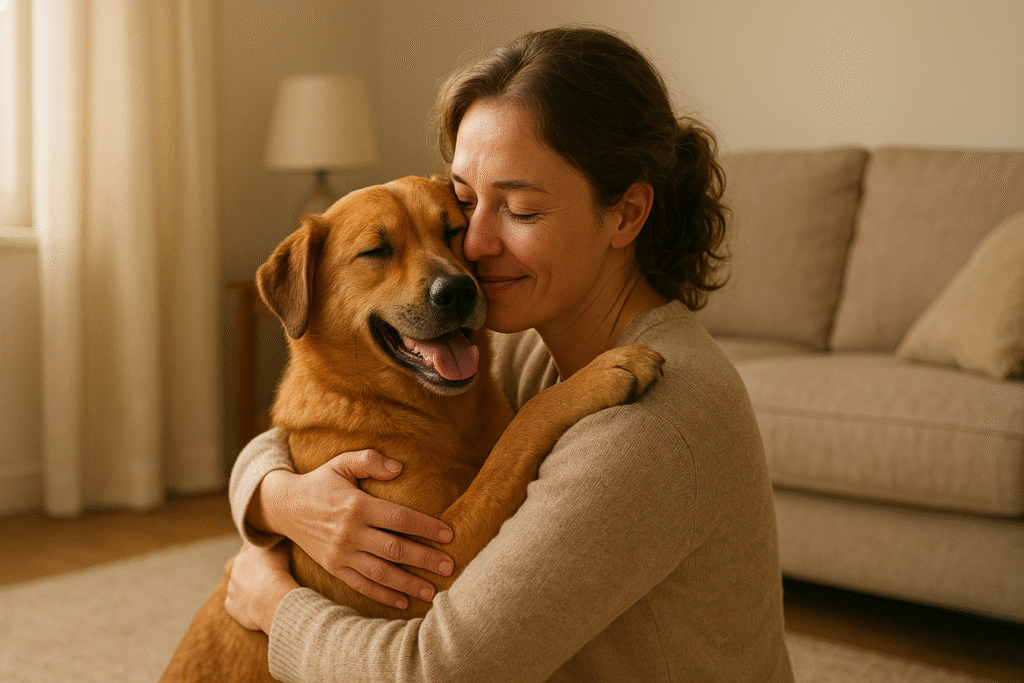
That deep exhale? That’s when you know safety is settling in.
Week 4 (Days 22–30): Personality Emerges
The fourth week is where personality surfaces.
Day 22: Zoomies in the backyard.
Day 24: Barked at the vacuum — his first confident protest.
Day 26: Initiated play without hesitation.
Day 28: Fell asleep on his back.
Full exposure. Vulnerable. Relaxed.
That posture alone tells you everything.
The rescue dog first month story doesn’t end with fireworks.
It ends with normalcy.
And normalcy is beautiful.
The Emotional Side No One Explains
There’s something that happens during this adopted dog adjustment journey that surprises many owners.
You change too.
You move slower.
You speak softer.
You celebrate small wins.
You stop expecting dramatic transformation and start noticing subtle healing.
This is why so many people describe adoption as life-changing.
If you want to understand the deeper psychological impact, read
The Emotional Benefits of Adopting a Rescue Dog: How Love Heals Both Ways
Because healing goes both directions.
Realistic Expectations for the First Month
Not every rescue dog transformation timeline looks identical.
Some dogs:
- Show anxiety longer
- Experience digestive issues
- Struggle with sleep
- Test boundaries
If you notice intense stress signs, it may help to review
Signs of Dog Anxiety After Adoption (And How to Help Them Heal)
Patience is not passive.
It is active consistency.
What the First 30 Days Really Mean
The first month is not about perfection.
It’s about stability.
It’s about proving — day after day — that:
You come back.
Food is consistent.
Voices stay calm.
Hands are gentle.
That’s how rescue dogs learn permanence.
That’s how fear turns into trust.
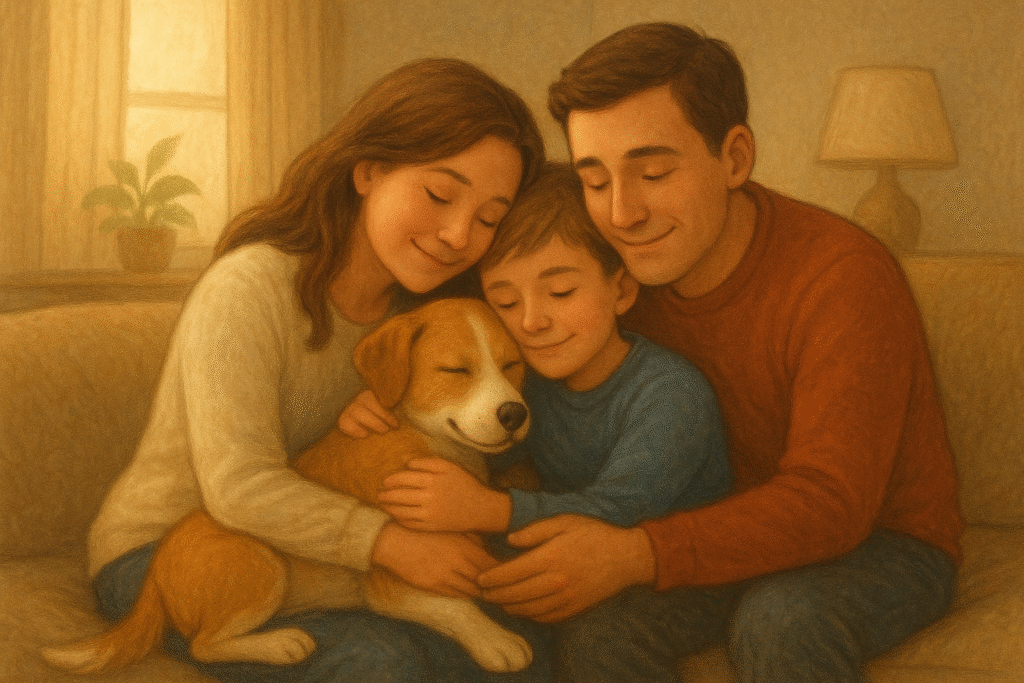
And that’s how a shelter dog slowly becomes a sofa dog.
Final Reflection
A true rescue dog first month story is not dramatic.
It is quiet.
It is gradual.
It is built on routine and reassurance.
By Day 30, he wasn’t a different dog.
He was the same dog — just safer.
And safety is the foundation of everything that follows.
FAQ
How long does it take a rescue dog to adjust to a new home?
Many rescue dogs begin settling within 3–4 weeks, but full emotional adjustment can take 3 months or longer depending on past experiences.
What should I expect during the first month after adoption?
Expect cautious behavior, sleep disruption, boundary testing, and gradual trust-building. Routine and patience are key.
Is it normal for a rescue dog to seem distant at first?
Yes. Emotional distance is common in the first weeks as dogs evaluate safety and consistency in their new environment.
SaveADoggo Team is a group of animal lovers passionate about rescue dogs, adoption education, and emotional healing for both dogs and humans. Our content is created with research, real-life experience, and compassion to support responsible adoption and stronger human–dog bonds.
All articles are carefully reviewed for clarity, accuracy, and responsible dog care guidance, and updated regularly to ensure trustworthy rescue-focused information.
Our mission is simple: help rescue dogs feel safe, loved, and understood—one home at a time.