Dog Training Tips for Behavior: What Actually Works (And Why)
Every dog owner reaches this moment.
You love your dog. Deeply.
But something isn’t working.
Maybe it’s the barking.
Maybe the jumping.
Maybe the leash pulling that turns walks into workouts.
Maybe the chewing that mysteriously targets only expensive things.
You start searching for dog training tips for behavior, hoping for a fix.
Here’s the honest truth:
Most behavior problems are not personality flaws.
They’re communication gaps.
And when you fix the communication, behavior follows.
This guide will walk you through practical, humane, evidence-based strategies you can apply at home — whether you’re raising a puppy or helping a rescue dog settle into a new life.
First: Understand Why Behavior Happens
Behavior is functional.
Dogs repeat behaviors that:
- Get attention
- Relieve stress
- Release energy
- Avoid discomfort
- Produce rewards
Before correcting behavior, ask:
What is my dog gaining from this?
If barking brings attention, barking continues.
If jumping leads to petting (even briefly), jumping persists.
If chewing relieves anxiety, chewing becomes coping.
Effective dog training tips for behavior always start with understanding motivation.
The Three Pillars of Behavior Training
Before addressing specific problems, establish these foundations.
1. Structure Creates Security
Dogs relax when life is predictable.
Consistent:
- Feeding times
- Walk schedules
- Sleep spaces
- Training sessions
If you recently adopted, revisit the principles explained in The 3-3-3 Rule for Adopting a Rescue Dog. Many early behavior issues stem from adjustment stress — not defiance.
Predictability reduces anxiety dramatically.
2. Reinforce What You Want, Not Just What You Don’t
One of the most overlooked dog training tips for behavior:
Reward calmness.
Reward quiet.
Reward relaxed body language.
Most owners only react to unwanted behavior.
But behavior you ignore rarely disappears.
Behavior you reinforce consistently strengthens.
3. Short Sessions. Daily Practice.
5–10 minutes.
Twice a day.
Consistency outweighs intensity.
Dog Training Tips for Common Behavior Problems
Let’s address the behaviors people struggle with most.
Excessive Barking
Why it happens:
- Alert behavior
- Boredom
- Anxiety
- Attention-seeking
Solution strategy:
- Identify the trigger.
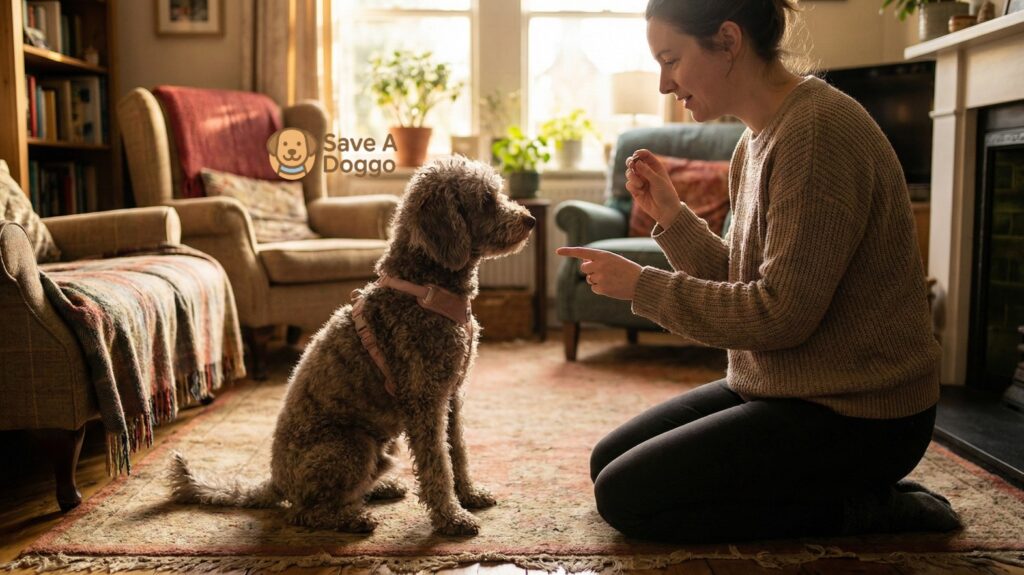
- Teach an incompatible behavior (e.g., “Place” or “Sit”).
- Reward silence quickly.
Do not yell.
Yelling often sounds like joining the barking.
If anxiety is involved, review Signs of Dog Anxiety After Adoption to rule out stress-related causes.
Jumping on Guests
Jumping is usually excitement or attention-seeking.
Correction approach:
- Ignore jumping completely.
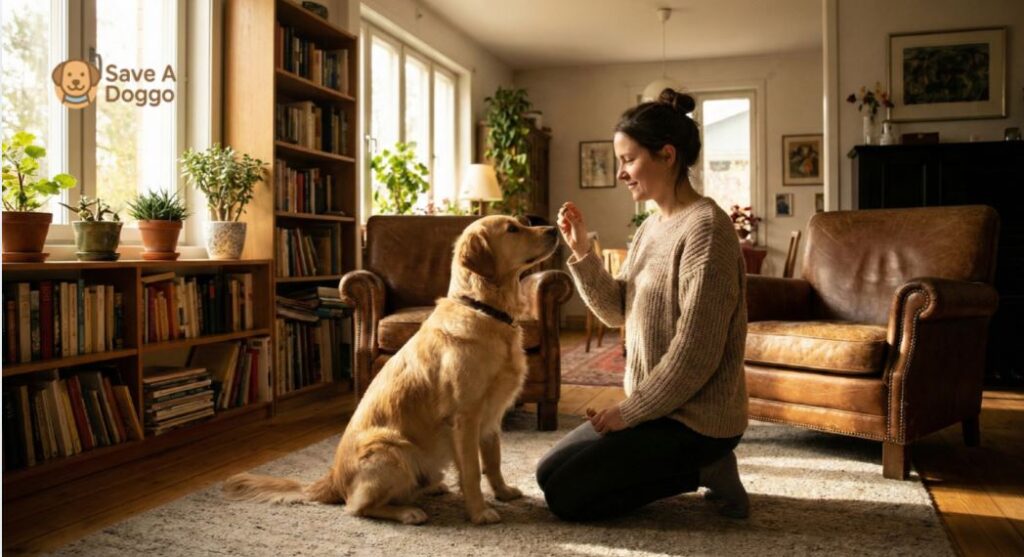
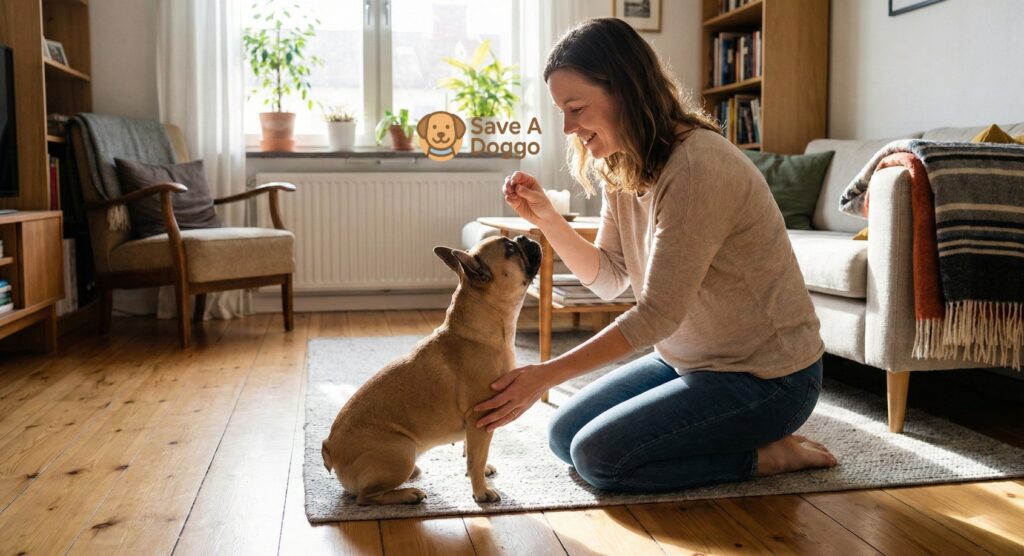
- Ask for “Sit” before greeting.
- Reward calm posture.
If your dog doesn’t reliably sit yet, strengthen basics using the step-by-step framework in How to Train a Dog at Home Step by Step.
Replacement behavior is more effective than punishment.
Leash Pulling
Pulling = forward progress reward.
To fix:
- Stop immediately when pulling starts.
- Resume only when leash slackens.
- Reward moments of loose leash.
Yes, it feels slow at first.
But consistency rewires habits.
Destructive Chewing
Chewing can mean:
- Teething
- Boredom
- Anxiety
- Lack of enrichment
Solutions:
- Provide legal chew alternatives.
- Increase mental stimulation.
- Supervise during transition.
Many “behavior problems” are enrichment problems.
Mental fatigue reduces destructive behavior more effectively than physical exhaustion alone.
Emotional Behavior: The Overlooked Layer
Some behavior isn’t about obedience.
It’s emotional regulation.
Rescue dogs, in particular, may exhibit:
- Startle responses
- Guarded body language
- Avoidance
- Hypervigilance
If you’re supporting an adopted dog, also read How to Help a Rescue Dog Adjust to Their New Home.
Training must match emotional readiness.
You cannot discipline fear out of a dog.
You must build safety first.
Preventing Behavior Problems Before They Start
One of the most powerful dog training tips for behavior is proactive training.
Teach:
- “Leave it”
- “Place”
- Impulse control games
- Calm leash walking
Prevention is easier than correction.
Impulse Control: The Game Changer
Impulse control training reduces:
- Jumping
- Door dashing
- Leash pulling
- Food grabbing
Simple exercise:
Ask for “Sit” before:
- Meals
- Walks
- Toys
- Greeting guests
You are not being strict.
You are building emotional regulation.
And emotional regulation prevents 80% of common behavior issues.
Realistic Timeline for Behavior Improvement
Here’s what most people don’t hear:
Behavior change is gradual.
Week 1–2: Learning
Week 3–4: Partial reliability
Month 2–3: Habit formation
Month 4+: Stability
If progress stalls, reassess clarity and consistency.
Dogs thrive on repetition.
When Behavior Requires Professional Help
Seek professional guidance if you observe:
- Aggression toward humans
- Aggression toward other dogs
- Resource guarding
- Severe separation anxiety
- Escalating fear responses
At-home dog training tips for behavior are powerful — but safety comes first.
There is no shame in asking for support.
The Role of Mental Stimulation in Behavior Control
Add enrichment:
- Puzzle feeders
- Scent games
- Training games
- Structured play
A mentally satisfied dog is calmer.
Many high-energy behaviors disappear when the brain is engaged.
A Perspective That May Surprise You
Here’s something that might challenge conventional thinking:
Behavior problems often reflect unmet needs, not dominance.
Dogs are not plotting control.
They’re responding to environment and reinforcement.
When we shift from control to clarity, behavior shifts too.
That mindset alone transforms training outcomes.
Daily Behavior Support Routine
Morning:
- Calm leash walk
- 5-minute impulse control
Afternoon:
- Mental enrichment activity
Evening:
- Short obedience review
- Reward calmness
Simple.
Sustainable.
Effective.
If you searched for dog training tips for behavior, you’re not alone.
Every dog owner faces behavior challenges at some point.
The difference between chaos and calm isn’t dominance.
It’s clarity.
It’s routine.
It’s reinforcement.
Behavior improves when communication improves.
And communication improves when we slow down enough to teach — instead of simply reacting.
That’s where real transformation begins.
Frequently Asked Questions (Dog Training Tips for Behavior)
How long does it take to correct unwanted behavior?
Mild behaviors may improve within a few weeks. Deeply ingrained habits may take several months of consistent reinforcement.
Should I punish bad behavior?
Punishment may suppress behavior temporarily but does not teach alternative actions. Positive reinforcement produces more stable long-term results.
Can rescue dogs overcome behavior problems?
Yes. With patience, structure, and consistent reinforcement, most rescue dogs show significant improvement.
What is the most important behavior command to teach?
Impulse control commands like “Sit,” “Stay,” and “Leave it” prevent many common issues.
SaveADoggo Team is a group of animal lovers passionate about rescue dogs, adoption education, and emotional healing for both dogs and humans. Our content is created with research, real-life experience, and compassion to support responsible adoption and stronger human–dog bonds.
All articles are carefully reviewed for clarity, accuracy, and responsible dog care guidance, and updated regularly to ensure trustworthy rescue-focused information.
Our mission is simple: help rescue dogs feel safe, loved, and understood—one home at a time.