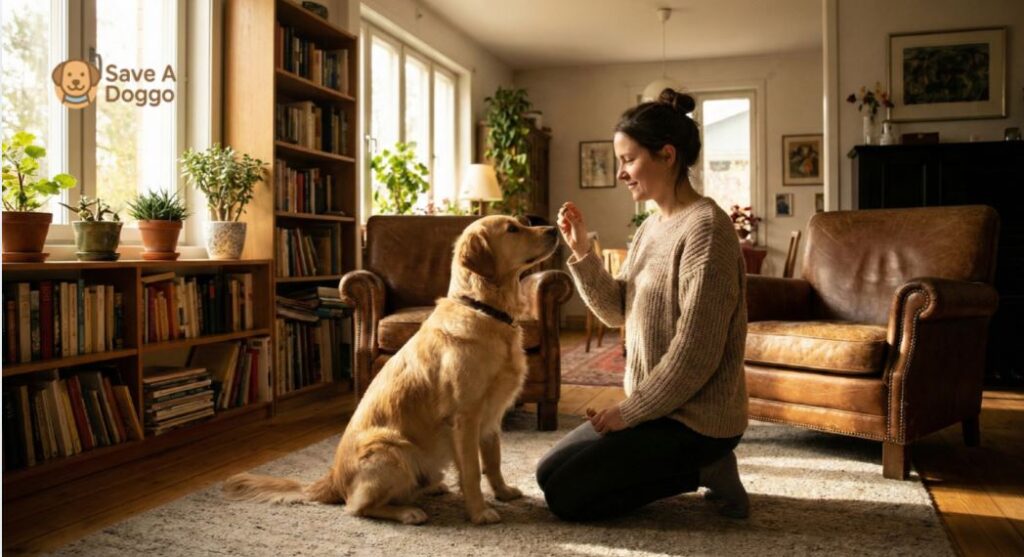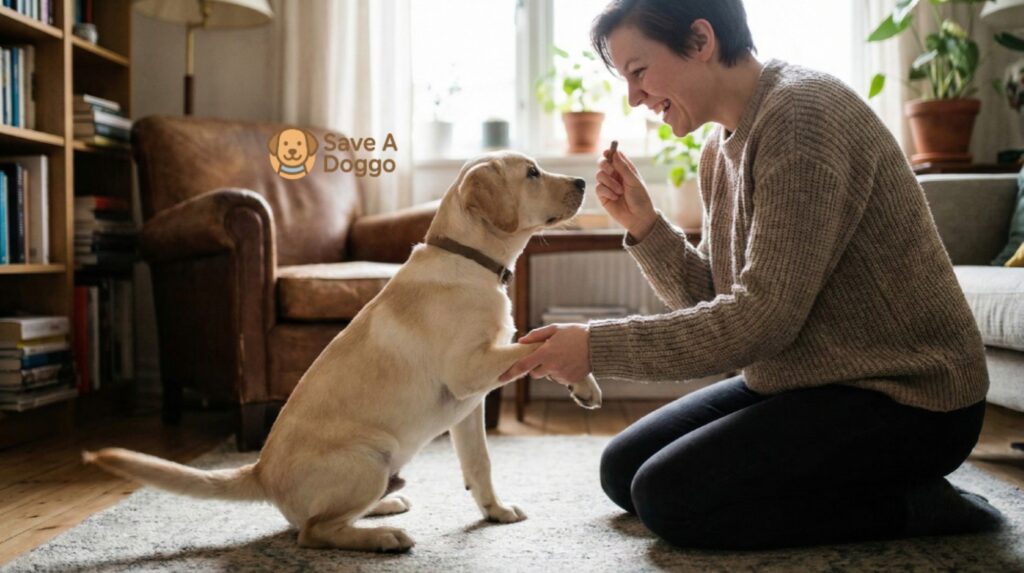
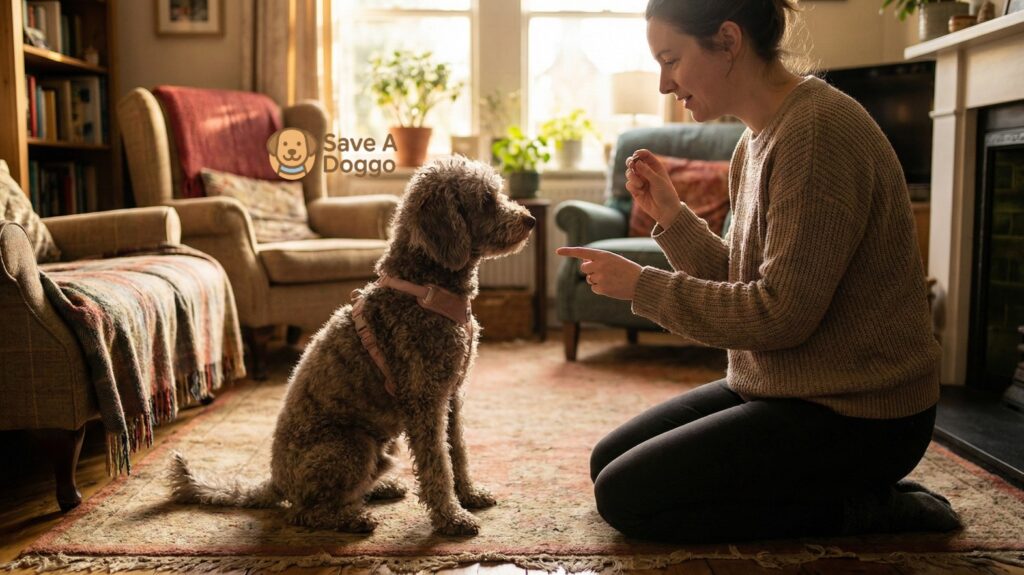
Basic Training for Dogs at Home — Where Real Bonding Begins
When people think about training, they often imagine strict commands, firm voices, maybe even frustration.
But the truth?
Basic training for dogs at home isn’t about control.
It’s about communication.
It’s about building a shared language between you and your dog — especially if you’ve recently adopted a rescue who’s still figuring out whether this new life is safe.
And here’s something I strongly believe (and yes, some trainers might debate this):
Consistency matters more than intensity.
You don’t need military-style discipline.
You need patience, structure, and repetition.
Let’s walk through what actually works.
Why Basic Training at Home Matters More Than You Think
Dogs thrive on predictability.
For rescue dogs especially, home training creates:
- Emotional safety
- Clear expectations
- Reduced anxiety
- Stronger attachment
- Fewer behavioral misunderstandings
If you’ve adopted recently, you may want to revisit the The 3-3-3 Rule for Adopting a Rescue Dog to understand how dogs adjust over the first weeks and months.
Training fits directly into that adjustment timeline.
It’s not about teaching tricks.
It’s about helping them feel secure.
The Foundations of Basic Training for Dogs at Home
Before commands. Before cues.
There are three foundations:
1. Routine
Feed at the same times.
Walk at predictable hours.
Practice short sessions daily.
Dogs relax when life becomes predictable.
2. Positive Reinforcement (Always)
Reward what you want repeated.
That means:
- Treats
- Praise
- Calm affection
- Play
Avoid punishment-based methods. They may suppress behavior temporarily but often increase anxiety long term — especially in adopted dogs adjusting to a new environment.
3. Short, Focused Sessions
5–10 minutes.
That’s it.
Dogs learn best in short bursts.
End sessions on success.
Step-by-Step Basic Training for Dogs at Home
Let’s break this down practically.
Step 1: Name Recognition
Before “sit.” Before “stay.”
Your dog must respond to their name.
How:
- Say their name in a warm tone.
- The moment they look at you — reward.
- Repeat throughout the day.
Simple. Powerful.
Step 2: Sit (The Anchor Command)
“Sit” builds impulse control.
How to teach:
- Hold a treat near the nose.
- Slowly lift it upward.
- As their head follows, their bottom naturally lowers.
- The second they sit — say “Sit” and reward.
Repeat daily.
Consistency beats complexity.
If you want a more detailed breakdown, our guide How to Train a Dog at Home Step by Step expands this process further.
Step 3: Stay
This one tests patience — for both of you.
- Ask for “Sit.”
- Show your palm and say “Stay.”
- Take one small step back.
- If they hold position for even one second — reward.
Gradually increase distance.
Small wins count.
Step 4: Come (Recall)
This may be the most important command for safety.
- Use a happy voice.
- Say “Come!”
- When they approach, reward generously.
Never punish after recall — even if they were doing something wrong.
You want “Come” to always mean safety and positivity.
Step 5: Leash Manners
Pulling is normal.
Loose-leash walking is learned.
When they pull:
- Stop walking.
- Wait silently.
- Resume once the leash relaxes.
It requires patience. But it works.
Basic Training for Rescue Dogs vs. Puppies
Here’s something people don’t talk about enough:
Rescue dogs often learn faster than puppies.
Why?
They crave stability.
They want to understand expectations.
But they may also carry fear, which is why you should pair training with emotional reassurance.
If your dog shows signs of stress, you may want to read:
Training and emotional healing go hand in hand.
Common Mistakes in Basic Training at Home
Let’s address what often goes wrong.
❌ Inconsistency
Different family members using different commands.
Solution: Agree on exact words.
❌ Training Only When There’s a Problem
Training should be daily — not reactive.
❌ Sessions That Are Too Long
Mental fatigue creates frustration.
Keep it short.
Always.
How Long Does Basic Training Take?
This depends on:
- Age
- Past experiences
- Breed tendencies
- Consistency
Most dogs show noticeable improvement within 2–4 weeks of daily practice.
Full reliability can take months.
But progress?
You’ll see it sooner than you think.
Creating a Calm Training Environment
Choose:
- Quiet room
- Minimal distractions
- Same space initially
Once behaviors are reliable, increase difficulty gradually (backyard → sidewalk → park).
This gradual exposure builds confidence.
When to Consider Professional Help
If your dog shows:
- Aggression
- Severe anxiety
- Resource guarding
- Trauma-based behaviors
Consult a certified positive reinforcement trainer.
Training at home works — but safety comes first.
The Emotional Side of Training
Here’s a perspective that may spark debate:
Training is less about obedience and more about emotional security.
A dog that understands expectations relaxes.
A dog that feels heard connects deeper.
I’ve seen rescue dogs transform simply because someone took 10 minutes a day to patiently teach them “Sit.”
Not perfectly.
Not dramatically.
Just consistently.
That’s where trust grows.
Basic training for dogs at home isn’t about perfection.
It’s about showing up every day.
It’s about patience over pressure.
And if you’re consistent — even imperfectly consistent — you’ll start noticing something unexpected:
Your dog isn’t just learning commands.
They’re learning you.
And that’s where everything changes.
FAQ – Basic Training for Dogs at Home
How early should I start basic training at home?
Immediately — even from day one after adoption. Keep sessions short and positive.
Can older rescue dogs learn basic commands?
Absolutely. Older dogs are fully capable of learning with patience and repetition.
How many times per day should I train?
Two to three short sessions daily (5–10 minutes each) is ideal.
Should I use treats every time?
At first, yes. Gradually phase into intermittent rewards once the behavior is reliable.

SaveADoggo Team is a group of animal lovers passionate about rescue dogs, adoption education, and emotional healing for both dogs and humans. Our content is created with research, real-life experience, and compassion to support responsible adoption and stronger human–dog bonds.
All articles are carefully reviewed for clarity, accuracy, and responsible dog care guidance, and updated regularly to ensure trustworthy rescue-focused information.
Our mission is simple: help rescue dogs feel safe, loved, and understood—one home at a time.