🐾 How Animal Shelters Help Dogs Recover Emotionally
🌱 Healing Is More Than Physical
When a dog arrives at a shelter, the wounds we see are often physical.
But the wounds that matter most are invisible.
Fear.
Confusion.
Loss.
Understanding how animal shelters help dogs recover emotionally reveals the quiet, powerful work happening behind kennel doors every single day.
🧠 Why Emotional Recovery Matters for Shelter Dogs
Dogs experience stress much like humans do.
Common emotional challenges include:
- Separation anxiety
- Fear of unfamiliar people
- Sensory overload
- Loss of routine
Without emotional support, even healthy dogs may shut down—reducing their chances of adoption.
That’s why shelter dog mental health is now a priority in ethical rescue organizations.
🏠 Creating Predictability Through Routine
One of the first emotional stabilizers is routine.
Shelters establish:
- Consistent feeding times
- Regular cleaning schedules
- Predictable human interaction
Routine helps dogs:
- Feel safer
- Reduce anxiety
- Regain trust
Dogs thrive when they know what comes next.
🎾 Enrichment Programs That Reduce Stress
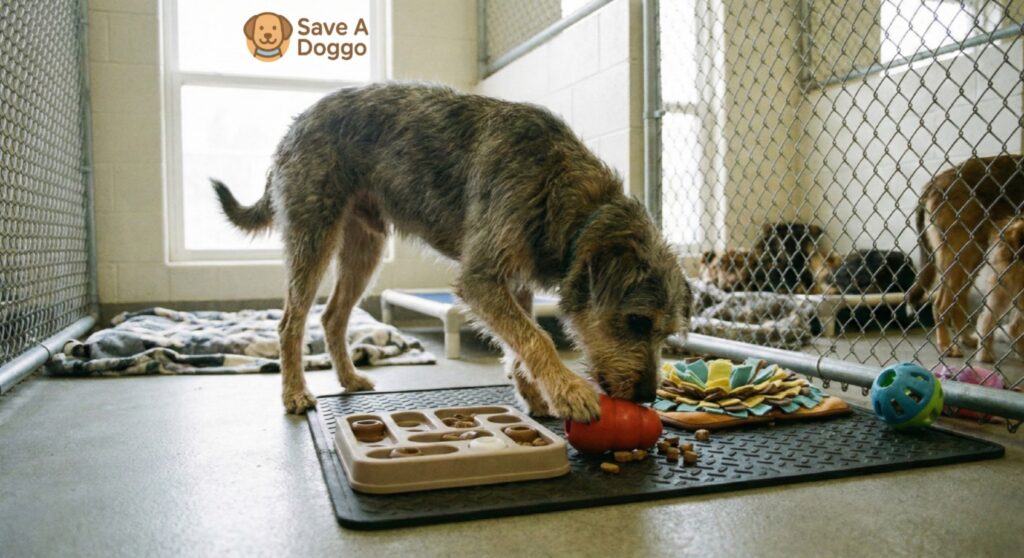
Modern shelters focus heavily on enrichment.
Examples include:
- Puzzle feeders
- Scent games
- Quiet time with volunteers
- Controlled play sessions
These activities:
- Reduce boredom
- Improve cognitive function
- Prevent emotional deterioration
Enrichment is often the first step toward emotional recovery.
🐕🦺 Behavioral Rehabilitation & Gentle Training
Some dogs arrive with behavioral challenges—not because they are “bad,” but because they are overwhelmed.
Shelters use:
- Positive reinforcement training
- Desensitization techniques
- One-on-one behavioral support
This process is similar to what adopters experience later, as explained in how to care for a rescued dog.
🤝 Human Connection: The Most Powerful Medicine
Nothing heals emotional trauma faster than safe human interaction.
Volunteers and staff:
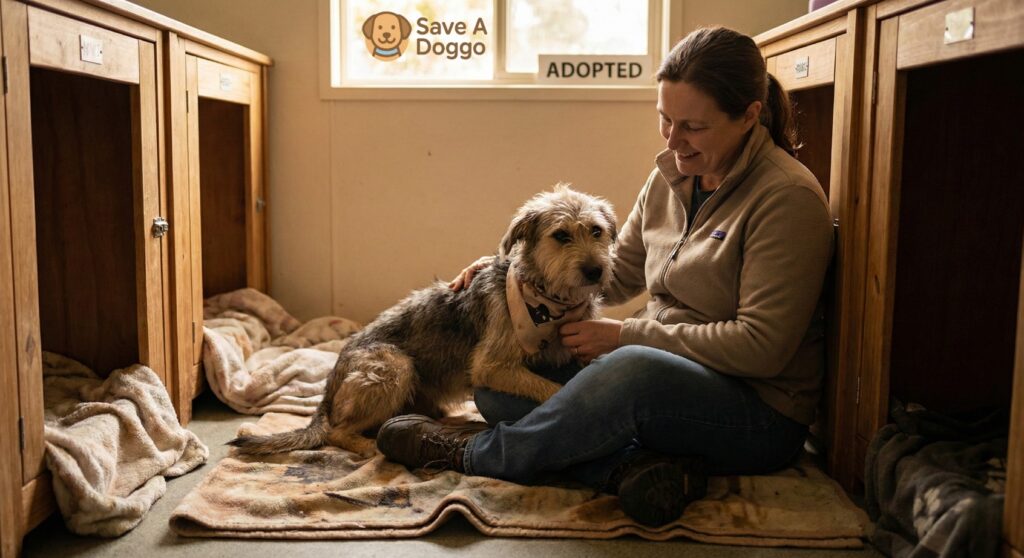
- Sit quietly with fearful dogs
- Speak softly
- Respect boundaries
Over time, dogs begin to:
- Make eye contact
- Accept touch
- Seek companionship
These small moments mark huge emotional breakthroughs.
🐾 Foster Homes: Emotional Recovery Outside the Shelter
For dogs struggling in kennels, foster care is transformative.
In foster homes, dogs experience:
- Calm environments
- Household routines
- Emotional bonding
Many long-term shelter dogs show rapid improvement in foster care, increasing adoption success—as seen in rescue dog adjusting to a new home.
🧠 Trauma-Informed Care for Rescue Dogs
Some shelters adopt trauma-informed practices, such as:
- Avoiding forced interactions
- Allowing dogs to choose engagement
- Using calming scents and music
These methods respect emotional boundaries and help dogs rebuild confidence naturally.
🕰️ Time, Patience, and Emotional Progress
Healing doesn’t follow a schedule.
Some dogs recover in days.
Others take months.
What matters is consistency.
Shelters understand that emotional recovery is not linear—and every step forward counts.
🌈 How Emotional Healing Improves Adoption Outcomes
Emotionally stable dogs:
- Display calmer behavior
- Interact better with adopters
- Adapt faster to new homes
This directly impacts adoption rates, especially for dogs who previously went unnoticed—like those discussed in what happens to dogs who are never adopted.
❤️ What You Can Do to Support Emotional Recovery
Even if you don’t work at a shelter, you can help:
- Volunteer your time
- Foster temporarily
- Donate enrichment supplies
- Share educational content
Every action supports a dog’s emotional healing journey.
🐾 Healing Makes Hope Possible
Understanding how animal shelters help dogs recover emotionally reminds us that rescue is not just about survival.
It’s about dignity.
It’s about trust.
It’s about giving dogs the chance to feel safe again.
And that changes everything.
❓ FAQ SECTION
❓ How long does it take for a shelter dog to recover emotionally?
It varies. Some dogs recover quickly, while others need weeks or months of consistent care.
❓ Do shelters provide mental health care for dogs?
Yes. Many shelters use enrichment, training, and trauma-informed approaches to support emotional health.
❓ Can emotionally traumatized dogs still be adopted?
Absolutely. With proper support, many become loving, stable companions.
❓ How can adopters help with emotional recovery?
Patience, routine, positive reinforcement, and calm environments are key.
What Good Emotional Support Looks Like in Practice
Shelters cannot erase a dog’s history, and a kennel is not automatically a healing environment. Quality support means reducing preventable stress while meeting medical, behavioral, and daily-care needs. The plan should be based on repeated observation and the individual dog’s response—not on forcing social interaction or promising a complete “transformation.”
- Predictability: consistent feeding, cleaning, walking, and rest periods.
- Choice: opportunities to approach, retreat, sniff, rest, and interact voluntarily.
- Enrichment: food puzzles, scent activities, chewing, gentle walks, and appropriate social time selected for that dog.
- Medical care: pain, illness, sleep, appetite, and medication are reviewed alongside behavior.
- Foster and placement support: suitable dogs may benefit from a quieter foster home, accurate notes, careful matching, and post-adoption guidance.
Progress Is Not Always Linear
A dog may appear shut down at intake, become more active as stress changes, or show different behavior in a foster home. One observation does not define temperament. Staff should document context—location, people present, distance, handling, noise, recovery time, and what helped—so adopters receive useful information without false certainty.
Visitors can help by respecting kennel instructions, avoiding prolonged staring or banging on doors, supporting foster and enrichment programs, and asking what the organization needs most.
Sources and further reading
- Association of Shelter Veterinarians: Standards of Care Guidelines
- ASPCApro: Canine Enrichment for Shelter Dogs

The Save A Doggo Editorial Team creates practical, welfare-first resources for rescue-dog adopters, foster families, and shelter supporters. We prioritize primary and authoritative sources, distinguish observation from diagnosis, correct material errors transparently, and explain when veterinary or qualified behavior support is needed. We do not claim veterinary credentials or professional review unless a named, verifiable reviewer has approved the final article.